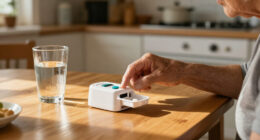

The AuraLink Bluetooth Hearing Aids for Seniors are receiver-in-canal devices aimed at adults with mild to moderate hearing loss who want sound adjustment and phone audio in one product. Their strongest appeal is the combination of app-based fitting, Bluetooth 5.4, and IP68 protection, with tinnitus masking and a UV-sanitizing charging case as added extras. The tradeoff is that full customization depends on a smartphone, and the listed hearing range does not replace a professional assessment of what amplification you need. Early verdict: worth considering for tech-comfortable buyers who will use the app and streaming features, but less compelling for people seeking simple controls or stronger clinical guidance.

Get everyday helpers delivered free with Prime
- Fast, free delivery on millions of items
- Prime Video, Amazon Music and more included
- Member-only deals all year

AuraLink Bluetooth Hearing Aids for Seniors Adults
- ✔ Hearing Loss Range: 25-85 dB HL
- ✔ Connectivity: Bluetooth 5.4
- ✔ Water Resistance: IP68
Why This Product Stands Out
AuraLink stands out by treating hearing aids as connected everyday devices, not only as amplifiers. App-based fitting, phone audio, and tinnitus masking put it closer to the feature-rich end of the consumer hearing-aid segment than a basic rechargeable model with a single control. For someone who already uses a smartphone throughout the day, that mix can make adjustments and audio access feel more integrated into ordinary routines.
Its IP68 protection is another point of distinction in the product description. Resistance to sweat, rain, and dust may suit people who walk, exercise lightly, or spend time outdoors, though it should not be read as permission to swim or expose the devices to any water condition. The UV-sanitizing case is a hygiene-oriented extra, not a substitute for routine care or a feature every buyer will value.
In category terms, AuraLink looks feature-rich for a self-directed, app-connected option, but those extras do not answer every important buying question. The listed 25–85 dB HL range is broad, yet product specifications alone cannot tell a buyer whether amplification, comfort, or speech clarity will be right for their particular hearing profile. Its appeal is strongest when connectivity and customization are priorities—not when the simplest possible setup or individualized clinical support is the deciding factor.
Key Features and What They Mean
App-controlled fitting is the feature most likely to shape day-to-day satisfaction. It offers a way to personalize sound through a compatible iOS or Android phone, which can be useful if a wearer wants to make adjustments without relying only on preset controls. The benefit depends on a willingness to use the app; buyers who prefer physical buttons or want another person to manage settings may find this approach less convenient. Treat the app as a meaningful control option, not proof that the devices provide a professional hearing-aid fitting.
Bluetooth 5.4 brings calls and music into the hearing-aid experience. For someone who frequently talks on a phone or listens to audio, streaming may cut down on device switching and make the aids more useful beyond conversations in a room. This is a category advantage for connected-device users, but it is optional value for buyers who rarely stream or who prioritize uncomplicated hearing support. The listing does not detail call controls, supported codecs, or compatibility with every phone model, so those specifics are worth checking if streaming is central to the purchase.
AI noise reduction is intended to help with listening when background sound competes with speech. That matters most to people who visit restaurants, family gatherings, or other busy places, where noise can make conversation tiring. The label does not guarantee clear speech in every setting, and no product description can establish how a particular listener will perceive the processing. It is a potentially useful feature, rather than a reason on its own to choose AuraLink over a simpler device.
Tinnitus masking may make AuraLink more appealing to people who experience tinnitus and want a sound option in the same device. Its practical value will vary: tinnitus differs between individuals, and the product information does not explain the available masking sounds or how they can be tailored. The UV-sanitizing charging case adds a hygiene-focused routine, while the RIC design places a receiver in the ear canal and the main housing behind the ear. That familiar style may suit buyers who want a discreet form factor, though comfort and retention depend on the wearer’s ear and fit.
The listed IP68 rating gives the aids a durability angle, with protection described for sweat, rain, and dust. This can be reassuring for routine activity and changing weather, but does not remove the need to follow care guidance or confirm the maker’s limits around water exposure. It is a useful supporting feature for an active lifestyle, not a replacement for proper handling and maintenance.
Performance and Real-World Use
For daily use, AuraLink’s best-case appeal is convenience: set a personal sound profile in the app, wear the RIC devices for conversation, and stream phone audio when needed. That arrangement could suit a person comfortable managing connected accessories. Setup may be less immediate than with a one-button hearing aid, particularly if the wearer needs help pairing the devices, installing the app, or adjusting sound. Buyers should check whether the app’s controls are accessible and whether a family member or caregiver can help if needed.
The design combines several functions, so there is more to manage than simple amplification. Users will need to keep the hearing aids charged, care for the receiver and ear tips, and use the charging case as directed. The UV feature may add a hygiene step, but it does not eliminate cleaning or routine maintenance. The description calls the design comfortable and durable, yet comfort is personal; a RIC fit can feel different depending on ear shape, tip choice, and how long the aids are worn.
Bluetooth and noise processing add practical utility, but buyers should not assume the listed specifications answer questions about battery life, call quality, connection stability in every environment, or ongoing support. Those details are not supplied here. Before relying on AuraLink as an all-day solution, confirm expected runtime, return and fitting policies, app support for your phone, and what assistance is available if the initial sound profile needs adjustment.
Who Should Buy This
AuraLink makes the most sense for an adult with mild to moderate hearing loss who wants more than basic amplification and is comfortable using a smartphone to tune settings. It is a stronger fit for someone who regularly streams calls or music, wants app-based personalization, or is interested in tinnitus masking as an added feature. Active users may also value the stated IP68 protection against sweat, rain, and dust. Before buying, they should confirm the phone is compatible and that the product’s fitting and support options match their needs; the listed range alone is not a personal suitability assessment.
Who Should Skip This
Skip AuraLink if you need amplification for severe hearing loss, expect a clinician to provide ongoing fitting as part of the purchase, or cannot comfortably manage app-based controls. It is also a weaker match for an older adult who wants simple, physical operation with few settings, or for a buyer who will not use Bluetooth streaming, tinnitus masking, or personalization. In those cases, a rechargeable one-button model may offer better day-to-day value; shoppers who specifically want a more direct control interface could compare options such as the Audien Atom X, while buyers prioritizing basic operation may prefer a simpler rechargeable hearing aid.
Value for Money
AuraLink is worth its mid-range price for buyers who will regularly use its connected features—especially app-based sound adjustments and Bluetooth streaming. For those users, tinnitus masking and IP68 protection add useful extras to a feature-rich package, making the higher cost over basic amplification easier to justify. The UV-sanitizing case is a bonus, but should not be the main reason to pay more.
It is not worth paying a premium for AuraLink if you mainly need straightforward amplification, dislike smartphone setup, or are unlikely to use streaming and personalization. A simpler rechargeable model with one-button operation may be better value in that case; a model such as Audien Atom One may appeal to buyers focused on a discreet, uncomplicated wireless design. AuraLink should be judged as a connected feature package, not an automatic upgrade in hearing performance. Confirm fit, support, battery details, and return terms before buying.
AuraLink Bluetooth Hearing Aids for Seniors Adults
AuraLink stands out by treating hearing aids as connected everyday devices , not only as amplifiers. App-based fitting, phone audio, and tinnitus masking put it closer to the feature-rich end of the consumer hearing-aid segment than a basic rechargeable model with a single control.
Pros:
- App-controlled sound fitting gives users a way to personalize listening rather than relying solely on a fixed setting, which may help people whose needs vary across environments.
- Bluetooth 5.4 supports calls and music streaming, reducing the need to remove the aids or switch to separate earbuds for everyday phone audio.
- AI noise reduction is intended to make speech listening more manageable in noisy settings, a meaningful benefit for social outings if it suits the wearer’s hearing needs.
- Tinnitus masking provides an additional listening option for buyers who experience tinnitus and want it alongside amplification.
- IP68 protection and a UV-sanitizing charging case add practical reassurance for active routines involving sweat, rain, dust, and regular storage.
Cons:
- The stated 25–85 dB HL range does not establish that the aids will suit every person within those figures; individual hearing needs and fitting still matter.
- Full sound customization relies on an iOS or Android app, which can be an obstacle for buyers without a compatible smartphone or confidence using apps.
- Bluetooth, AI processing, tinnitus masking, and a specialized case add complexity that may not justify a higher price for someone who mainly wants straightforward amplification.
- Product details do not specify battery runtime, fitting support, or the extent of clinical follow-up, so buyers should verify those points before relying on the aids for all-day use.
Best for: Adults with mild to moderate hearing loss who want app-adjustable sound, phone calls or music through their hearing aids, and added resistance to everyday moisture and dust.
Not ideal for: People who need help with severe hearing loss, dislike smartphone-based setup, or want uncomplicated one-button controls and minimal connected features.
Bottom line: AuraLink is worth buying for the right connected-device user : an adult with mild to moderate hearing loss who wants app-adjustable sound, Bluetooth calls or music, and added resistance to everyday moisture and dust.
Frequently Asked Questions
Are AuraLink hearing aids suitable for severe hearing loss?
The product is described for mild to moderate hearing loss, with a listed range of 25–85 dB HL. That figure does not confirm suitability for an individual or establish support for severe loss. If your hearing loss is severe or your needs are uncertain, get professional guidance before choosing a device.
Do I need a smartphone to use AuraLink?
The hearing aids are described as compatible with iOS and Android, and the app provides personalized fitting and customization. The listing does not clarify which functions work without the app, so check this before buying if you want to avoid smartphone-based setup or controls.
Can AuraLink stream calls and music?
Yes. The product lists Bluetooth 5.4 connectivity for calls and music streaming. Check compatibility with your specific phone and confirm the call controls and streaming behavior meet your needs, since those details are not provided in the product information.
Does IP68 mean I can wear AuraLink while swimming?
No such use is confirmed by the product description. It describes protection against sweat, rain, and dust; buyers should follow the manufacturer’s limits and not assume that the rating makes the aids suitable for swimming or every kind of water exposure.
Is AuraLink a better choice than a basic one-button hearing aid?
It may be a better fit if you will use app adjustments, Bluetooth audio, or tinnitus masking. If you mainly want uncomplicated amplification and prefer physical controls, a one-button rechargeable model is likely to be easier to manage and may offer better value for your needs.
Final Thoughts
AuraLink is worth buying for the right connected-device user: an adult with mild to moderate hearing loss who wants app-adjustable sound, Bluetooth calls or music, and added resistance to everyday moisture and dust. Its combination of features is more compelling than basic amplification when those extras have a clear role in the wearer’s routine. It is not the best choice for someone seeking severe-loss support, hands-off fitting, or very simple controls. If those needs describe you, compare a basic rechargeable model or seek professional guidance; if the app and streaming features are the main draw, verify compatibility and fitting support before deciding.