When a senior starts missing conversation, television dialogue, or parts of a family gathering, the practical choice is often between an over-the-counter hearing aid and a personal sound amplification product, or PSAP. Both can make sounds easier to hear, but they serve different purposes. OTC hearing aids are intended to help adults with perceived mild to moderate hearing loss; PSAPs amplify sound for particular activities and are not medical devices for treating hearing loss.

Get everyday helpers delivered free with Prime
- Fast, free delivery on millions of items
- Prime Video, Amazon Music and more included
- Member-only deals all year
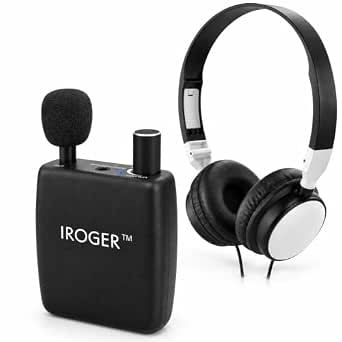
Rechargeable Hearing Amplifier with Up to 50 dB Gain and Automatic Gain Control
- ✔ Gain: Up to 50 dB
- ✔ Controls: Manual one-knob operation
- ✔ Microphone: Directional

Williams AV Pocketalker Ultra Hearing Amplifier Earbud & Headphones
- ✔ Power: Two AAA batteries, not included
- ✔ Controls: Volume and tone knobs
- ✔ Included listening options: Folding headphones and earbud
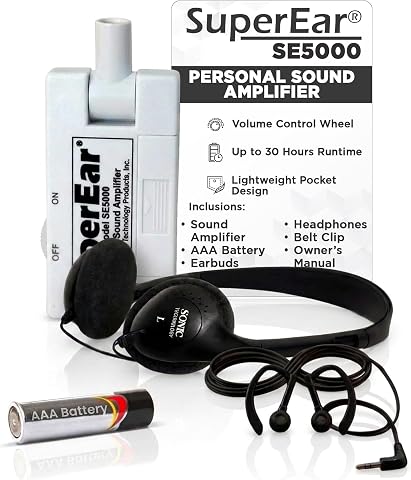
SuperEar SE5000 Personal Sound Amplifier with Headphones
- ✔ Amplification: Up to 50+ dB
- ✔ Microphone: Swivel microphone
- ✔ Volume control: Tactile adjustable wheel
That distinction matters more than the label or the initial price. OTC hearing aids generally offer hearing profiles, fitting controls, and features built around regular use. PSAPs can cost less and may suit someone who wants occasional amplification in a quiet setting. The comparison below focuses on fit, sound control, comfort, support, and value so readers can choose a device that matches their needs rather than buying on price alone.
At a Glance
| Criteria | Over-the-counter hearing aids | Personal sound amplification products (PSAPs) | Winner |
|---|---|---|---|
| Intended use | Designed to help adults with perceived mild to moderate hearing loss | Designed to amplify sound for particular listening activities; not intended to treat hearing loss | A |
| Personalization | Usually includes controls or profiles for tailoring amplification to the wearer | Often has simpler volume or tone controls, with less hearing loss specific fitting | A |
| Cost and value | Often costs more; added fitting and hearing focused features may justify the price for regular use | Typically lower cost; strongest value for occasional, limited use | Depends |
| Everyday listening | Better suited to routine conversation and daily wear when properly fitted | May amplify background noise along with voices, which can frustrate all day users | A |
| Support and setup | May include fitting guidance, app tools, or customer support; offerings vary | Setup is often straightforward, though hearing focused fitting help may be limited | A |
| Situational amplification | Can support varied settings, but performance depends on fit and model features | Can be useful for a specific task, such as listening to a speaker or television | B |
| When to seek professional care | Does not replace an evaluation when symptoms are sudden, severe, one sided, or accompanied by other warning signs | Does not diagnose or treat hearing loss; persistent difficulty warrants professional advice | Tie |
Rechargeable Hearing Amplifier with Up to 50 dB Gain and Automatic Gain Control
The iRoger is our leading choice for seniors who want a personal amplifier that is easy to pick up and operate. Its single knob powers the device and adjusts volume, avoiding menus, apps, and pairing steps. The stated gain of up to 50 dB and automatic gain control are intended to make listening more consistent, while a directional microphone focuses on sound in front of the device. That makes it a sensible option for facing a conversation partner, rather than trying to follow several people around a room.Its strongest practical advantage over the Pocketalker Ultra and SuperEar is the rechargeable battery: a roughly one-hour charge is stated to provide up to 100 hours of use. Those are manufacturer specifications, and actual use can vary. The Pocketalker offers more ways to connect wired accessories, and the SuperEar includes both headphones and earbuds; iRoger keeps the setup more self-contained. That simplicity also defines its limits. The single knob offers less precise adjustment than separate controls, and the directional pickup may miss ambient sounds. With no wireless connectivity or Bluetooth listed, we should skip it if direct wireless TV listening is essential.
Pros:
- One-knob control keeps operation straightforward.
- Rechargeable battery with a stated charge time of about one hour.
- Up to 100 hours of stated use per charge.
- Directional microphone focuses on sound in front.
Cons:
- Directional pickup can miss sounds outside the front-facing area.
- A single knob limits how finely volume can be adjusted.
- No Bluetooth or wireless connectivity is listed.
Best for: Seniors who value straightforward one-knob operation and rechargeable listening for focused conversations.
Not ideal for: People who need wireless TV audio, multiple wired accessories, or broad pickup of sounds from around them.
Bottom line: We recommend the iRoger for simple, focused listening when rechargeable convenience matters more than accessory flexibility.
“We recommend the iRoger for simple, focused listening when rechargeable convenience matters more than accessory flexibility.”
Williams AV Pocketalker Ultra Hearing Amplifier Earbud & Headphones
When one amplifier needs to work at home, in appointments, and in group settings, the Pocketalker Ultra is the most adaptable kit here. The plug-in microphone can be placed nearer to a conversation partner, and the included 12-foot TV cord supports listening from a distance. Folding headphones and an earbud give us alternatives for comfort, while compatibility with external microphones or neckloops can extend its usefulness in appropriate setups. Compared with the iRoger’s self-contained design, the Pocketalker gives up rechargeable simplicity for more listening configurations.Its controls are described as large volume and tone knobs, a helpful distinction for people who want to change loudness and sound character separately. There is no app or pairing process, but the connection is still wired. The device uses two AAA batteries, which are not included, and its accessory set means more pieces to keep track of than with the iRoger. Its stated battery life of up to 200 hours is the longest in this comparison, though real-world duration will depend on use and batteries. Choose this model if the cord and microphone options solve a concrete listening need; choose the SuperEar instead if a smaller ambient sound amplifier with a belt clip and fewer setup options is more appealing.
Pros:
- Includes folding headphones, an earbud, plug-in microphone, and 12-foot TV cord.
- Separate volume and tone controls allow distinct adjustments.
- Up to 200 hours of stated battery life.
- Works with external microphones or compatible neckloops.
Cons:
- Requires two AAA batteries, which are not included.
- Wired accessories require setup and can be inconvenient to manage.
- No wireless connectivity is listed.
Best for: Seniors who want a wired listening kit for conversations, TV audio through the included cord, or appointments.
Not ideal for: People who prefer rechargeable or wireless operation, or want the fewest accessories to manage.
Bottom line: We choose the Pocketalker Ultra when accessory flexibility and wired TV listening outweigh the upkeep of disposable batteries and cables.
“We choose the Pocketalker Ultra when accessory flexibility and wired TV listening outweigh the upkeep of disposable batteries and cables.”
SuperEar SE5000 Personal Sound Amplifier with Headphones
The SuperEar SE5000 is a portable handheld amplifier for people who want to amplify nearby ambient sound without carrying a larger assortment of wired accessories. A swivel microphone and tactile volume wheel let us point the pickup toward a sound source and adjust loudness directly. It comes with stereo headphones, earbuds, and a belt clip, giving it more listening-format flexibility than the iRoger, even though its overall feature set is simpler than the Pocketalker Ultra’s.This is also the most clearly limited choice for TV use. It can amplify sound near a television’s speakers, but it does not connect directly or wirelessly to a TV; sound quality and convenience depend on where the amplifier is positioned in the room. One included AAA battery powers it, with up to 30 hours stated under moderate to heavy use. That is a shorter stated duration than either rival: the Pocketalker claims up to 200 hours, and iRoger up to 100 hours between charges. We would pick the SE5000 for portability and a tactile control wheel, not for long stretches between battery changes or cord-based TV listening.
Pros:
- Portable handheld design includes a stainless steel belt clip.
- Both stereo headphones and earbuds are included.
- Swivel microphone can be aimed toward a sound source.
- One AAA battery is included.
Cons:
- Does not connect directly or wirelessly to a television.
- Up to 30 hours of stated battery life is shorter than the other picks.
- Requires disposable AAA battery replacement.
Best for: Seniors who want a lightweight handheld amplifier with a belt clip and a choice of headphones or earbuds.
Not ideal for: People seeking direct TV connectivity, longer stated battery life, or a rechargeable device.
Bottom line: We recommend the SuperEar for portable ambient listening when its compact format matters more than direct TV connection or longer battery life.
“We recommend the SuperEar for portable ambient listening when its compact format matters more than direct TV connection or longer battery life.”
As an Amazon Associate we earn from qualifying purchases.
Key Differences
The central difference is purpose. OTC hearing aids are made for adults who believe they have mild to moderate hearing loss and want help across daily listening situations. PSAPs are general amplifiers for specific situations. A PSAP may make a distant speaker or television louder, but added volume does not selectively restore the speech details a wearer is missing. If it raises background noise as much as conversation, the result can be louder without being clearer.
For regular use, OTC hearing aids are usually the more suitable starting point because their controls and fitting options are intended to address hearing needs. That does not mean every OTC model will work for every person, or that choosing one avoids professional care. PSAPs make more sense when the goal is narrow and occasional, and the user understands their limits. The lower purchase cost is useful only if the device actually helps with the task at hand.
Comfort, ease of adjustment, and access to help shape the real value of either choice. A device that is too uncomfortable, confusing, or noisy may sit unused. Before buying, check return terms, trial periods, battery or charging requirements, and what setup help is included. Sudden hearing changes, pain, drainage, dizziness, or a marked difference between ears call for prompt medical advice rather than a trial of amplification.
Detailed Comparison
Intended use (Over-the-counter hearing aids wins — major)
OTC hearing aids win by a major margin for persistent hearing difficulty. They are intended for adults with perceived mild to moderate hearing loss and are designed around ongoing hearing support. PSAPs amplify sound for particular activities, such as listening to a television or a speaker across a room. They are not meant to treat hearing loss. In practice, someone who struggles in several everyday settings should look first at an OTC hearing aid or professional care, rather than expecting a general amplifier to solve the problem.
Personalization and clarity (Over-the-counter hearing aids wins — moderate)
OTC hearing aids usually win; the gap is moderate to major, depending on the model. Many offer fitting steps or controls that let the wearer adjust sound for their needs. PSAPs often focus on making sound louder, with fewer hearing loss specific adjustments. That difference may matter when speech is audible but unclear, or when amplification makes surrounding noise intrusive. Buyers should compare the actual adjustment options rather than assume every hearing aid has sophisticated fitting tools.
Price and value (moderate difference)
Neither wins for everyone; the gap is moderate because use determines value. PSAPs generally cost less, which can make sense for occasional amplification during one activity. OTC hearing aids tend to cost more, but regular users may find the additional fitting features and hearing focused design worth paying for. A cheaper amplifier is poor value if it fails to improve conversation; a more expensive hearing aid is poor value if the wearer cannot tolerate or manage it. Check the trial and return policy before committing.
Everyday listening (Over-the-counter hearing aids wins — moderate)
OTC hearing aids win by a moderate margin for routine wear. They are designed for ongoing support with perceived mild to moderate hearing loss. A PSAP can help in a specific setting, but raising all sound may make busy environments harder rather than easier. Someone who mainly needs occasional television amplification may not need an everyday device; someone who routinely misses speech in multiple settings is more likely to benefit from a hearing aid fitted to their needs.
Setup and support (Over-the-counter hearing aids wins — moderate)
OTC hearing aids generally have the edge, but the difference is moderate and product specific. Some provide guided setup, app adjustments, or access to fitting support. PSAPs can be simple to switch on and use, a real advantage for a person who wants minimal setup. However, simple controls do not guarantee a comfortable or clear result. Compare included support, instructions, and return terms, especially if the wearer has limited dexterity or does not use a smartphone.
Specific listening tasks (Personal sound amplification products (PSAPs) wins — minor)
PSAPs can win by a minor to moderate margin when the need is narrow. If the user wants occasional help hearing a nearby conversation in a quiet room or listening to a particular source, a simple amplifier may be adequate and less costly. OTC hearing aids can also help in those situations, but may be more device than needed for a single occasional task. The advantage disappears if the underlying problem affects conversation throughout the day.
Knowing when amplification is not enough (major difference)
This is a tie: neither product evaluates the cause of hearing difficulty. Both can mask a problem without identifying it, and neither should be used to delay care for warning signs. A sudden change, hearing difficulty in one ear, ear pain or drainage, dizziness, or severe impairment calls for medical evaluation. For gradual persistent trouble, a hearing assessment can clarify whether an OTC device is appropriate and whether another issue needs attention.
Over-the-counter hearing aids: Pros and Cons
Pros:
- Designed for perceived mild to moderate hearing loss
- Often offers more hearing focused adjustment and fitting options
- Better suited to regular use across everyday listening situations
Cons:
- Usually costs more than a basic PSAP
- Setup and adjustment can take time
- May not be suitable for more severe or complex hearing needs
Personal sound amplification products (PSAPs): Pros and Cons
Pros:
- Usually has a lower upfront price
- Can suit occasional amplification for a particular task
- Often has simple controls and setup
Cons:
- Not designed to treat hearing loss
- May amplify background noise along with speech
- Often offers less personalized fitting for daily use
Who Should Choose What
Choose Over-the-counter hearing aids if:
- You regularly miss conversation or other sounds across everyday settings and believe your hearing loss is mild to moderate.
- You want fitting controls designed around hearing needs and are willing to spend more for regular use.
- You can compare models, follow setup guidance, and use a trial period to judge comfort and clarity.
Choose Personal sound amplification products (PSAPs) if:
- You want occasional amplification for a specific activity, such as listening to a television or a speaker in a quiet setting.
- Your need is limited and you prefer a lower cost device with simple controls.
- You understand that a PSAP is not a treatment for hearing loss and will seek advice if difficulties persist.
Skip both if: Your hearing changed suddenly, is much worse in one ear, or comes with pain, drainage, dizziness, or severe difficulty; seek medical advice. Also seek a hearing evaluation if you need more support than an OTC device can provide.
Value for Money
Paying more for an OTC hearing aid is worthwhile when hearing difficulty affects regular conversation and daily activities. Its hearing focused fitting options may make it more useful than a basic amplifier for someone who wears a device often. The higher price does not guarantee a better result, so compare comfort, controls, support, and return terms before deciding.
A PSAP can be better value when the need is occasional and specific. Spending less makes sense if the device helps with that one task and is not being asked to replace hearing care. If a low cost amplifier simply makes everything louder, it may not solve the underlying problem. For persistent difficulty, the more useful investment may be a hearing assessment and a suitable hearing aid rather than repeated purchases of general amplifiers.
Final Verdict
For most seniors with ongoing, mild to moderate hearing difficulty, choose an OTC hearing aid over a PSAP. Its intended use and fitting options make it the stronger choice for regular conversation and daily wear. Choose a PSAP if you only want occasional help with a specific listening task and accept that it does not treat hearing loss. The deciding factor is whether the need is persistent across everyday life or limited to one situation. Seek professional advice for sudden, one sided, painful, or severe hearing problems.
Frequently Asked Questions
Are hearing amplifiers the same as hearing aids?
No. OTC hearing aids are intended to help adults with perceived mild to moderate hearing loss. PSAPs amplify sound for particular activities and are not intended to treat hearing loss.
Should a senior try a PSAP before buying a hearing aid?
A PSAP can be reasonable for an occasional, specific listening task. If difficulty is persistent across conversations or settings, a hearing assessment and a suitable OTC hearing aid are more appropriate next steps than relying on a general amplifier.
Are more expensive OTC hearing aids always better?
No. Price alone does not predict comfort, clarity, or ease of use. Compare fitting controls, support, battery or charging needs, trial terms, and how well the device suits the wearer.
When should an older adult seek medical advice instead of trying an amplifier?
Seek prompt advice for sudden hearing change, a major difference between ears, ear pain or drainage, dizziness, or severe hearing difficulty. These symptoms need assessment rather than self-directed amplification.