
Inside your hearing aid charging case, sophisticated technology manages the power flow to your devices, monitoring battery levels and preventing overcharging or overheating. Tiny electrical contacts connect with your hearing aids, and smart circuitry controls the charge process to keep everything safe and efficient. Indicators tell you about charging status, while heat management features protect the batteries’ longevity. To discover how all these features work together to keep your hearing aids reliable, keep exploring what happens behind the scenes.

Get everyday helpers delivered free with Prime
- Fast, free delivery on millions of items
- Prime Video, Amazon Music and more included
- Member-only deals all year
Key Takeaways
- The case uses advanced circuitry to control and monitor power flow into the hearing aids during charging.
- Tiny electrical contacts connect with hearing aids to transfer energy efficiently.
- LED indicators display charging status and alert for issues or full charge.
- Safety features protect batteries from overheating, overcharging, and short circuits.
- The system manages heat and optimizes charge cycles to prolong battery lifespan and device performance.

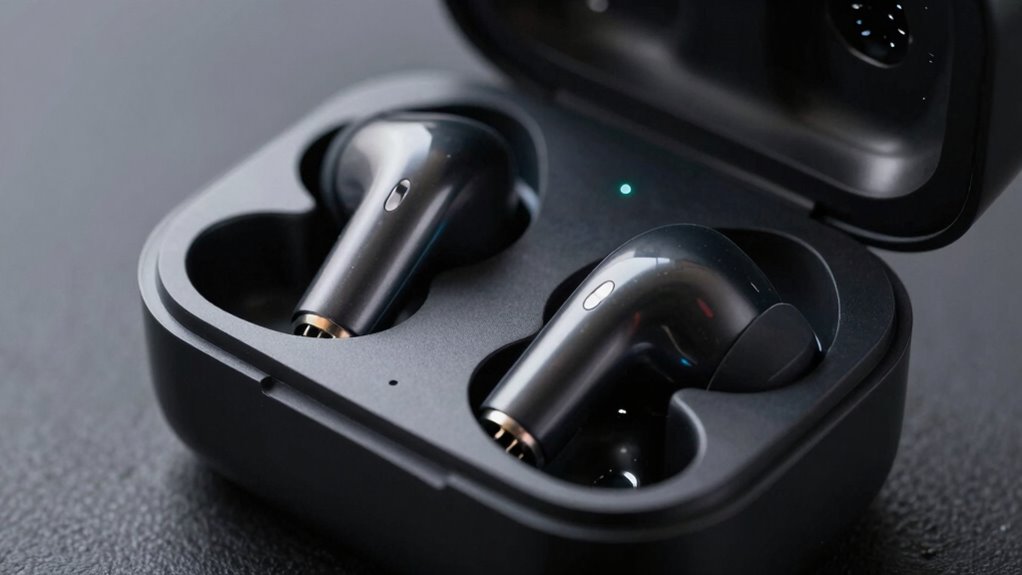
Ever wonder what’s happening inside a hearing aid charging case? When you insert your hearing aids, a complex process begins that’s designed to maximize battery longevity and guarantee your devices stay powered when you need them most. Inside the case, advanced charging technology works behind the scenes, managing how power flows into your hearing aids. Unlike traditional batteries that wear out over time, modern rechargeable hearing aids rely on sophisticated circuitry that carefully controls the charging process, protecting the batteries from overcharging and thermal damage. This careful regulation not only preserves battery health but also extends the overall lifespan of your hearing aids, saving you money and hassle in the long run.
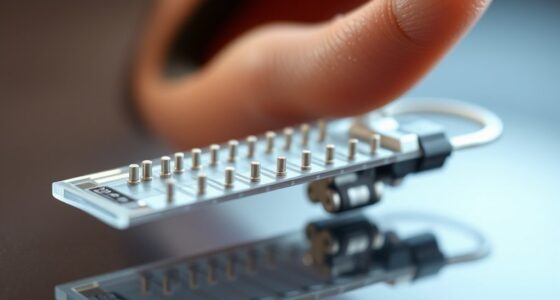
As you place your hearing aids into the case, tiny electrical contacts connect with the charging pins, signaling the device to start supplying power. The case contains a built-in power source—often a rechargeable battery or an external power supply—that provides energy to the hearing aids. Thanks to innovative charging technology, the process is quick and efficient; most cases can fully charge your hearing aids within a few hours, so you’re ready to go when you wake up. The case’s circuitry monitors the charging status, preventing overcharging, which can degrade battery health over time. This smart management assures that your hearing aids are always charged without unnecessary strain on the batteries, helping maintain their capacity and performance for years to come. Additionally, the integration of advanced charging circuitry ensures that the entire process is safe and reliable.
You might notice small LED indicators on your case that show the charging status. These lights help you understand whether your hearing aids are charging, fully charged, or if there’s an issue. The technology inside the case also manages heat, which is vital because excessive heat can harm the battery’s longevity. By controlling temperature and optimizing charge cycles, the case prolongs the life of your hearing aid batteries, making sure they retain their charge capacity longer. Proper battery maintenance, including avoiding extreme temperatures, is crucial for battery longevity and overall device performance. This is especially important for rechargeable hearing aids, as their overall performance heavily depends on how well the batteries are maintained.
Furthermore, the smart charging system inside the case often incorporates safety features like short circuit protection and temperature regulation to prevent damage during the charging process. In essence, the inside of a hearing aid charging case is a tiny but powerful hub of smart technology. It orchestrates the flow of energy, protects the batteries, and assures your hearing aids are always ready for daily use. The inclusion of battery management technology enhances the overall efficiency and safety of the charging process, providing peace of mind for users. This technology also helps optimize the charge cycles to reduce wear and tear on the batteries, ultimately extending their lifespan. The combination of advanced charging technology and attention to battery longevity means your hearing aids will perform reliably for years, reducing the need for frequent replacements. So, next time you pop your hearing aids into the case, remember that a sophisticated system is working tirelessly to keep your devices charged, healthy, and ready to support your hearing needs.
As an affiliate, we earn on qualifying purchases.
Frequently Asked Questions
How Long Does It Take to Fully Charge a Hearing Aid?
It typically takes around two hours to fully charge your hearing aid, but this can vary depending on the model. You’ll notice charging indicators that show when the device is connected and charging is complete. Proper charging extends battery longevity, ensuring your hearing aid performs efficiently. To maximize battery life, avoid overcharging and keep the case and device clean. Regularly check the indicators for a quick confirmation that your hearing aid is ready to use.
Can I Overcharge My Hearing Aids?
You don’t need to worry about overcharging your hearing aids; modern charging cases act like vigilant guardians, stopping power when the battery is full. Overcharging concerns are minimal, so your device’s battery lifespan remains intact, like a well-tended garden. As long as you follow the manufacturer’s guidelines, your hearing aids will stay healthy and ready to serve you, without the risk of damage from excess charging.
Are Charging Cases Compatible With All Hearing Aid Models?
Charging cases aren’t compatible with all hearing aid models. You need to check if your hearing aids support wireless connectivity with the case, as compatibility varies. Using an incompatible case can affect battery lifespan and charging efficiency. Always verify the model specifications before purchasing. Proper compatibility ensures your hearing aids charge reliably, maintains battery health, and provides seamless wireless connectivity for peak performance.
What Happens if My Hearing Aids Don’t Turn on After Charging?
If your hearing aids don’t turn on after charging, it might be due to a drained battery lifespan or a charging safety issue. First, confirm they’re properly seated in the case and fully charged. Sometimes, resetting the device or checking for debris can help. If problems persist, the battery might be worn out, or there could be a safety concern with the charging process. Consult your audiologist for further assistance.
How Often Should I Clean the Charging Contacts?
You should clean your hearing aid charging contacts at least once a week—ironic, isn’t it? Even with battery maintenance and charging best practices, dirt and debris can build up, hindering proper charging. Use a soft, dry cloth or a small brush to gently clean the contacts. Regular cleaning guarantees your hearing aids charge efficiently, saving you from unnecessary frustration and keeping your device ready whenever you need it most.
Conclusion
Now you know what’s happening inside your hearing aid charging case. It’s more than just a pretty box—it’s a mini power station that keeps your devices ready to go. With smart charging and dry storage, your hearing aids stay in top shape, so you can focus on what matters most. Remember, a well-charged hearing aid is your best friend in sound, ensuring you don’t miss a beat. Stay charged, stay connected!
Columbus Day / Indigenous Peoples' Day Picks
long weekend sales
As an affiliate, we earn on qualifying purchases.