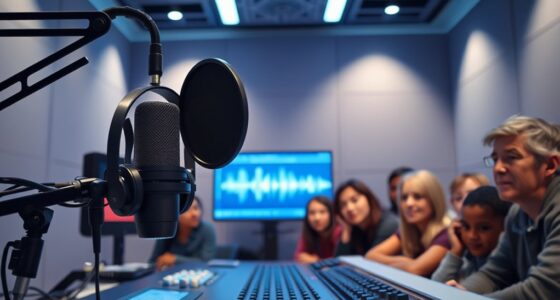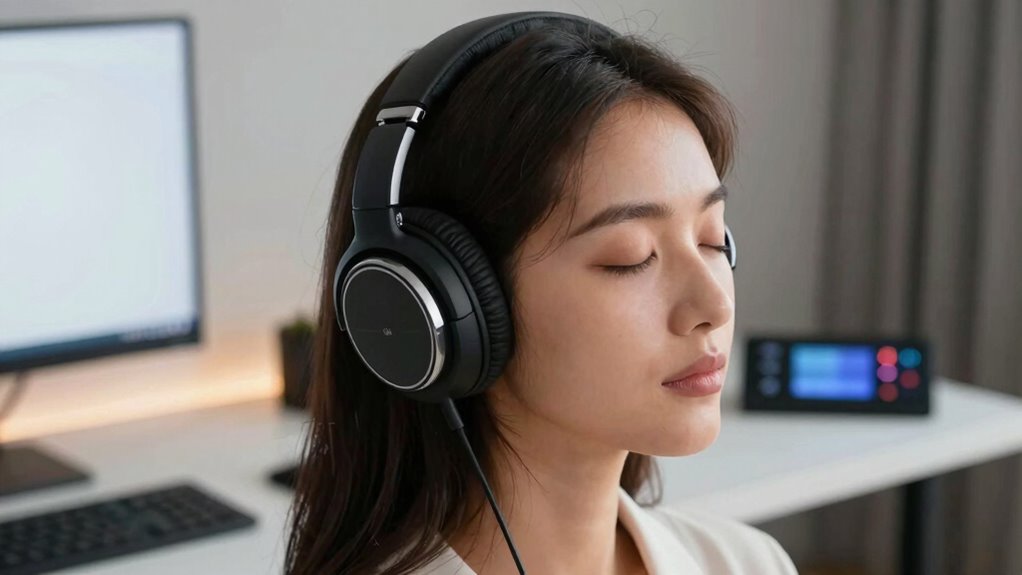

AI can greatly reduce your listening fatigue by improving audio clarity and filtering out background noise, making conversations easier to understand. It continuously adapts to your environment, ensuring consistent sound quality and reducing the mental effort needed to focus. Devices like smart headphones and hearing aids use AI to automatically tune into speech and minimize distractions. If you keep exploring, you’ll discover more about how AI transforms your listening experience and helps you stay comfortable longer.

Get everyday helpers delivered free with Prime
- Fast, free delivery on millions of items
- Prime Video, Amazon Music and more included
- Member-only deals all year
Key Takeaways
- AI improves speech clarity and reduces mental effort needed to understand conversations.
- AI-driven noise cancellation filters background sounds, creating quieter listening environments.
- Real-time adaptive processing adjusts audio dynamically to different environments and sounds.
- Embedded AI in hearing devices and headphones continuously tunes to minimize distractions.
- Overall, AI reduces listening fatigue by enhancing comfort, reducing strain, and improving audio quality.
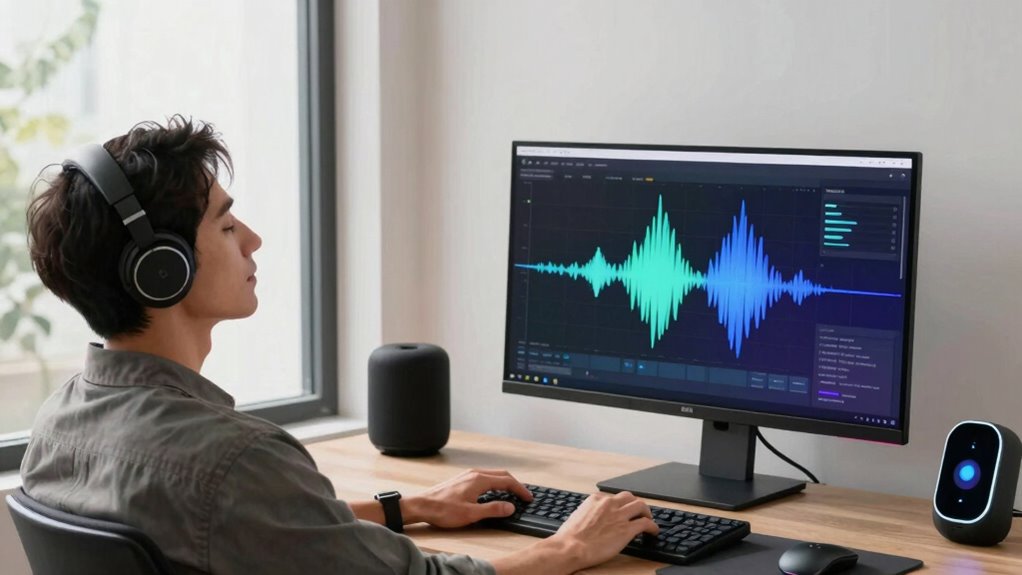
Listening fatigue can be a real challenge, especially during long conversations or hours of listening to audio content. It leaves you feeling drained, distracted, and sometimes even frustrated. Fortunately, artificial intelligence is making strides in helping you combat these issues. One of the essential ways AI can assist is through enhancing speech clarity. When audio is clear, your brain doesn’t need to work as hard to distinguish words from background sounds. AI-powered tools analyze the audio in real time, suppressing distortions and amplifying speech signals, so you can focus on what’s being said without straining to hear. This improved clarity reduces mental fatigue, making conversations feel more natural and less exhausting over time.
Alongside speech clarity, noise cancellation plays a vital role in fighting listening fatigue. Traditional noise-canceling headphones block out ambient sounds, but AI-driven noise cancellation takes it further. These systems actively analyze environmental sounds and selectively filter out background noise, allowing only the desired audio to pass through. Whether you’re in a noisy office, on a busy street, or in a crowded room, AI-enhanced noise cancellation creates a quieter listening environment. This means you don’t have to struggle with trying to decipher speech amid chaos, which is a major factor in fatigue. Instead, you get a cleaner, more focused audio stream that keeps your cognitive load manageable. Real-time audio analysis further enhances this process by dynamically adjusting to changing sounds and environments. Additionally, AI’s capability to adapt to complex auditory situations ensures that the listening experience remains effective across diverse scenarios. The integration of advanced audio processing in devices allows for smoother and more intuitive adjustments, further reducing listening effort. Incorporating machine learning algorithms enables these systems to improve their performance over time based on user feedback and environmental data.
Most AI applications for reducing listening fatigue are embedded in devices like smart headphones or hearing aids. These devices continuously adapt to changing surroundings, providing maximum speech clarity and noise cancellation without you having to adjust settings manually. As a result, you experience less mental effort during communication, whether it’s a virtual meeting or a simple phone call. The ability to automatically tune into the speaker’s voice while minimizing distracting sounds makes a significant difference in your overall listening experience. This seamless assistance means you can stay engaged longer without feeling drained.
While AI can’t eliminate all sources of fatigue, it undeniably helps reduce the strain caused by poor audio quality and noisy environments. By improving speech clarity and leveraging advanced noise cancellation, AI allows you to listen more comfortably and for extended periods. It’s not about replacing human interaction but making it easier for you to process and understand speech in diverse settings. Additionally, advancements in content analysis enable AI to adapt even better to complex auditory situations. In essence, AI is transforming how you experience audio, making listening less taxing and more natural.
As an affiliate, we earn on qualifying purchases.
Frequently Asked Questions
How Does AI Personalize Listening Experiences for Users?
AI personalizes your listening experience through music personalization and voice recognition. It analyzes your listening habits to recommend songs, playlists, or genres you enjoy, making each session uniquely tailored. Voice recognition allows you to control playback effortlessly and request specific tracks or artists. This combination guarantees your listening stays engaging and convenient, adapting to your preferences and making every moment of listening more enjoyable and less tiring.
Can AI Adapt to Different Hearing Impairments?
Yes, AI can adapt to different hearing impairments, transforming sound therapy and hearing customization. It analyzes your unique hearing profile, adjusting sound inputs in real-time to enhance clarity and comfort. This personalized approach not only reduces listening fatigue but also opens new possibilities for immersive audio experiences. As AI continues to evolve, you’ll find your hearing needs met more precisely, making every conversation or soundscape feel tailor-made just for you.
What Are the Privacy Concerns With AI in Audio Processing?
You should be aware that privacy concerns with AI in audio processing mainly revolve around data security and user consent. When AI collects and analyzes your audio data, there’s a risk of sensitive information being exposed or misused. That’s why ensuring proper data security measures and obtaining clear user consent are essential. You have the right to control your data, and developers must prioritize transparency to protect your privacy effectively.
How Accessible Are Ai-Powered Hearing Assistance Devices?
AI-powered hearing assistance devices are more accessible than ever, making hearing support feel like a breeze, as if you’re surrounded by a caring community. These devices incorporate features like music therapy and reduce cognitive load, helping you process sounds more effortlessly. With ongoing advancements, affordability and ease of use are improving, so you can confidently access these life-changing tools without hassle, enhancing your everyday listening experience profoundly.
Will AI Replace Human Audiologists in the Future?
AI won’t fully replace human audiologists in the future. While AI can improve sound quality and help diagnose hearing loss efficiently, it lacks the empathy and personalized care a human provides. You need an audiologist to interpret complex hearing loss cases, adjust devices, and offer emotional support. AI serves as a helpful tool, but human expertise remains essential for thorough hearing health, ensuring you get the best care tailored to your needs.
Conclusion
Imagine a world where AI is your gentle lighthouse, guiding you through the stormy seas of listening fatigue. It’s not just about technology; it’s about reclaiming your mental clarity and emotional balance. With AI’s help, you can navigate conversations and media with ease, avoiding the fog of exhaustion. So, as you stand on this new horizon, ask yourself: are you ready to let AI illuminate your path to better listening?
Halloween Picks
halloween
As an affiliate, we earn on qualifying purchases.