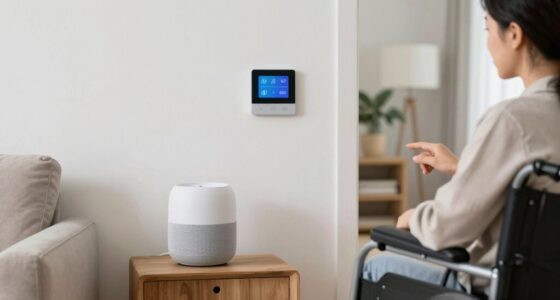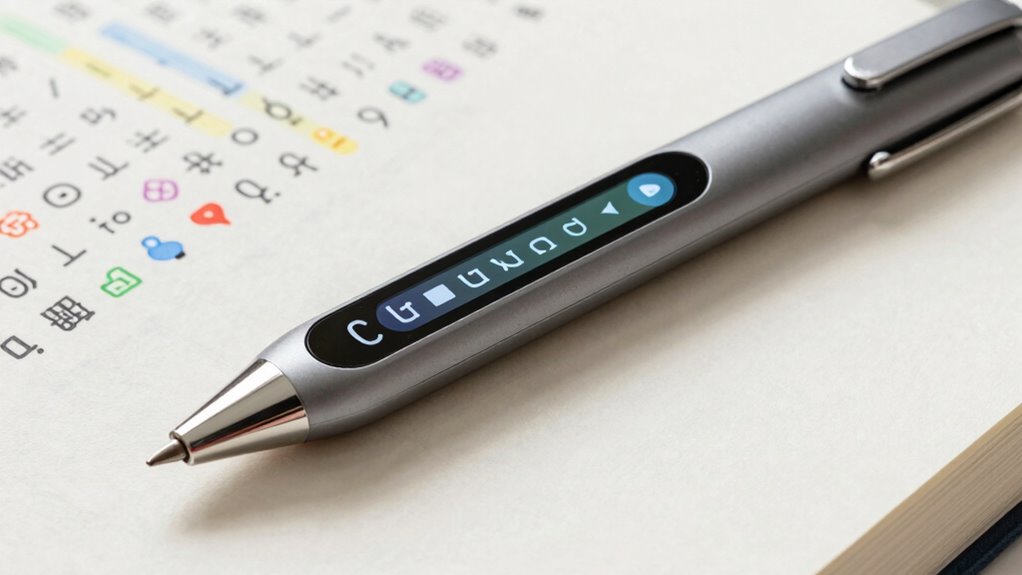

Translation pens and smart pens are essential tools that help you communicate more easily across languages and support diverse learning needs. They provide real-time translations, making it easier to understand signs, documents, and speech without bulky equipment or language barriers. These devices promote independence for people with disabilities and make travel, education, and daily interactions more inclusive. If you want to discover how these innovations can transform your experience and open new opportunities, keep exploring further.

Get everyday helpers delivered free with Prime
- Fast, free delivery on millions of items
- Prime Video, Amazon Music and more included
- Member-only deals all year
Key Takeaways
- Enable instant, real-time translations to assist multilingual communication and reduce language barriers.
- Support individuals with disabilities by reading aloud or digitizing handwritten notes.
- Enhance accessibility and independence for users with learning differences like dyslexia.
- Facilitate seamless navigation and understanding in travel and multicultural environments.
- Promote inclusive learning by offering personalized, alternative educational tools and aids.

Advancements in translation technology and smart pens are transforming accessibility for people with diverse language needs and disabilities. These tools are vital in breaking down language barriers that often hinder effective communication. When you encounter someone speaking a different language or struggle with written content, translation pens and smart pens can quickly bridge that gap, making information more accessible. They turn language barriers into manageable challenges, allowing you to understand and be understood more easily. This isn’t just about convenience; it’s about empowering you to participate fully in conversations, education, and daily activities without feeling excluded.
Assistive technology, like smart pens, plays a key role in supporting those with disabilities or learning differences. For example, if you have dyslexia or other reading difficulties, a smart pen can read text aloud or translate handwritten notes into digital formats, helping you process information more efficiently. These devices are designed to adapt to your needs, offering customized support that traditional tools simply can’t provide. They make reading, writing, and learning more accessible and less frustrating, giving you greater independence and confidence. As these devices become more intuitive and user-friendly, their impact on accessibility continues to grow. Additionally, ongoing developments in assistive technology are expanding the range of capabilities available to users, making these tools even more versatile.
Translation pens are especially valuable when you’re traveling or working in multicultural environments. They provide instant, real-time translations that can save you time and reduce misunderstandings. Instead of relying on bulky phrasebooks or waiting for someone to interpret, you can hold a smart pen over a sign, document, or spoken sentence and get immediate clarification. This instant feedback helps you navigate unfamiliar situations seamlessly, whether you’re ordering food abroad or attending international meetings. The convenience of these devices makes communication smoother and more natural, fostering connections that might otherwise be lost due to language differences. As real-time translation technology continues to improve, the accuracy and speed of these tools are also advancing, making them even more reliable in diverse settings.
Incorporating assistive technology like smart pens into your routine can also make educational settings more inclusive. Teachers and students benefit from tools that support diverse learning styles, enabling everyone to participate actively. For learners who struggle with traditional methods, these devices provide alternative ways to engage with material, whether through audio support, visual aids, or instant translations. This inclusivity helps reduce frustration and encourages a more equitable learning environment. As AI solutions continue to develop, their integration with smart devices promises even greater accessibility features, tailored to individual needs and preferences.
Ultimately, these innovations are about more than just technology—they’re about creating opportunities for everyone to communicate and learn without unnecessary obstacles. Whether you’re overcoming language barriers or supporting a disability, translation and smart pens serve as powerful tools that promote accessibility, independence, and connection. By integrating these assistive technologies into your daily life, you’re taking meaningful steps toward a more inclusive world.
translation pen real-time language translator
As an affiliate, we earn on qualifying purchases.
As an affiliate, we earn on qualifying purchases.
Frequently Asked Questions
How Do Translation Pens Handle Idiomatic Expressions?
Translation pens handle idiomatic expressions by analyzing cultural nuances and context to provide accurate translations. They often rely on advanced algorithms and databases that recognize idioms, ensuring you get a translation that makes sense culturally and contextually. While they’re not perfect, these pens improve understanding by capturing the essence of idiomatic phrases, helping you communicate more effectively across language barriers and preserving the intended meaning in different cultural settings.
Can Smart Pens Be Used for Real-Time Communication?
Yes, smart pens can be used for real-time communication. They often feature automatic transcription, converting spoken words into text instantly, and voice synchronization, ensuring your speech aligns seamlessly with digital notes. This makes conversations clearer and more efficient, especially for individuals with hearing or speech challenges. By capturing and displaying speech instantly, smart pens facilitate smoother, more accessible interactions, empowering you to communicate effectively in various settings.
Are Translation Pens Effective for Sign Language Translation?
Back in the day, who would’ve thought tech would bridge communication gaps? Translation pens can be quite effective for sign language translation by utilizing gesture recognition technology. They interpret hand movements and display the corresponding signs on a visual display, helping bridge the communication gap for the deaf and hard-of-hearing community. While not perfect, they offer a promising tool to foster understanding and inclusivity in everyday interactions.
What Languages Do Smart Pens Typically Support?
Smart pens typically support a variety of languages, allowing for language customization to suit your needs. They often feature intuitive user interfaces that make switching between languages seamless. You can usually find support for major languages like English, Spanish, French, Chinese, and more, depending on the device. This flexibility helps guarantee effective communication and learning, especially when you need to use the pen across different languages or regions.
How Durable Are Translation and Smart Pens for Daily Use?
Translation and smart pens are quite durable for daily use, thanks to solid build quality. They typically feature strong casing that withstands everyday wear and tear. Battery life varies but generally lasts several hours, enough for extended use without frequent recharging. With proper care, these pens can handle daily tasks reliably, making them essential tools for accessibility, language learning, and communication in various settings.
Conclusion
In today’s world, translation and smart pens are game-changers, making information accessible to everyone—think of them as your trusty sidekick, like Robin to Batman. They break down language barriers and help you navigate the digital age with ease. Just like the invention of the wheel revolutionized travel, these pens revolutionize learning and communication. Embrace this tech, and you’ll find that accessibility isn’t just a dream but a reality—no flux capacitor needed!
Halloween Picks
halloween
As an affiliate, we earn on qualifying purchases.