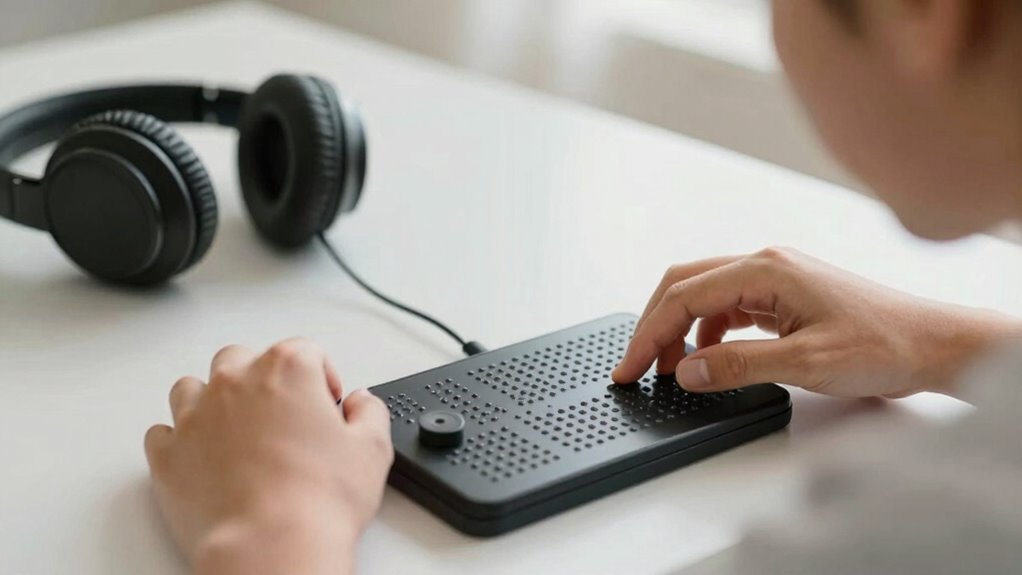

As a deafblind user, you can combine Braille and audio tools to stay connected and independent. You switch seamlessly between tactile reading on Braille displays and listening through speech synthesizers or specialized headphones. This flexibility helps you access detailed information or quick updates based on your environment or preference. By integrating these tools, you enhance your communication and daily interactions. Keep exploring, and you’ll discover even more ways these technologies support your needs.
Key Takeaways
- DeafBlind users switch seamlessly between Braille displays and audio devices based on their environment and information needs.
- Assistive technology integrates tactile Braille output with spoken audio for comprehensive communication.
- Users toggle between modes to access detailed documents via Braille or listen to spoken content.
- Devices support multimodal interaction, enabling independent navigation and information processing.
- Combining tactile and auditory tools enhances overall accessibility and communication effectiveness.
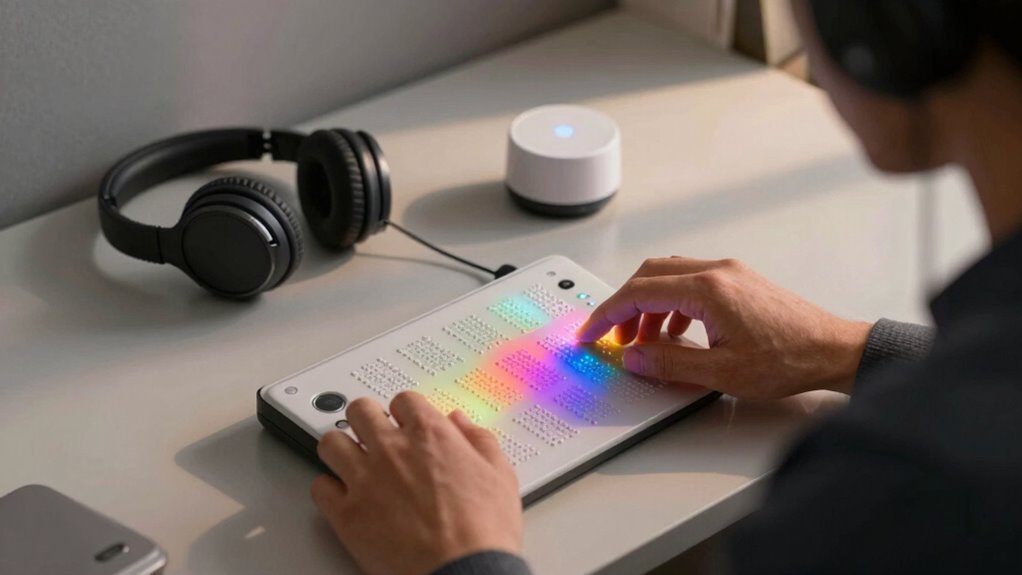
For DeafBlind users, combining Braille and audio tools creates a seamless way to access information and communicate effectively. This approach relies on assistive technology designed specifically for your unique needs, blending tactile and auditory methods to maximize independence. You might use Braille displays to read text through raised dots that you can feel with your fingertips, while audio devices like specialized headphones or speakers deliver spoken information. This dual setup allows you to switch effortlessly between tactile reading and listening, depending on the situation or your preference at any given moment.
Your communication methods become more flexible with this integrated approach. When you need to read detailed documents or access written content, Braille displays enable you to feel the information directly. These devices convert digital text into tactile output, giving you immediate access without relying solely on audio. Conversely, when you want to listen to a conversation or an announcement, audio tools like screen readers or speech synthesis devices come into play. They convert text into speech, allowing you to comprehend spoken language without visual cues. By combining these methods, you gain more control over how you receive and process information, making everyday tasks more manageable.
Using assistive technology effectively requires understanding how to coordinate these tools. You may use a Braille note-taker or a portable Braille display for reading emails, books, or menus, then switch to headphones connected to a speech synthesizer when someone speaks to you or when you’re in a noisy environment. Many devices now integrate both functions, letting you toggle between tactile and auditory modes with ease. This flexibility means you’re not limited to one method, and you can adapt your approach based on your environment, the complexity of information, or your personal preference. Assistive technology plays a crucial role in enabling this seamless integration, helping users maximize their independence and accessibility. Additionally, ongoing advancements in multimodal communication are expanding the ways DeafBlind users can engage with digital content, especially as adaptive technology continues to evolve rapidly. Understanding how these tools work together can enhance accessibility and improve overall user experience.
Understanding these technologies can also improve user independence, making daily interactions more intuitive and self-sufficient. Your ability to communicate with others also improves through this combination. For example, you might read a message in Braille to understand its content fully or listen to a spoken reply from someone else. Voice output devices can read documents aloud, while Braille displays provide detailed tactile feedback for more in-depth reading. This synergy between assistive technology and communication methods ensures you stay connected, informed, and independent. It’s a tailored approach that respects your needs, making everyday interactions smoother and more natural. In brief, blending Braille and audio tools creates an all-encompassing system that enhances your ability to navigate the world, empowering you with multiple ways to access information and communicate effectively.
As an affiliate, we earn on qualifying purchases.
Frequently Asked Questions
How Do Deafblind Users Choose Between Braille and Audio Tools?
You choose between braille and audio tools based on your tactile feedback needs and sensory adaptation. If you prefer direct, tactile information, you lean toward braille. When auditory input suits your sensory preferences better, you opt for audio tools. Your decision depends on how your senses adapt to different stimuli, allowing you to access information comfortably and efficiently. You may also switch between them depending on your environment and the task at hand.
What Training Is Needed to Effectively Use Both Tools Together?
Think of it as learning to dance; you need practice and coordination. You’ll require training in tactile feedback to interpret Braille and audio cues effectively. Cognitive adaptation is key—training helps your brain integrate both tools seamlessly. You might take specialized courses, work with orientation and mobility specialists, or join support groups. Over time, this practice will help you confidently switch between or combine Braille and audio, making communication smoother and more natural.
Are There Specific Brands or Devices Recommended for Deafblind Users?
You should look into trusted assistive technology brands like HumanWare and Freedom Scientific, which offer devices tailored for deafblind users. These devices often combine tactile Braille displays with audio options, enhancing communication strategies. When choosing, consider your specific needs, such as portability or compatibility with other tools. Training on how to operate these devices is essential, ensuring you can effectively integrate Braille and audio features for seamless communication.
How Do Users Manage Situations Without Access to Both Tools?
When both tools aren’t available, you rely on tactile navigation and sensory adaptation. You might use your fingertips to feel environmental cues or textured surfaces, helping you orient yourself. You develop heightened awareness of sound, touch, and vibrations to gather information. This sensory adaptation allows you to navigate safely and effectively, even without digital or Braille aids. Over time, your heightened senses become essential for independence in diverse situations.
What Challenges Do Users Face When Integrating Braille and Audio Technologies?
You might think integrating braille and audio technologies is straightforward, but tactile feedback can sometimes be inconsistent, making it hard to trust what you feel or hear. This can lead to cognitive overload, as your brain works harder to process two different information streams simultaneously. Despite the challenges, with proper training and adaptive tools, you can effectively balance both, enhancing your independence and ensuring clear communication.
Conclusion
You now understand how deafblind users effectively combine braille and audio tools to stay connected and access information. Remarkably, studies show that over 70% of deafblind individuals prefer using a mix of tactile and auditory methods, highlighting the importance of personalized approaches. By embracing both technologies, they enhance independence and communication. Remember, these adaptive strategies continue to evolve, empowering more people to navigate the world with confidence and resilience.