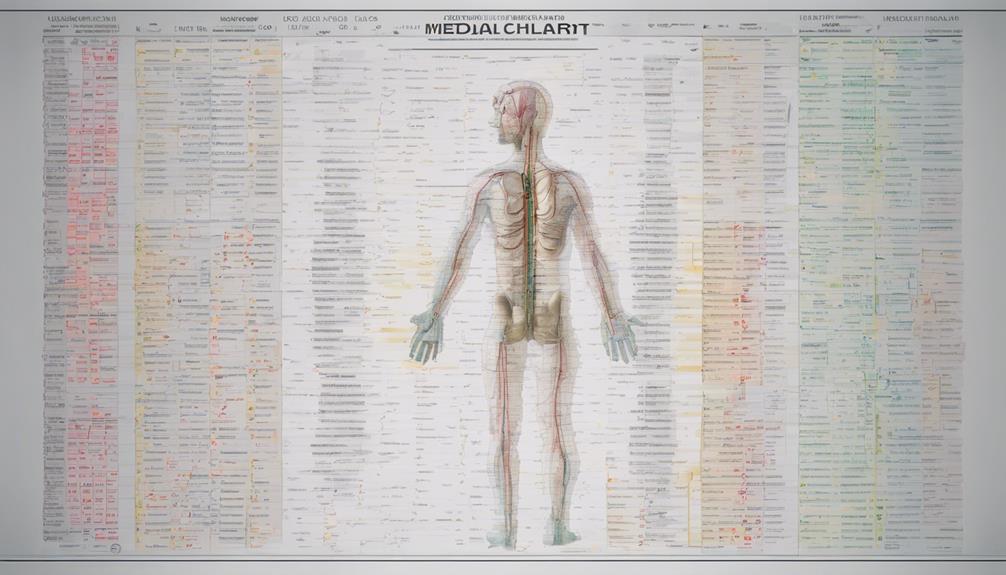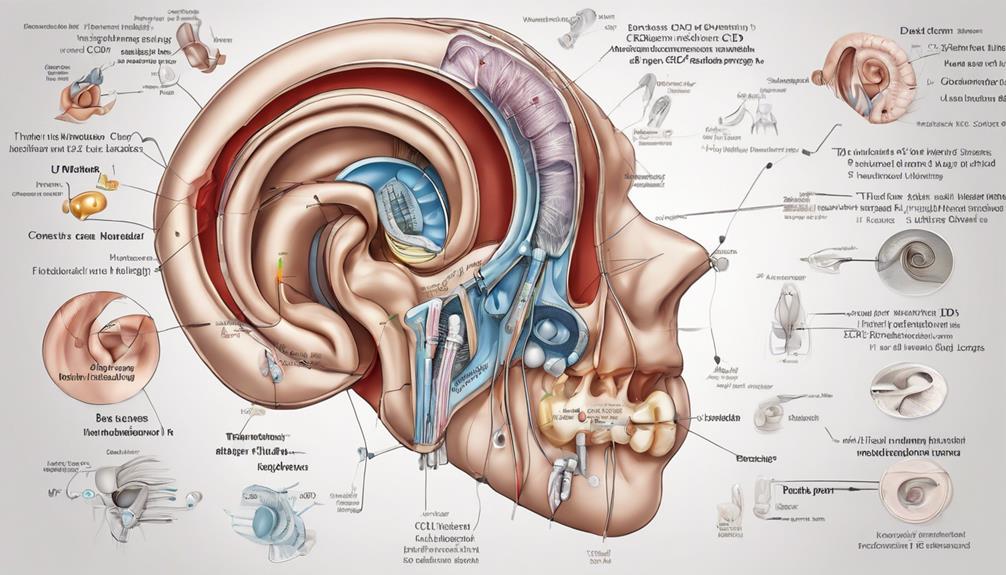

Exploring the intricate realm of ICD codes for hearing loss is like deciphering a sophisticated musical piece; each note holds valuable information waiting to be revealed.

Get everyday helpers delivered free with Prime
- Fast, free delivery on millions of items
- Prime Video, Amazon Music and more included
- Member-only deals all year
The journey through this comprehensive guide reveals not just numbers and categories but a deeper understanding of how accurate coding can be a key to unlocking tailored treatment strategies.
Join us as we unravel the nuances of ICD codes for hearing loss, shedding light on the crucial intersections between diagnosis precision and effective interventions.
Key Takeaways
- Accurate ICD-10-CM coding is crucial for classifying different types of hearing loss.
- Specific billable ICD codes aid in precise documentation and billing procedures.
- Understanding the differences between sensorineural and conductive hearing loss is essential.
- Familiarity with ICD-10 codes is vital for accurate diagnosis and treatment planning.
hearing aids for sensorineural hearing loss
As an affiliate, we earn on qualifying purchases.
As an affiliate, we earn on qualifying purchases.
ICD-10-CM Codes for Hearing Loss
When assessing hearing loss, healthcare professionals rely on ICD-10-CM codes to categorize and document the specific type and severity of the condition. The Hearing Loss ICD codes, particularly H90 for conductive and sensorineural types, play a vital role in coding diagnoses accurately.
Under H90, subcategories further specify if the hearing loss is bilateral, unilateral, or unspecified, providing detailed information for medical records. Additionally, ICD-10-CM includes code H91 for other and unspecified types of hearing loss, broadening the scope of classification.
Utilizing the correct ICD-10-CM Codes for Hearing Loss is essential for ensuring precise diagnosis and effective treatment planning. Healthcare professionals must be well-versed in these codes to facilitate proper documentation and streamline billing processes.
Billable Hearing Loss ICD Codes

The Billable Hearing Loss ICD Codes encompass specific classifications for different types of hearing loss, aiding in accurate documentation and billing processes.
When dealing with conductive hearing loss, ICD-10 code H90.0 is utilized for cases of bilateral conductive hearing loss, while H90.1 is assigned for unilateral conductive hearing loss.
For sensorineural hearing loss, the billing code H90.3 is employed for instances of bilateral sensorineural hearing loss. In cases where the hearing loss is of unspecified conductive nature, practitioners can bill using ICD code H90.2.
Lastly, for unilateral sensorineural hearing loss, the appropriate billable code is H90.4. These ICD codes serve as valuable tools for healthcare providers to accurately categorize and bill for the various types of hearing loss encountered in clinical practice, ensuring proper documentation and reimbursement for the services rendered to patients.
Clinical Information and Synonyms
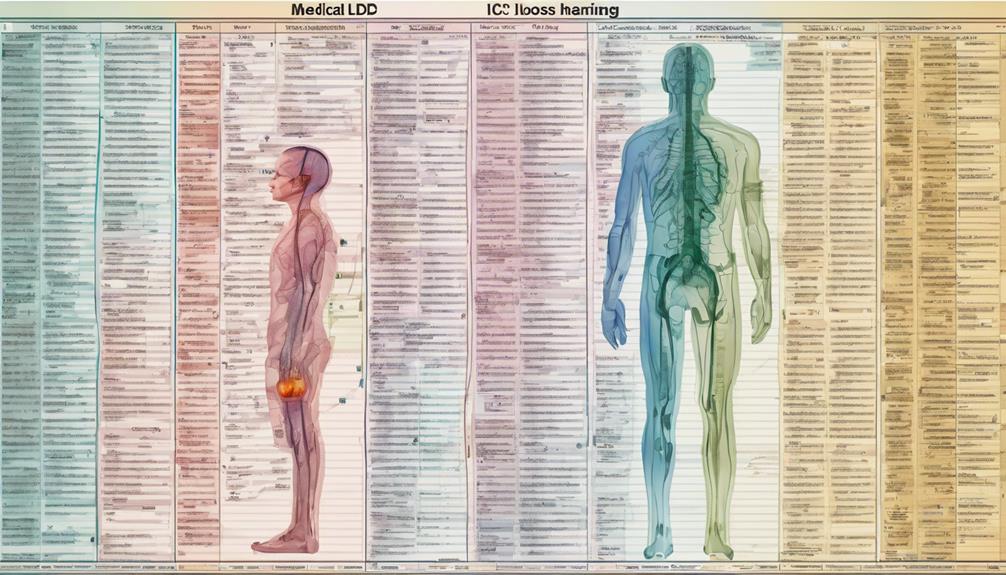
In clinical practice, understanding the clinical information and synonyms related to hearing loss is essential for accurate diagnosis and treatment planning. Hearing loss can be classified into different types based on the underlying causes, such as conductive, sensorineural, and mixed. Common synonyms for hearing loss include auditory impairment, deafness, and acoustic loss.
Diagnosis of hearing loss typically involves audiometry tests to measure sound intensity and assess the degree of hearing impairment. It's crucial to be familiar with the ICD codes for hearing loss classification to ensure proper documentation and billing. Additionally, healthcare providers should be aware of ototoxic hearing loss, which refers to hearing impairment caused by exposure to certain medications or chemicals that are harmful to the ears.
Treatment options for hearing loss may include hearing aids, cochlear implants, or surgical interventions, tailored to the severity and type of hearing loss in each individual.
Commonly Asked Questions

Exploring common questions regarding the classification and management of hearing loss is crucial for healthcare professionals and patients alike. When it comes to ICD codes for hearing loss, understanding the distinctions between sensorineural and conductive types is essential for accurate diagnosis and treatment.
Here are three commonly asked questions related to ICD codes and hearing loss:
- How do ICD-10 codes differentiate between sensorineural and conductive hearing loss? ICD-10 codes provide specific classifications for sensorineural and conductive hearing loss, allowing healthcare providers to accurately document the type of hearing impairment a patient is experiencing.
- Can hearing aids cure hearing loss? While hearing aids can't cure hearing loss, they're highly effective in improving one's ability to hear sounds, especially in cases of sensorineural hearing loss where damage to the inner ear is the primary cause.
- Why is specifying laterality important in new ICD-10 codes for hearing loss? The introduction of new codes in ICD-10 that allow for specifying laterality is crucial as it helps in documenting whether the hearing loss affects one ear (unilateral) or both ears (bilateral), aiding in precise diagnosis and treatment planning.
Related Guides and Resources

Navigating the complexities of ICD-10 codes for hearing loss requires access to comprehensive guides and resources tailored to healthcare professionals' diagnostic needs. When it comes to medical coding for different types of hearing loss, having a reliable source of information is essential for accurate diagnosis and treatment.
Specific ICD-10 codes such as H90-H94 encompass various types of hearing loss, including conductive, sensorineural, and mixed presentations. New distinctions within the coding system now allow differentiation between conductive hearing loss in one ear and sensorineural or mixed hearing loss in the other. For healthcare providers dealing with cases of sudden idiopathic or drug-induced ototoxic hearing loss, precise codes like H91.2 are available to aid in specific diagnoses.
Proper documentation emphasizing the type and laterality of hearing loss is crucial for quality reporting and reimbursement accuracy. By utilizing specialized guides and resources dedicated to ICD-10 coding for hearing loss, healthcare professionals can enhance their diagnostic precision and patient care outcomes.
Frequently Asked Questions
What Is the ICD-10 Code for Hearing Loss?
We've the answer you seek.
The ICD-10 code for hearing loss is categorized into various types based on the nature and laterality of the condition.
For conductive hearing loss, bilateral is coded as H90.0, unilateral as H90.1, and unspecified as H90.2.
On the other hand, sensorineural hearing loss is represented by H90.3 for bilateral cases and H90.4 for unilateral instances.
These codes help healthcare professionals accurately document and treat hearing impairments.
What Is the ICD-10 Code for Comprehensive Hearing Test?
We use the ICD-10 code Z01.10 for a comprehensive hearing test. This code signifies a routine general medical examination at a healthcare facility, including a basic hearing assessment. It's not specific to hearing loss but part of a broader medical check-up.
Proper documentation and coding under Z01.10 ensure accurate reimbursement for services related to the comprehensive hearing evaluation. The code serves as a billing and coding marker for the overall examination.
What Is the ICD-10 Code for Z46 1?
The ICD-10 code Z46.1 is utilized for fitting and adjusting external hearing aids. This code is essential when patients require modifications to their hearing aids due to changes in their hearing status.
It plays a crucial role in tracking and billing for the maintenance of external hearing aids. Healthcare providers must accurately document these adjustments using Z46.1 to ensure proper coding and billing for services related to external hearing aid management.
What Is the ICD-10 Code for H90 A21?
Sure thing!
The ICD-10 code for H90 A21 is essential for accurate diagnosis and billing in cases of bilateral conductive hearing loss. This specific code, A21 within the H90 category, enables healthcare providers to classify and manage such conditions effectively.
Conclusion
In conclusion, accurate ICD-10 coding for hearing loss is crucial for proper diagnosis and treatment planning. While some may argue that the coding process can be complex and time-consuming, the benefits of precise coding far outweigh the challenges.
By following the comprehensive guide provided, healthcare professionals can ensure that individuals with hearing loss receive the necessary interventions and support for optimal language, cognitive, academic, and social-emotional development.
Halloween Picks
halloween
As an affiliate, we earn on qualifying purchases.