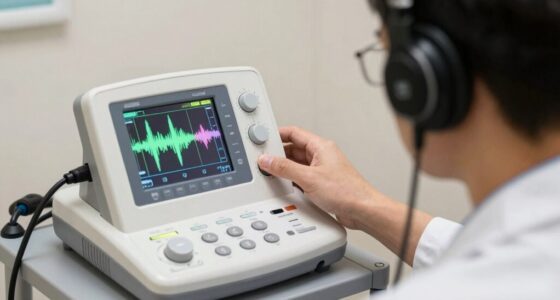

Word recognition scores show how well you understand spoken words in quiet settings, indicating speech clarity and device effectiveness. They are expressed as a percentage, with higher scores meaning better comprehension. These scores help your audiologist assess hearing abilities beyond just detecting sounds, guide adjustments to hearing devices, and set realistic expectations for improvement. If you’re curious about what these scores reveal about your hearing, keep exploring to learn more.
Key Takeaways
- Word Recognition Scores indicate how well a person understands spoken words, not just their ability to hear sounds.
- Higher scores reflect better speech clarity and communication effectiveness with hearing devices.
- Scores help audiologists evaluate hearing device performance and identify areas needing improvement.
- They serve as a baseline to track progress and guide adjustments or additional training.
- Scores are influenced by auditory processing and overall hearing health, impacting real-world speech comprehension.
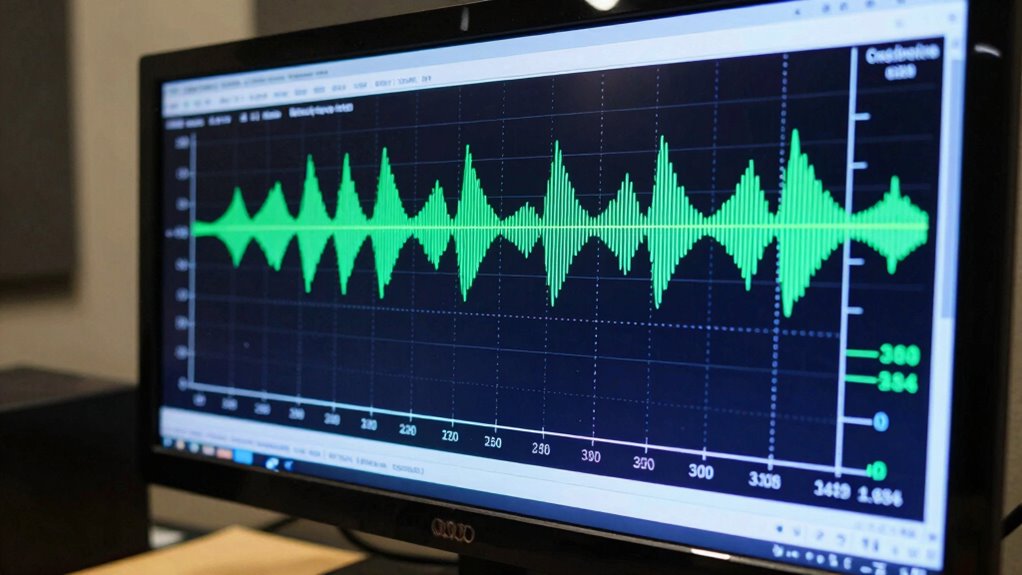
Have you ever wondered how well you can understand speech through a hearing aid or cochlear implant? One way to gauge this is through word recognition scores, which measure how accurately you can identify spoken words in a quiet setting. These scores are essential because they give you a clear indication of your speech clarity and how effectively your hearing devices are working. When you undergo an audiologist evaluation, the professional will test your word recognition to determine your current abilities and to help tailor your hearing solutions. It’s not just about whether you can hear sounds, but how well you can understand what’s being said.
Your word recognition scores are usually expressed as a percentage, with higher scores indicating better speech comprehension. For example, a score of 90% suggests you correctly identify most words, whereas a lower score might mean you’re missing critical parts of speech. These scores are indispensable for understanding your real-world hearing ability, especially in situations where speech clarity is essential, like conversations at a busy restaurant or a noisy gathering. They also help audiologists decide if your current hearing aids or cochlear implants are effective or if adjustments are needed to improve your understanding. Hearing assessment results can provide valuable context for interpreting these scores accurately.
Higher word recognition scores indicate better speech understanding and help assess hearing device effectiveness in real-world situations.
During an audiologist evaluation, you’ll listen to a series of words played through specialized equipment. You’ll be asked to repeat what you hear, and your responses are scored. This test isolates your ability to recognize speech, independent of other sounds. It’s a straightforward yet powerful way to assess your auditory processing skills. Your scores can reveal whether your hearing loss impacts your ability to distinguish different words or if your hearing devices are providing ideal support. If your scores are lower than expected, your audiologist might recommend adjustments or additional training to boost your speech clarity. It’s also important to understand that auditory processing plays a key role in how well you recognize words, especially in challenging listening environments. In addition, hearing health can influence your overall ability to process and interpret speech sounds.
Understanding what your word recognition scores mean helps you set realistic expectations and guides your treatment plan. They also serve as a baseline for tracking your progress over time. If your scores improve after adjustments or therapy, you’ll see tangible evidence of your hearing abilities getting better. Conversely, if scores stay low, it may indicate the need for alternative strategies or additional support. Ultimately, these scores are an essential piece of the puzzle in achieving clearer communication and better quality of life. Your audiologist’s insights from the evaluation help guarantee you’re getting the most out of your hearing devices and that your speech understanding continues to improve. Recognizing the importance of word recognition scores can help you better understand your hearing health and the effectiveness of your hearing solutions.
hearing aid word recognition test
As an affiliate, we earn on qualifying purchases.
As an affiliate, we earn on qualifying purchases.
Frequently Asked Questions
How Are Word Recognition Scores Calculated?
You calculate word recognition scores by testing your ability to identify words in speech, often using phoneme segmentation tasks. During the test, you listen to words and repeat or select them, which measures your speech clarity. The score reflects the percentage of words correctly recognized, indicating your overall speech understanding. This process helps audiologists assess your hearing and speech processing skills, providing insights into areas needing improvement.
Do Word Recognition Scores Change Over Time?
Yes, your word recognition scores can change over time. Factors like speech therapy or adjustments to hearing aids might improve your ability to understand speech. Regular check-ups help monitor these scores, guaranteeing your hearing devices are working effectively. If your scores decline or fluctuate, it might be time to revisit your hearing plan with your audiologist. Staying proactive ensures you get the most from your hearing aids and speech therapy.
Can Training Improve My Word Recognition Scores?
Yes, training can improve your word recognition scores. Studies show that after auditory training or speech therapy, many individuals see significant gains—sometimes improving by 20% or more. Engaging in targeted exercises helps your brain better interpret speech sounds, especially with consistent practice. So, if you’re looking to boost your scores, participating in auditory training or speech therapy can make a real difference in your ability to understand speech.
What Factors Influence Word Recognition Test Results?
Your word recognition test results are influenced by factors like auditory processing, which affects how well your brain interprets sounds, and cognitive factors, such as attention and memory. If your auditory processing is efficient, you’re likely to recognize words more accurately. Cognitive factors also play a role; if your focus is sharp and your memory strong, your scores tend to improve. Addressing these areas can help enhance your overall recognition performance.
Are Word Recognition Scores the Same for Everyone?
No, word recognition scores aren’t the same for everyone. Your results depend on factors like hearing ability, age, and language skills, which influence your contextual understanding and emotional impact when processing words. These elements shape how well you recognize speech in different situations. So, your score reflects your unique hearing profile and experiences, making it different from others’ scores, even if they have similar hearing thresholds.
Conclusion
Remember, don’t judge a book by its cover—your word recognition scores are just one piece of the puzzle. They give you valuable insight into your hearing, but they don’t define your overall ability. Keep working with your audiologist, stay patient, and trust the process. As the saying goes, “Every cloud has a silver lining.” With time and effort, you’ll continue to improve and understand your hearing health better.