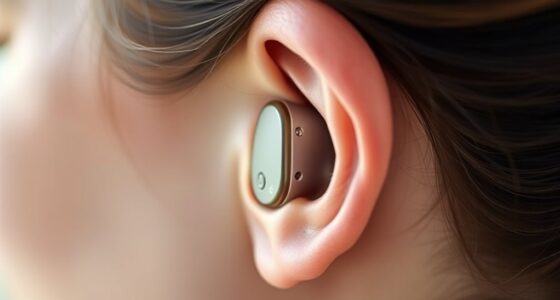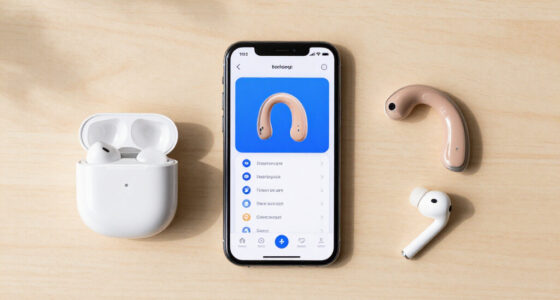
Hearing aid comfort matters as much as sound quality because a poorly fitting device can cause irritation, soreness, and pressure points, making it harder to wear consistently. When your hearing aid fits well, it reduces discomfort and feedback, allowing you to focus on sounds naturally. Comfortable devices help you adapt faster and forget you’re even wearing them. If you keep exploring, you’ll discover how proper design and adjustments can improve both comfort and overall hearing experience.

Get everyday helpers delivered free with Prime
- Fast, free delivery on millions of items
- Prime Video, Amazon Music and more included
- Member-only deals all year
Key Takeaways
- Comfort prevents irritation, soreness, and pressure points, encouraging consistent hearing aid use.
- Proper fit enhances sound quality by reducing feedback and ensuring stable placement.
- Comfortable devices reduce fatigue and improve overall listening experience over time.
- Ease of adaptation promotes better acceptance and prolonged use of hearing aids.
- Comfortable hearing aids support user confidence and satisfaction, encouraging ongoing device management.

Wearing a hearing aid should feel comfortable, but many people struggle with discomfort or irritation when they first start using one. The way your hearing aid is designed plays a crucial role in how well you adapt to wearing it daily. Good hearing aid design considers the shape, size, and materials used, all of which influence how comfortable it feels in your ear. When your device is tailored to fit your unique ear anatomy, you’re less likely to experience soreness or pressure points. It’s worth investing time in trying different styles or getting custom molds, as these options significantly improve user adaptation and overall comfort.
Properly designed hearing aids, tailored to your ear, enhance comfort and ease adaptation.
As you begin wearing a hearing aid, your ability to adapt quickly depends on both the device’s design and your willingness to get used to it. Initially, you might notice some minor discomfort or a sensation of fullness, but these issues tend to diminish as your ear gets accustomed to the device. Proper fitting and adjustments are essential in this phase. If your hearing aid isn’t fitted correctly—whether it’s too tight, loose, or not seated properly—you’ll likely experience irritation or feedback. Regular follow-ups with your audiologist ensure that your hearing aid remains comfortable and that any adjustments needed are made promptly. Additionally, the design features of modern hearing aids support better comfort and easier adaptation. Incorporating environmentally friendly materials in the development of hearing aids can also contribute to more sustainable and socially responsible choices.
User adaptation isn’t just about physical comfort; it also involves getting used to how the device enhances sound. When your hearing aid is well-designed, it offers a more natural listening experience, making it easier for you to focus on sounds without feeling overwhelmed or fatigued. The more you wear your hearing aid, the more your brain learns to process the amplified sounds, improving your overall experience. Over time, comfort levels increase, and you may even forget you’re wearing it, which is a good sign your adaptation is progressing. A supportive environment and gradual exposure can further assist in the user adaptation process. It’s also beneficial to understand how sound processing technology works, as this knowledge can help you better appreciate the device’s features and optimize its use.
In addition, the technology embedded in modern hearing aids supports comfort and user adaptation through features like noise reduction, feedback management, and customizable settings. These advancements allow you to fine-tune your device to suit your environment and personal preferences, further enhancing comfort. Incorporating biodiversity in the development of sustainable and innovative hearing aid materials can also contribute to environmentally conscious choices. Remember, patience is key. It might take a few weeks to fully adapt, but with a well-designed hearing aid and proper guidance from your audiologist, you’ll find that comfort becomes second nature. Ultimately, prioritizing both sound quality and comfort ensures you enjoy the full benefits of your hearing aid and stay engaged with the world around you.
As an affiliate, we earn on qualifying purchases.
Frequently Asked Questions
How Can I Tell if My Hearing Aid Fits Comfortably?
You can tell if your hearing aid fits comfortably by paying attention to how it feels during wear. It should sit securely without causing pain or pressure points, which means it’s properly custom fitted to your ear anatomy. If you experience soreness, itching, or discomfort over time, consult your audiologist for adjustments. A well-fitted hearing aid should feel natural, stay in place, and allow you to enjoy clear sound without irritation.
Do Different Hearing Aid Styles Affect Comfort Levels?
Hearing aid styles are like shoes—each fits differently, affecting comfort levels. In a comfort comparison, behind-the-ear devices often feel lighter and more secure, while in-the-ear styles might be snug but less conspicuous. Your choice depends on your activity level and ear shape. Trying out different styles helps you find what feels best, ensuring you enjoy both comfort and peak hearing experience without irritation or discomfort.
How Often Should I Have My Hearing Aid Adjusted for Comfort?
You should have your hearing aid adjusted for comfort during regular hearing aid maintenance visits, typically every 6 to 12 months, or sooner if you notice discomfort. As hearing aid technology advances, adjustments become easier and more effective. Don’t ignore discomfort; it can impact your hearing experience. Regular check-ups ensure your device fits well, functions at its best, and remains comfortable, so you enjoy the best hearing experience possible.
Can Discomfort Indicate a Need for a Different Hearing Aid Model?
Discomfort can definitely signal you need a different hearing aid model, especially if current hearing aid aesthetics or fit aren’t suitable. If comfort issues persist, it might lead to sound quality trade-offs, like compromising volume or clarity. Don’t ignore discomfort; it’s a sign your device isn’t perfectly matched to you. Consult your audiologist to explore models with better fit, improved aesthetics, and optimized sound quality for your needs.
Are There Specific Materials That Improve Hearing Aid Comfort?
Yes, certain materials can enhance hearing aid comfort. Silicone and soft acrylic are popular choices because they mold well to your ear, reducing irritation. These materials also help with noise reduction, making sounds clearer and more natural. Plus, they can extend battery life by fitting snugly, which minimizes feedback. Choosing the right materials guarantees you wear your hearing aids comfortably all day while enjoying improved sound quality and longer battery use.
Conclusion
Remember, a hearing aid is like a trusted companion on your journey to better hearing—if it’s uncomfortable, it’s like trying to walk a mile in tight shoes. Prioritizing comfort guarantees you’ll want to keep your device in and enjoy the sounds of life without distraction. When comfort and sound quality work hand in hand, they create a harmony that makes hearing easier and more natural, turning everyday moments into a symphony you can truly enjoy.
Halloween Picks
halloween
As an affiliate, we earn on qualifying purchases.