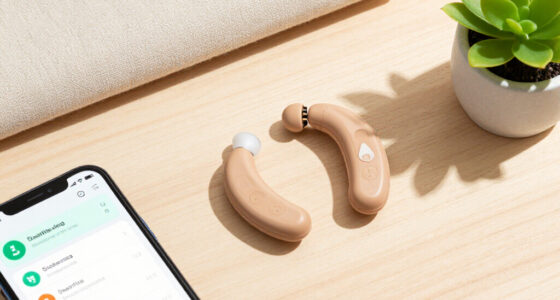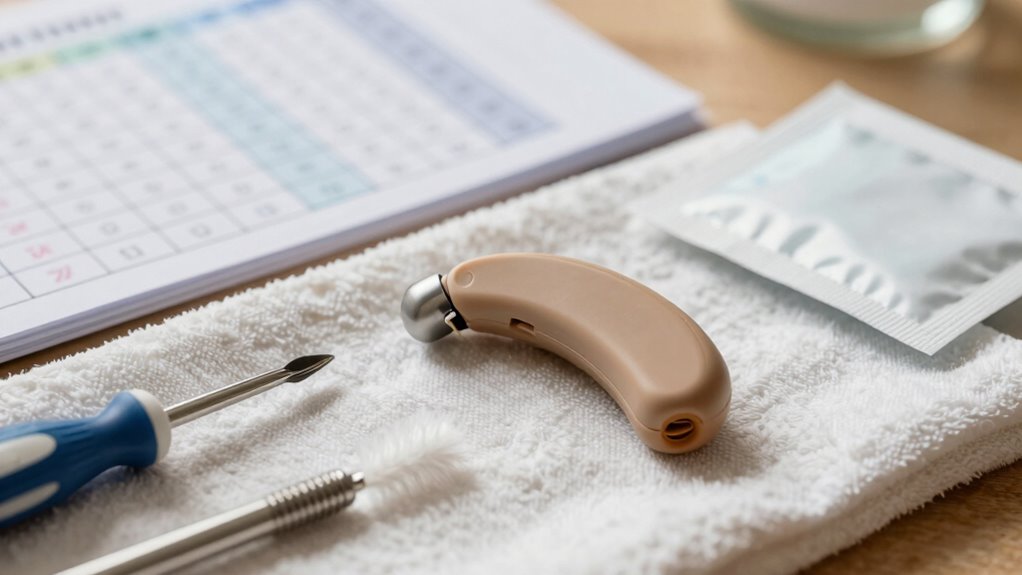

To keep your hearing aids working well, develop a regular maintenance schedule. Check the batteries daily and replace them before they die. Use a soft cloth to clean the exterior and clear wax with special tools or brushes. Inspect for damage regularly and schedule professional checkups every few months. Clean filters and wax guards often, and turn off devices before handling. Staying consistent with these tasks helps extend your hearing aid’s life — keep going, and you’ll find even more helpful tips ahead.

Get everyday helpers delivered free — and shop member deals
- Fast, free delivery on millions of items
- Access to Prime Big Deal Days deals on October 6–7
- Prime Video, Amazon Music and more included
Key Takeaways
- Establish daily, weekly, and monthly routines for battery checks, cleaning, and inspections to maintain optimal device performance.
- Schedule regular professional checkups for thorough cleaning, damage assessment, and necessary adjustments.
- Replace batteries proactively before they fully deplete, and carry spares for uninterrupted use.
- Clean exterior and internal components using manufacturer-recommended tools to prevent damage and ensure clarity.
- Monitor device condition regularly to detect early signs of wear or damage, preventing costly repairs.

Regular maintenance is essential to keep your hearing aids functioning at their best. When you prioritize routine care, you guarantee clear sound quality and prolong the lifespan of your devices. One of the most important tasks is battery replacement. You should check your hearing aid batteries daily and replace them before they completely run out. Many hearing aids have indicator lights or beeps that alert you when the battery is low, but it’s best to swap out the batteries proactively. Carry spare batteries with you so you’re never caught without power when you need your hearing aids most. When replacing batteries, turn off your devices first to prevent any damage, then gently open the battery compartment, remove the old battery, and insert a fresh one, making sure the positive and negative sides align correctly. This simple step guarantees your hearing aids operate smoothly and reduces the risk of sound distortions. Proper battery maintenance is crucial for consistent device performance. Additionally, storing batteries in a cool, dry place can help extend their lifespan and ensure they work reliably when needed.
Another critical aspect of maintenance is wax cleaning. Earwax naturally builds up in your ear canal, and some of it can find its way into your hearing aids, clogging the microphones or receivers. Regularly inspecting and cleaning your hearing aids prevents this buildup from impairing sound quality. Use a soft, dry cloth to wipe down the exterior of your devices daily. For deeper cleaning, most manufacturers recommend using a specialized wax removal tool or a small brush to gently clear out any wax or debris from the openings. Avoid using sharp objects or liquids, as they can damage delicate components. If your hearing aids have filters or wax guards, check these regularly and replace them when they appear clogged or dirty. Keeping the microphones and receivers free of wax ensures that your hearing aids deliver clear, natural sound every time you put them on. Establishing a routine cleaning schedule helps maintain optimal hearing aid performance and prevents costly repairs over time. Regularly checking for damage can also help identify potential issues early, saving you from unexpected repairs down the line. Incorporating a professional checkup with your audiologist into your maintenance routine can further help ensure your devices stay in top condition. Scheduling routine professional inspections allows you to catch any issues before they become major problems.
Beyond battery replacement and wax cleaning, you should also schedule routine checkups with your audiologist or hearing specialist. They can perform professional cleaning, inspect for damage, and make any necessary adjustments. Incorporating these steps into your weekly and monthly routines helps catch issues early before they become costly repairs or cause discomfort. Remember, consistent care not only enhances your hearing experience but also extends the life of your devices. By staying proactive with battery replacement and wax cleaning, you keep your hearing aids functioning reliably and comfortably. Simple daily habits like wiping down your devices and checking the battery life can make a significant difference in maintaining peak performance. Ultimately, taking these small, regular steps ensures that your hearing aids continue to serve you well, improving your quality of life through better hearing.
hearing aid batteries replacement kit
As an affiliate, we earn on qualifying purchases.
As an affiliate, we earn on qualifying purchases.
Frequently Asked Questions
Can I Use Any Cleaning Solution on My Hearing Aids?
You shouldn’t use any cleaning solution on your hearing aids unless it’s specifically recommended by your audiologist. Over-the-counter cleaning solutions may damage your devices or affect hearing aid compatibility. Always opt for cleaning solutions designed for hearing aids, and follow the manufacturer’s instructions carefully. Regular cleaning with the right solutions helps maintain sound quality and prolongs your hearing aid’s lifespan, ensuring they stay comfortable and effective.
How Often Should I Replace the Batteries?
Did you know the average hearing aid battery lasts about 5 to 7 days? You should replace the batteries regularly, roughly once a week, to keep your device functioning at its best. Battery lifespan varies depending on usage and type, so pay attention to signs like reduced sound quality or the low battery warning. To avoid interruptions, set a reminder for replacement and keep spare batteries handy.
Are There Specific Storage Tips for Hearing Aids?
You should store your hearing aids in a cool, dry place away from moisture and extreme temperatures. Keep them in a designated case to guarantee storage safety and protect against dust and dirt. Practicing good hearing aid hygiene by regularly cleaning and storing them properly helps maintain their performance. Avoid leaving them in places where they might fall or get damaged, and always follow your audiologist’s storage recommendations for ideal care.
What Should I Do if My Hearing Aid Stops Working?
If your hearing aid stops working, start with simple hearing aid troubleshooting steps like checking the battery and cleaning the device. If issues persist, schedule professional maintenance to diagnose and fix the problem. Don’t attempt complicated repairs yourself, as this could cause further damage. Regular professional check-ups ensure your hearing aid functions effectively, keeping your hearing clear and comfortable.
Can I Wear My Hearing Aids While Swimming?
You shouldn’t wear your hearing aids while swimming, even if they claim water resistance, because water can damage the devices. For swimming safety, avoid submerging your hearing aids, as they’re typically not designed to handle full immersion. Water resistance offers some protection, but it’s not foolproof. Always remove your hearing aids before swimming to prevent damage and ensure they stay in peak condition.
Conclusion
Keeping up with your hearing aid maintenance might seem tedious, but neglecting it can lead to costly repairs or even losing your ability to hear clearly. Think of your hearing aids as tiny, valuable tools—like a camera or a phone—that need regular care to perform at their best. By sticking to a simple schedule, you guarantee your hearing stays sharp and your investment lasts. After all, great hearing is worth a little effort.
Fall Picks
fall essentials
As an affiliate, we earn on qualifying purchases.