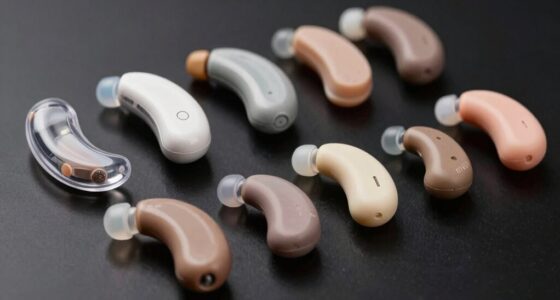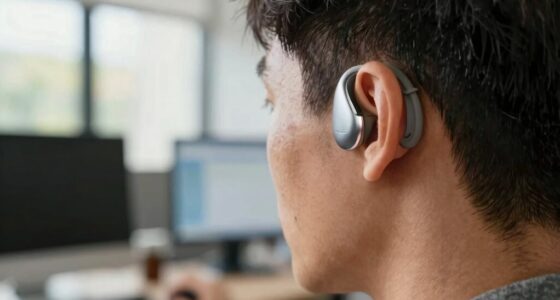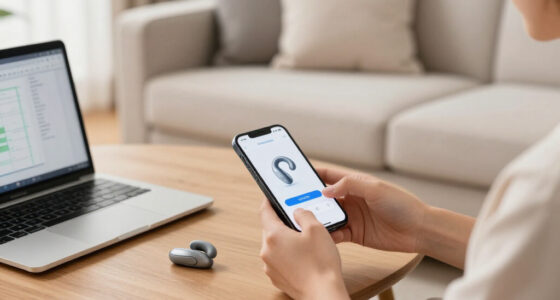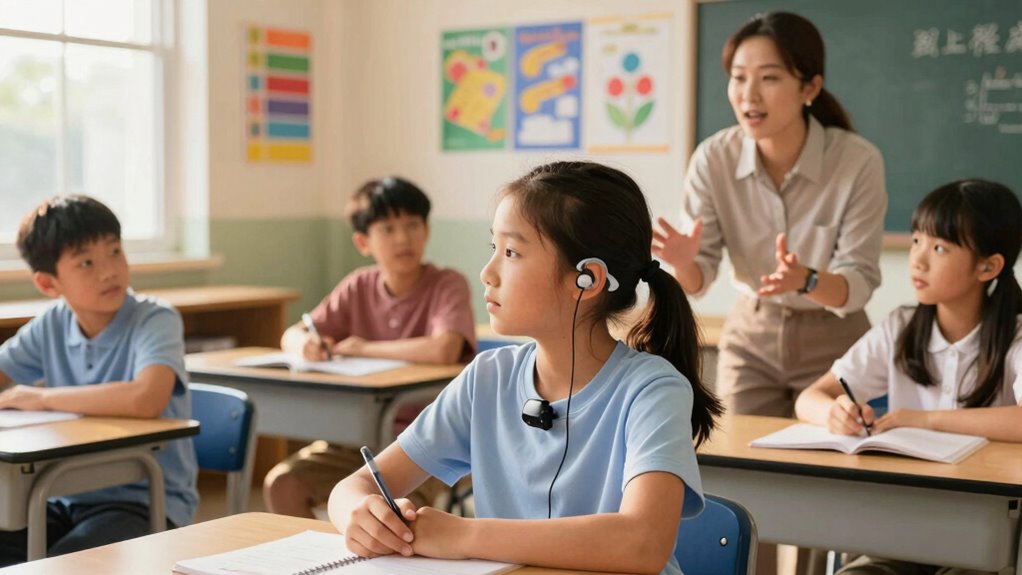

Hearing technology can greatly enhance classroom listening by amplifying the teacher’s voice and reducing background noise, making it easier for students with hearing challenges to follow along. Assistive devices like hearing aids, FM systems, and cochlear implants work with classroom tech to improve sound clarity. Adjusting the environment with acoustic treatments and strategic seating also helps. If you keep exploring, you’ll discover how combining these solutions creates a more inclusive and effective learning space for everyone.

Get everyday helpers delivered free with Prime
- Fast, free delivery on millions of items
- Prime Video, Amazon Music and more included
- Member-only deals all year
Key Takeaways
- Assistive devices like hearing aids and cochlear implants amplify sound, improving clarity for students with hearing challenges.
- FM systems transmit the teacher’s voice directly, reducing distance and background noise for better understanding.
- Classroom acoustics with sound-absorbing materials minimize echoes and ambient noise, enhancing speech clarity.
- Microphone systems evenly distribute the teacher’s voice, ensuring all students hear clearly regardless of seating location.
- Combining technology with optimal classroom setup creates an inclusive environment that boosts student engagement and participation.
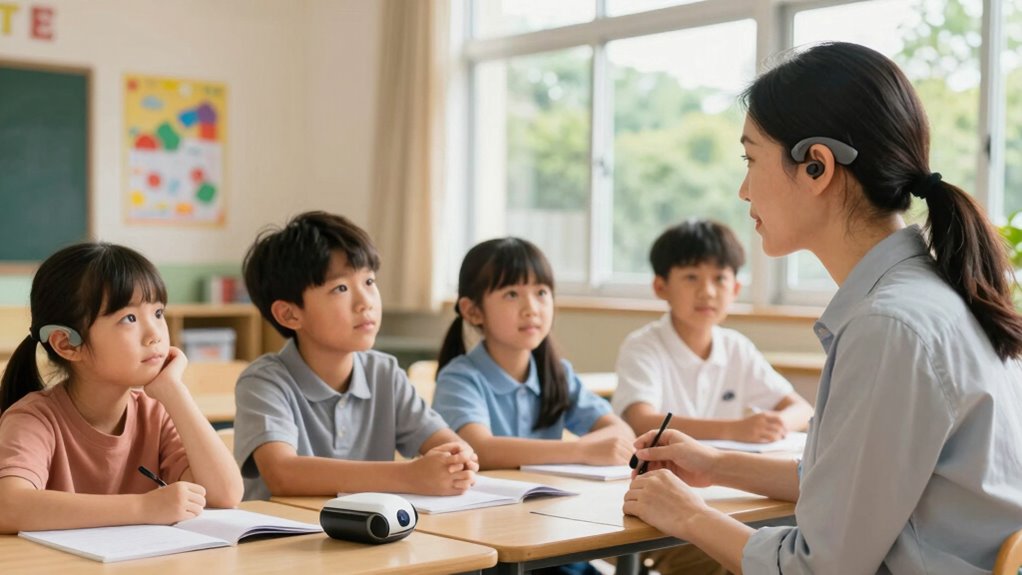
In today’s classrooms, hearing technology is transforming how students with hearing challenges access education. If you or a student you’re working with struggles to hear clearly, assistive devices and classroom acoustics play crucial roles in creating a more inclusive learning environment. Assistive devices, such as hearing aids, FM systems, and cochlear implants, are designed to amplify sound directly to the user, reducing background noise and enhancing speech clarity. When these devices are paired with classroom technology, the impact is even greater, allowing students to focus on lessons without straining to hear. For example, FM systems transmit the teacher’s voice directly to a student’s hearing device, minimizing the effects of distance and ambient noise. This direct transmission ensures that the student hears the teacher’s words more clearly, which boosts understanding and participation.
Assistive devices and classroom tech improve hearing, clarity, and participation for students with hearing challenges.
Beyond assistive devices, one of the most effective ways to improve listening is by optimizing classroom acoustics. Poor acoustics can make even normal hearing difficult, especially for students with hearing impairments. Amplifying sounds won’t help if the room’s design causes echoes or excessive noise. You can make a significant difference by using sound-absorbing materials like carpets, curtains, and acoustic panels. These materials dampen echo and reduce background noise, making it easier for students to focus on speech. Additionally, arranging seating to minimize distance between the teacher and students can improve sound transmission. When students are closer to the speaker, their hearing devices pick up clearer signals, and they can better follow lessons.
Implementing good classroom acoustics doesn’t require extensive renovations; simple adjustments can yield notable results. For instance, using a microphone system ensures your voice is evenly distributed throughout the room, preventing some students from missing key information. It’s also helpful to establish a quiet environment during instruction, limiting unnecessary noise that can interfere with auditory processing. When you combine assistive devices with well-considered classroom acoustics, you create a more equitable environment where students with hearing challenges can thrive. They’re more likely to engage actively, retain information, and participate confidently in class discussions.
Ultimately, understanding the importance of assistive devices and classroom acoustics empowers you to make informed choices that support every learner. Your efforts can remove barriers, giving students with hearing challenges the tools they need to succeed academically and socially. Recognizing the significance of classroom acoustics and assistive technology plays a vital role in fostering inclusive education environments. Your commitment to optimizing the learning space helps ensure that hearing difficulties don’t hinder a student’s educational experience.
As an affiliate, we earn on qualifying purchases.
Frequently Asked Questions
How Affordable Is Hearing Technology for Schools?
Hearing technology can be quite affordable for schools when you do a thorough cost analysis and explore various funding options. You might find grants, government programs, or partnerships that help offset costs. While initial investments can seem high, the long-term benefits—better student engagement and learning outcomes—justify the expense. By actively researching funding sources and comparing prices, you can make hearing tech accessible without straining your school’s budget.
Can Hearing Tech Be Customized for Individual Students?
Yes, hearing tech can be customized for individual students. Imagine each student wearing a device tailored to their unique needs—like personalized fittings and settings based on their preferences. About 80% of hearing devices now offer customizable features, ensuring ideal sound clarity and comfort. This personalization helps students focus better, communicate more effectively, and participate fully in classroom activities, making learning more inclusive and engaging for everyone.
What Training Is Needed for Teachers to Use Hearing Tech Effectively?
You need targeted teacher training to effectively use hearing tech in the classroom. Focus on technology integration skills, including setting up devices, troubleshooting issues, and understanding how to adapt lesson plans. Hands-on training sessions help you become comfortable with the equipment, while ongoing professional development guarantees you’re up-to-date on new features. This preparation empowers you to maximize hearing tech’s benefits, creating a more inclusive and accessible learning environment for all students.
How Durable and Maintenance-Free Is Hearing Technology?
Hearing technology is quite durable thanks to its wearable design, which is built to withstand daily classroom activities. You’ll find that most devices have long battery longevity, reducing the need for frequent charging or replacements. Regular cleaning and occasional software updates keep them functioning at their best. Overall, these devices are designed to be low-maintenance, so you can focus on teaching without worrying about constant repairs or replacements.
Are There Privacy Concerns With Hearing Assistive Devices?
Yes, there are privacy concerns with hearing assistive devices. You might worry about privacy risks and data security, as these devices often collect and transmit audio data. While manufacturers implement security measures, vulnerabilities can still exist. Be sure to review privacy policies and choose devices with robust encryption. Staying informed helps you protect your personal information while benefiting from hearing technology’s advantages.
Conclusion
By embracing hearing tech, you empower your environment to echo clarity and curb chaos. With wireless wonders and sound solutions, you create a space where students can seamlessly succeed, suppressing struggles and amplifying understanding. This tech transforms teaching into a tailored, transparent, and truly transformative experience. So, step into the future of education, where hearing tech helps harmony thrive, hurdles lessen, and every child’s voice is vividly valued and vibrantly heard.
Halloween Picks
halloween
As an affiliate, we earn on qualifying purchases.