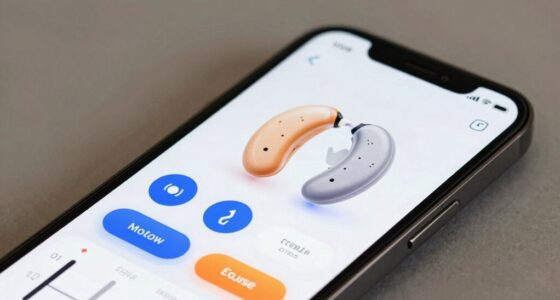

Hearing devices use advanced algorithms to help you understand speech in busy environments. They analyze sounds to differentiate speech from background noise, filtering out unnecessary sounds for clearer listening. Directional microphones focus on sounds from specific directions, like a conversation partner, while noise suppression reduces ambient chatter and traffic sounds. Machine learning continuously adapts to your environment, improving performance over time. Keep exploring to discover how these innovations can enhance your everyday listening experience.

Get everyday helpers delivered free with Prime
- Fast, free delivery on millions of items
- Prime Video, Amazon Music and more included
- Member-only deals all year
Key Takeaways
- Hearing devices use advanced auditory algorithms to distinguish speech from background noise.
- Noise suppression features reduce ambient sounds while preserving speech clarity.
- Directional microphones focus on sounds from specific directions, like a conversation partner.
- Adaptive technologies learn and adjust in real-time to changing environmental sounds.
- Ongoing research enhances algorithms for better performance in noisy, busy settings.
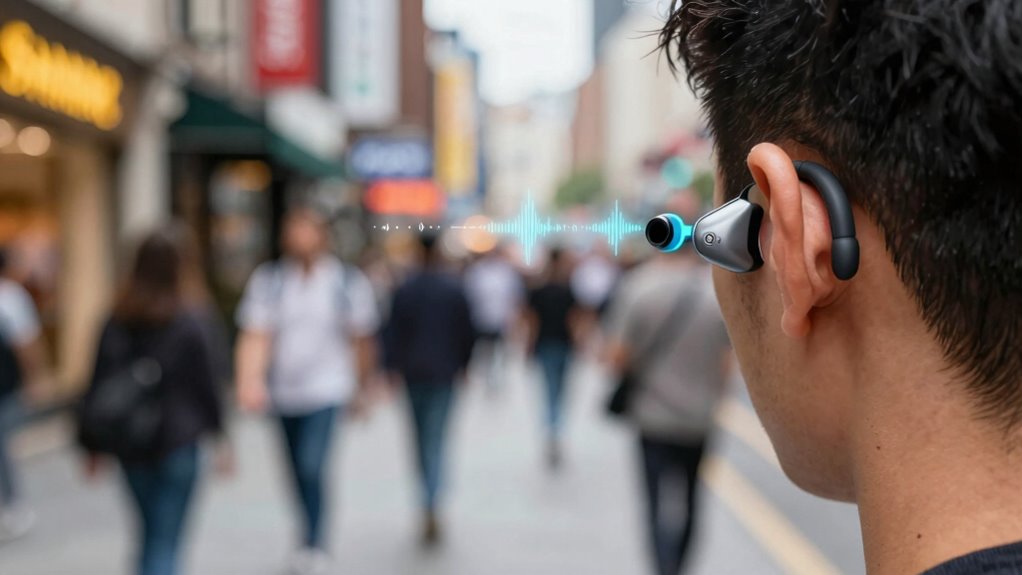
Have you ever wondered how modern hearing devices help you understand speech more clearly? Today’s technology is sophisticated, using advanced auditory algorithms that analyze sounds and filter out unnecessary noise. These algorithms work behind the scenes to distinguish speech from background clutter, giving you a more natural listening experience even in busy environments. When you’re in a crowded café or a noisy street, your hearing device actively processes incoming sounds to prioritize human speech, making conversations easier to follow.
Modern hearing devices use advanced algorithms to filter noise and enhance speech clarity in busy environments.
One of the key features that makes this possible is noise suppression. These systems are designed to reduce ambient sounds that typically interfere with speech clarity, such as chatter, traffic, or music. Noise suppression algorithms identify background noise by analyzing the sound patterns and selectively dampening those that aren’t relevant to speech. This doesn’t mean the device simply mutes all noise; instead, it intelligently preserves the sounds you want to hear—like a friend’s voice—while minimizing distracting noise. This balance allows you to focus on conversations without feeling overwhelmed by the surrounding environment.
Your hearing device constantly listens and adapts to changing sounds. As the environment shifts, so do the auditory algorithms. For instance, if someone starts talking from behind you, the device detects the speech and adjusts its processing parameters accordingly. It amplifies the speech signal while keeping the background noise at a manageable level. The noise suppression feature works in tandem with directional microphones, which focus on sounds coming from specific directions—usually the person you’re talking to—further sharpening speech clarity. This dynamic adjustment helps you stay engaged in conversations without having to strain or ask others to repeat themselves. Additionally, adaptive sound processing plays a crucial role in ensuring these devices remain effective across various situations. In fact, ongoing research and technological advancements continually refine these algorithms for better performance.
These algorithms don’t just improve clarity; they also help reduce listening fatigue. When background noise is suppressed effectively, your brain doesn’t have to work as hard to decipher speech, which makes listening in busy settings less exhausting. Modern hearing devices also learn from your environment over time, fine-tuning the noise suppression and auditory algorithms to match your daily listening needs. They utilize machine learning techniques to adapt to your unique hearing environment, providing a more personalized listening experience. As a result, you get a seamless experience that adapts to different environments, whether you’re at a bustling restaurant, a lively party, or a noisy street corner. Furthermore, researchers are exploring biometric data to better understand user preferences and improve the customization of auditory processing.
Furthermore, auditory algorithms are continually being refined through ongoing research and technological advancements, ensuring that hearing devices stay effective in diverse situations. In essence, the combination of advanced auditory algorithms and noise suppression technology transforms how you experience speech in noisy settings. It ensures you hear more clearly, with less effort, allowing you to participate fully in social situations without feeling overwhelmed by background sounds.
hearing aids with noise suppression
As an affiliate, we earn on qualifying purchases.
As an affiliate, we earn on qualifying purchases.
Frequently Asked Questions
How Do Hearing Devices Distinguish Speech From Background Noise?
Your hearing device uses sound amplification to make speech clearer and noise reduction to minimize background sounds. It analyzes the environment in real-time, focusing on the direction and volume of sounds. By filtering out unnecessary noises, your device guarantees you hear conversations more distinctly, even in busy places. This intelligent processing helps you stay engaged without being overwhelmed by background noise, making your listening experience more natural and comfortable.
Can Hearing Devices Adapt to Different Noisy Environments Automatically?
Yes, your hearing device can automatically adapt to different noisy environments. Modern devices use advanced algorithms to distinguish speech from background noise, enhancing clarity. They also optimize battery life by adjusting power consumption based on activity, ensuring durability. This smart adaptation helps you hear better in busy settings without manual adjustments, providing consistent performance and longer-lasting battery life, so you stay connected and comfortable throughout your day.
What Role Does Directional Microphone Technology Play in Speech Clarity?
Directional microphone technology is a game-changer for you, like having a superpower that cuts through chaos. It uses directional focus to zero in on speech directly in front of you, reducing background noise. Sound localization helps you determine where sounds originate, making conversations clearer and more natural. This technology amplifies speech while suppressing unwanted noise, so you can enjoy better clarity and focus, even in the busiest, loudest environments.
Are There Customizable Settings for Different Busy Environments?
Yes, your hearing device often includes customizable settings for different busy environments. You can select personalized presets or environmental profiles that automatically adjust to noise levels and speech clarity. These features help optimize your hearing experience by tailoring the device’s performance to specific situations, whether you’re in a crowded restaurant or a noisy street. With these options, you gain better control and improved speech understanding in varied, challenging environments.
How Do Hearing Devices Handle Multiple Speakers Simultaneously?
Imagine being at a lively party, with multiple conversations happening. Your hearing device uses voice recognition and environmental adaptation to focus on your chosen speaker, filtering out background noise. It automatically switches focus between multiple speakers, making it easier to follow conversations. This technology isolates voices in real-time, helping you stay engaged without feeling overwhelmed. So, your device acts like a skilled listener, adapting instantly to different speakers in busy settings.
Conclusion
Now that you understand how hearing devices deftly decode dialogue amid distractions, you can appreciate their sophisticated sophistication. By balancing background noise and boosting bold speech signals, these devices deliver dynamic, discernible sounds. With clever coding and creative compensation, they convert chaotic chaos into clear communication. So, savor the seamless soundscape, knowing your device’s diligent design diligently delivers distinct dialogue, deciphering dialogues with deftness, determination, and a dash of digital dexterity.
Evergreen bestsellers Picks
bestsellers
As an affiliate, we earn on qualifying purchases.