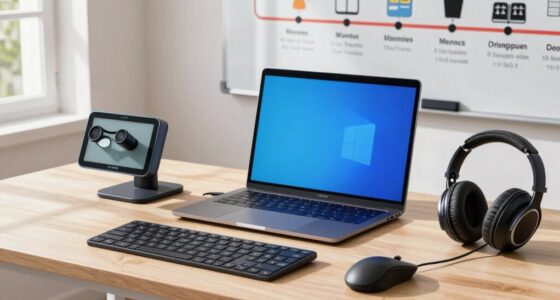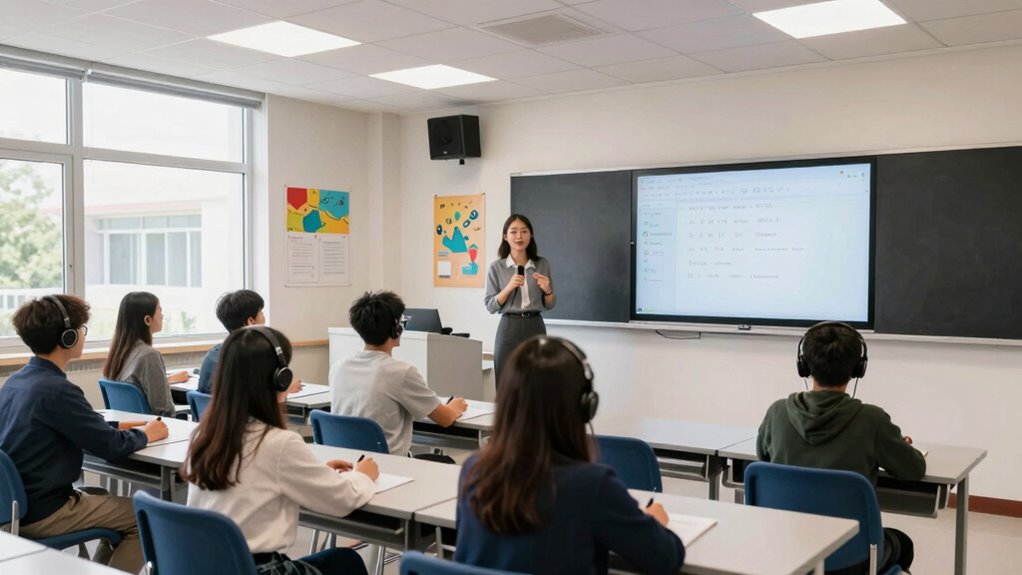

Better audio access in classrooms helps you create an inclusive environment where every student hears you clearly, no matter where they sit. Assistive listening devices and sound systems reduce background noise and improve comprehension for students with hearing challenges or distractions. This boosts engagement, streamlines communication, and makes teaching more effective. When everyone can participate confidently, classroom dynamics improve. Keep exploring to discover how these tools can transform your teaching space even further.

Get everyday helpers delivered free with Prime
- Fast, free delivery on millions of items
- Prime Video, Amazon Music and more included
- Member-only deals all year
Key Takeaways
- Enhances student comprehension and retention by providing clear, direct sound regardless of classroom distance or background noise.
- Promotes inclusive learning by accommodating students with hearing impairments and diverse auditory needs.
- Increases teacher efficiency and classroom management through improved communication and reduced repetition.
- Fosters active participation and engagement from all students, creating a more interactive learning environment.
- Supports legal compliance and equitable access, ensuring no student is left behind due to auditory barriers.
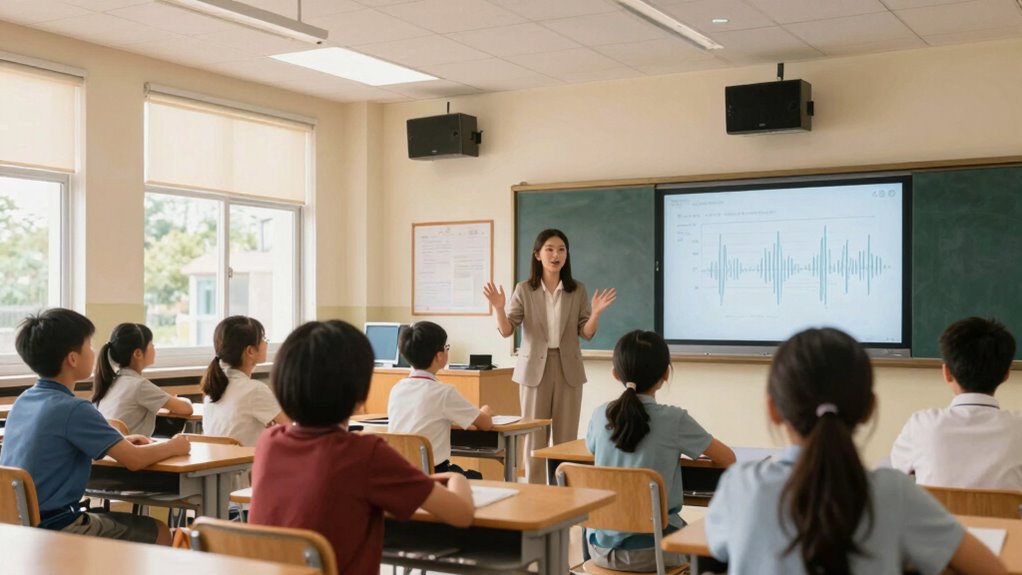
Improved audio access in classrooms transforms the learning experience by guaranteeing every student can hear and understand lessons clearly. When you implement assistive listening devices and sound amplification systems, you remove barriers that might prevent students from fully engaging with the material. These tools are especially crucial for students with hearing impairments, but they also benefit those with attention challenges or environmental distractions. You’ll find that better audio access creates an inclusive learning environment where every voice is heard and every learner can participate confidently.
Enhanced audio access creates inclusive classrooms where every voice is heard and all students can engage confidently.
Assistive listening devices work by capturing the teacher’s voice through a microphone and transmitting it directly to a student’s hearing aids or personal listening devices. This technology reduces background noise and minimizes the effects of distance, making it easier for students to focus on the lesson. By providing clear, direct sound, assistive listening enhances comprehension and retention. As a result, students who previously struggled to keep up now have a fairer chance to succeed, feeling more connected to the classroom discussions and activities. Implementing sound amplification systems can further unify the auditory environment, ensuring consistency for all students. Additionally, integrating assistive listening technology can promote a more equitable classroom environment by accommodating diverse learning needs.
Sound amplification systems, on the other hand, serve the entire classroom by evenly distributing the teacher’s voice through strategically placed speakers. These systems ensure that even students sitting at the back of the room can hear every word without straining or asking for repetition. When you use sound amplification, you create a consistent auditory environment that supports all learners, not just those with hearing difficulties. This technology also helps reduce teacher fatigue, as you don’t have to raise your voice repeatedly, which can be physically taxing and disruptive.
The benefits go beyond accessibility; improved audio access enhances classroom management and student engagement. When students can clearly hear instructions and explanations, they spend less time trying to decipher what’s being said and more time actively participating. This clarity fosters better classroom interactions, encourages questions, and reduces misunderstandings. Teachers, too, appreciate the ability to communicate more effectively without constantly repeating themselves, which makes lessons flow more smoothly.
Ultimately, investing in assistive listening and sound amplification isn’t just about meeting legal requirements or accommodating a few students. It’s about creating an environment where every learner has equal access to information. When everyone can hear and process instructions easily, the entire classroom benefits. You foster a space where learning is more effective, inclusive, and engaging—making sure no student is left behind due to auditory barriers.
assistive listening devices for classrooms
As an affiliate, we earn on qualifying purchases.
As an affiliate, we earn on qualifying purchases.
Frequently Asked Questions
How Does Improved Audio Access Affect Student Engagement?
Improved audio access boosts your student engagement by making it easier for students to participate actively. When auditory comprehension improves through clear sound, students can follow lessons more effectively, leading to increased participation. You’ll notice students are more confident asking questions and contributing to discussions. Better audio helps all students, especially those with hearing difficulties, stay focused and involved, creating a more inclusive and dynamic classroom environment.
What Are the Cost Implications of Upgrading Classroom Audio Systems?
Upgrading classroom audio systems involves initial costs for equipment and installation, but it’s a worthwhile investment. You need to conduct a thorough cost analysis to understand long-term benefits versus expenses. Budget considerations include balancing upfront costs with ongoing maintenance and potential improvements in student engagement and learning outcomes. While the upfront investment might seem high, better audio access can reduce the need for additional teaching aids, ultimately saving costs over time.
How Does Audio Access Support Students With Hearing Impairments?
You might think hearing impairments are a minor hurdle, but with proper audio access, students can thrive. Hearing aids and assistive devices become powerful tools when classrooms use clear, amplified sound. Ironically, the best way to support students with hearing impairments isn’t just about special equipment — it’s about making audio accessible for everyone. This inclusivity helps students stay engaged, learn better, and feel truly part of the classroom community.
What Training Is Needed for Teachers to Optimize Audio Use?
You need targeted teacher training on audio technology to optimize its use in classrooms. This training should cover how to operate audio devices effectively, troubleshoot common issues, and adjust settings for different learning needs. By staying updated on new audio tech, you guarantee all students, especially those with hearing impairments, benefit fully. Regular practice and professional development help you integrate audio tools seamlessly into your teaching, enhancing overall learning experiences.
Can Better Audio Access Improve Classroom Management?
Imagine a classroom where students clearly hear instructions, reducing disruptions. Better audio access, supported by acoustic treatment and durable equipment, can indeed improve classroom management. Clear sound minimizes misunderstandings and behavior issues, allowing you to focus on teaching. When audio systems are reliable and well-maintained, students stay engaged, and shifts become smoother, creating a more organized environment. This proactive approach fosters better discipline and enhances overall learning outcomes.
Conclusion
By embracing better audio access, you create a more inclusive, engaging classroom where every student can thrive—no matter their hearing ability. Think of it as upgrading from a chariot to a sleek spaceship; the difference in communication is revolutionary. With clear sound, you foster understanding, boost confidence, and pave the way for success. Don’t let poor audio hold your students back—step into the future and unleash their full potential today.
Halloween Picks
halloween
As an affiliate, we earn on qualifying purchases.