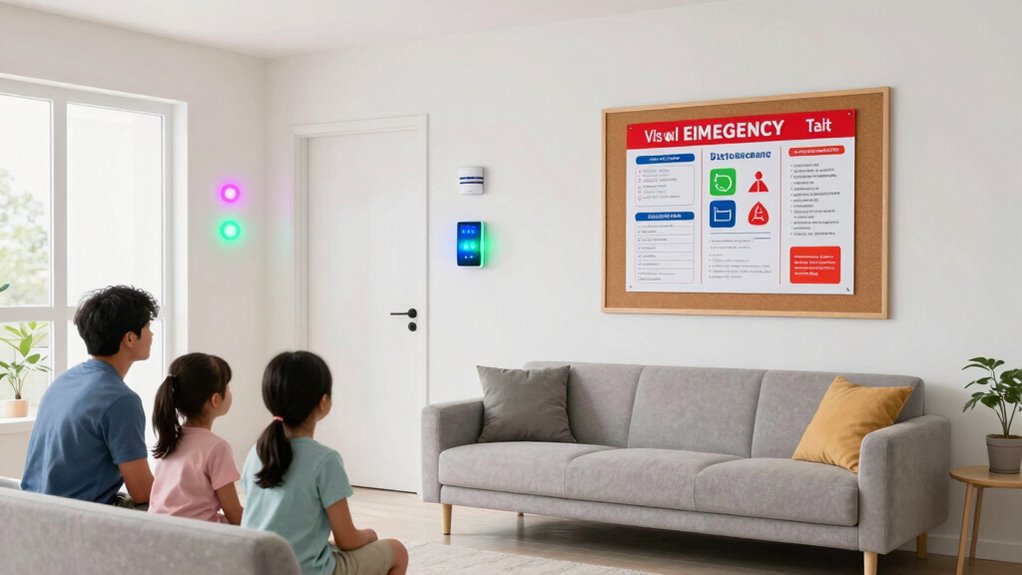

In a deaf household, you should include visual alert systems like flashing lights, strobe alarms, and vibrating devices, ensuring they are accessible in every room. Create clear visual instructions for emergencies and establish visual communication with neighbors and family members. Conduct regular drills to practice responses and keep emergency supplies handy. Review and update your safety plan often to stay prepared for any situation. If you keep exploring, you’ll find more effective strategies to keep everyone safe.

Get everyday helpers delivered free with Prime
- Fast, free delivery on millions of items
- Prime Video, Amazon Music and more included
- Member-only deals all year
Key Takeaways
- Install visual alert systems like strobe lights and ensure they are accessible in all rooms.
- Use multiple notification methods, including vibrating devices and visual cues, for comprehensive emergency alerts.
- Post clear visual instructions and diagrams for emergency responses in key household areas.
- Conduct regular emergency drills practicing visual signals and response procedures with all household members.
- Keep emergency supplies accessible, including flashlights, batteries, and visual communication tools, and review safety plans periodically.
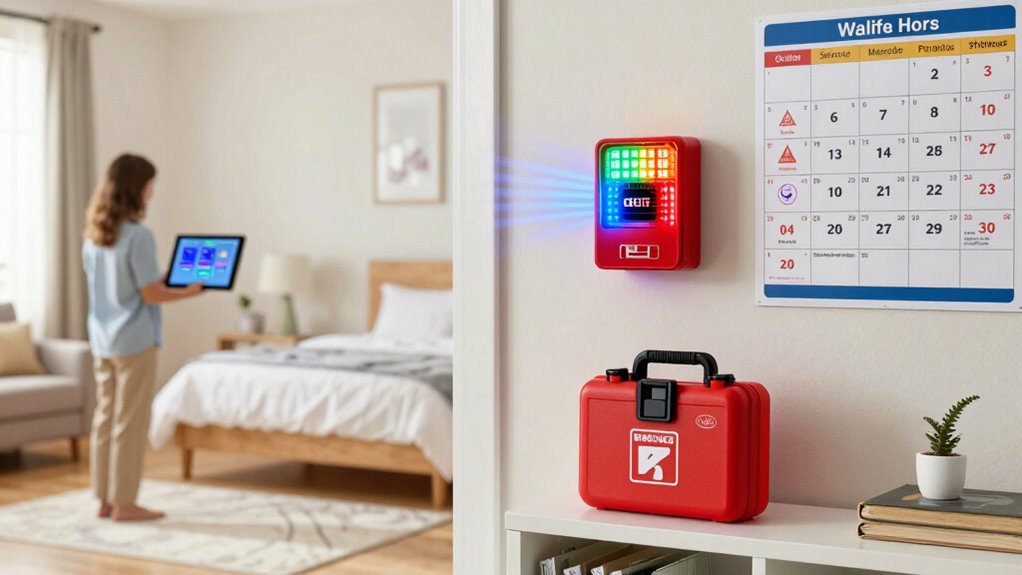
Are you confident your home safety plan effectively protects everyone in your deaf household? If not, it’s time to guarantee your plan includes essential communication tools tailored to your needs. Emergency communication is indispensable, especially since traditional methods like phone alerts or verbal warnings won’t work for everyone. You need to implement visual alert systems that can notify you instantly about emergencies, whether it’s a fire, a break-in, or a gas leak. These systems use flashing lights, vibrating alerts, or both to grab your attention quickly. Make certain every room has access to these visual alerts, and test them regularly to verify they’re working correctly.
Ensure your home safety plan includes visual alerts and regular tests to protect your deaf household effectively.
Your safety plan should also incorporate multiple layers of notification. For example, consider installing strobe lights near smoke detectors and carbon monoxide alarms. These lights should be loud enough and bright enough to be seen from anywhere in the house, especially during nighttime or when you’re not in the immediate vicinity of the alerts. Vibrating devices, like bed shakers or wearable alerts, can provide additional layers of notice, particularly for individuals who might not hear or see traditional signals. Combining these alert methods ensures that everyone in your household is promptly informed during emergencies, regardless of sensory limitations. Additionally, understanding visual alert systems is crucial for selecting the most effective solutions tailored to your household needs.
In addition to alert systems, your plan should include clear, visual emergency communication strategies. Post visual instructions in key areas of your home, outlining what to do in case of fire, medical emergencies, or other hazards. Use pictures or simple diagrams if needed to make instructions easily understandable at a glance. It’s also essential to establish a visual communication strategy with neighbors, friends, or family members who can assist during emergencies. Make sure they know how to reach you and how to assist using visual signals or other accessible communication methods. Incorporating accessible communication methods can significantly enhance your household’s preparedness and response time. Regularly reviewing and practicing these communication strategies will also help ensure they are effective when needed.
Regular drills are a must. Practice your emergency response with all household members, focusing on how to react when alerts go off. These drills help everyone become familiar with the visual alert systems and reinforce what steps to take immediately afterward. Keep a checklist of emergency supplies, such as flashlights, batteries, and first aid kits, in accessible locations. Ensure these supplies are easily reachable and well-stocked at all times. It’s also beneficial to involve all household members in reviewing and updating your safety plan periodically, ensuring everyone remains informed and prepared.
Finally, review and update your safety plan periodically. Technology advances, and your household’s needs may change over time. Staying proactive guarantees your deaf household remains protected and prepared for any emergency situation. By integrating visual alert systems, effective emergency communication, and regular practice, you create a thorough safety plan that prioritizes the well-being of everyone in your home. Remember, a comprehensive safety plan is an ongoing process that adapts to new challenges and innovations in emergency preparedness.
visual alert strobe lights for smoke detectors
As an affiliate, we earn on qualifying purchases.
As an affiliate, we earn on qualifying purchases.
Frequently Asked Questions
How Often Should I Update My Safety Plan?
You should update your safety plan at least once a year, or after any major changes in your household or routines. Regularly review and practice emergency drills to guarantee everyone stays familiar with procedures. Incorporate safety reminders into your routine and adjust the plan if new hazards arise or if family members’ needs change. Staying proactive helps keep your household prepared and safe in any emergency.
What Emergency Contacts Should I Include?
You should include emergency contacts like local police, fire department, and medical facilities. Also, add trusted neighbors or friends who can assist quickly. Make certain to incorporate sign language resources so you can communicate effectively during emergencies. Additionally, include notification systems like flashing lights or vibrating alarms to alert you instantly. Keep this list updated regularly to guarantee all contacts and resources are current, so you’re prepared for any emergency.
How Can I Involve Children in the Safety Plan?
You can involve children in the safety plan by practicing sign language drills together, making communication clear during emergencies. Incorporate emergency role-playing exercises to teach them how to respond calmly and effectively. Use visual cues and practice these scenarios regularly, so they feel confident. Engaging children in these activities helps them understand safety procedures and guarantees everyone knows their role, making your household safer and more prepared.
Are There Specific Tools Recommended for Deaf Households?
Think of your home as a fortress where safety is your shield. You’ll want visual alerts like flashing lights and assistive devices such as vibrating smoke detectors to catch your attention in emergencies. These tools act as your home’s watchful eyes and ears, ensuring you’re never left in the dark. Incorporating them creates a safety net that’s both reliable and tailored to your needs, keeping your family secure and informed at all times.
How Do I Test the Effectiveness of My Safety Plan?
You test your safety plan by simulating emergency scenarios, like a fire or break-in, to see if your alarm systems activate and if you can follow your escape routes quickly. Make sure alarms are loud or visual, and practice routes with all household members. Regular drills help identify any issues, ensuring your plan effectively alerts everyone and that escape routes are clear and easy to follow during an actual emergency.
Conclusion
Think of your home safety plan as a lighthouse guiding ships safely through stormy waters. Just like a lighthouse signals danger and guides sailors home, your plan alerts you to hazards and keeps your family safe. By including visual alerts, reliable communication, and emergency routines, you become the lighthouse for your household—steadfast and bright. With this beacon in place, you guarantee everyone stays safe, no matter how dark or stormy the night.
Halloween Picks
halloween
As an affiliate, we earn on qualifying purchases.