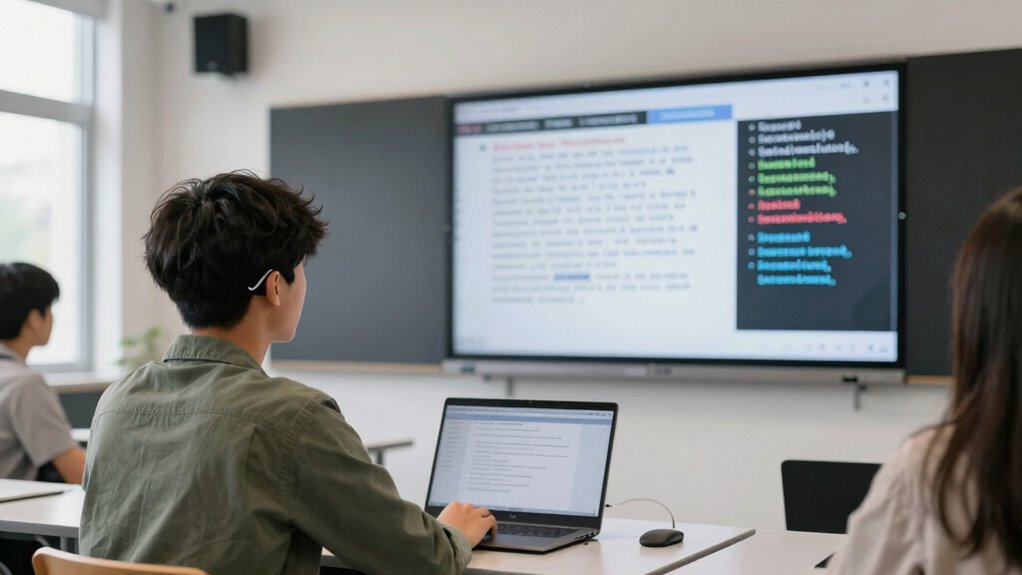
Lecture capture offers you better access to class content by providing accurate, customizable recordings. It allows you to revisit confusing parts, pause, and replay segments at your own pace. Enhanced caption quality and adjustable features improve readability and understanding, even when audio isn’t clear. Plus, it works seamlessly with hearing aids and assistive devices. To discover more ways lecture capture supports your learning, keep exploring how these tools can make your studies easier.
Key Takeaways
- Provides accurate captions that improve comprehension and reduce misunderstandings for students with hearing loss.
- Allows students to revisit lectures at their own pace for better understanding and retention.
- Enhances accessibility through adjustable fonts, color contrast, and highlighting features.
- Supports the use of assistive listening devices and hearing aids during review and study.
- Transforms passive listening into active engagement, boosting confidence and academic success.

Have you ever wondered how students with hearing loss navigate the increasing reliance on lecture capture technology? For many, lecture recordings have become essential tools, providing access to course content that might otherwise be difficult to follow. These recordings serve as assistive technology, allowing students to revisit lectures at their own pace, clarify confusing parts, and reinforce their understanding. But just as important as having the recordings is how well they support your specific needs. That’s where caption accuracy comes into play. Accurate captions ensure that you can read what’s being said in real-time, minimizing misunderstandings and reducing the cognitive load that comes with trying to decipher muffled or unclear audio.
When lecture capture systems are properly set up, they offer significant benefits for students with hearing loss. You can listen to lectures with assistive listening devices or hearing aids while simultaneously reading precise captions. This dual approach helps you catch every detail, especially when audio quality isn’t perfect or when speakers have strong accents. It also allows you to pause and review sections that are difficult to understand, giving you control over your learning process. High caption accuracy means the text matches the spoken words closely, which is essential. Poorly captioned videos can be confusing and frustrating, undermining the very purpose of having access to recorded content. As a result, investing in or advocating for systems that prioritize caption accuracy is essential for your success. Ensuring captioning quality is a crucial aspect of making lecture recordings truly accessible. Additionally, advancements in automated grammar correction tools can help improve captioning accuracy by reducing errors and enhancing clarity.
Lecture capture also makes it easier to prepare for exams or review complex concepts. You can replay segments as many times as needed without feeling rushed or missing vital information during live lectures. This flexibility is especially beneficial when trying to fill in gaps in your understanding or clarify points that weren’t fully explained during the original session. Furthermore, with good assistive technology integrated into lecture recordings, you can enhance your learning experience. Features like adjustable font size, color contrast, or even text highlighting can make reading captions more comfortable and accessible. These tools aren’t just about convenience—they’re about guaranteeing that you have equal access to course content, regardless of your hearing ability. Proper captioning and assistive technology can significantly improve comprehension and engagement, making the entire learning experience more inclusive.
In essence, lecture capture adds a layer of accessibility that supports your educational journey. When paired with reliable assistive technology and highly accurate captions, it transforms passive listening into an active, engaging learning process. You gain more independence, confidence, and control over your studies. With these tools, you’re not just passively consuming content—you’re actively empowering yourself to succeed in your academic pursuits, making sure that hearing loss doesn’t stand in the way of your learning.
lecture capture captioning device
As an affiliate, we earn on qualifying purchases.
As an affiliate, we earn on qualifying purchases.
Frequently Asked Questions
Can Lecture Capture Improve Note-Taking for Students With Hearing Loss?
Yes, lecture capture can improve your note-taking by allowing you to revisit the material at your own pace. With interactive annotations, you can highlight key points or add comments directly on the video, enhancing understanding. Personalized playback lets you control the speed or pause to clarify complex concepts. These features help you focus on important details, making your note-taking more effective and tailored to your learning needs.
How Accessible Are Lecture Recordings for Students With Different Hearing Impairments?
Lecture recordings are becoming increasingly accessible for students with different hearing impairments through features like sign language interpretation and auditory enhancement. You can benefit from clear, visual sign language videos alongside the recordings, making content more comprehensible. Auditory enhancements, such as volume control and background noise reduction, help you focus on key information. These tools work together to create an inclusive, flexible learning environment tailored to your hearing needs.
Do Lecture Captures Include Captions or Transcripts Automatically?
Lecture captures often include automatic captioning, but the quality can vary. You should check the transcription accuracy, as automatic captions may sometimes misinterpret speech, especially with technical terms or accents. While some platforms improve captioning over time, it’s wise to review and edit transcripts for clarity. Relying solely on automatic captioning might not always provide perfect accessibility, so consider supplementary materials or requesting manual captions if needed.
Are There Specific Tools to Enhance Comprehension for Hearing-Impaired Students?
Yes, there are specific tools to enhance comprehension for hearing-impaired students. You can include sign language interpretation videos alongside lecture recordings, making content more accessible. Additionally, using visual aids like diagrams, subtitles, and text summaries helps clarify complex concepts. These tools support diverse learning needs, ensuring students with hearing loss can follow along effectively and engage fully with the course material.
How Do Lecture Captures Support Participation in Class Discussions?
Lecture captures facilitate participation by fostering real-time feedback and peer collaboration. You can revisit recordings to clarify confusing concepts, enabling more confident contributions. These captures allow students to prepare for discussions and respond thoughtfully, even if they missed details initially. By providing ongoing access, lecture captures empower you to engage actively in class debates, collaborate with peers, and build a stronger understanding, boosting your overall classroom confidence and communication.
Conclusion
Lecture capture transforms your learning experience, offering flexibility and clarity that live lectures often can’t provide. While hearing loss may make in-person classes challenging, these recordings become your lifeline—like a silent partner guiding you through complex concepts. It’s a striking contrast: the immediacy of a lecture versus the tailored, accessible review you get with recordings. In this way, lecture capture isn’t just an aid; it’s a game-changer for your education and confidence.