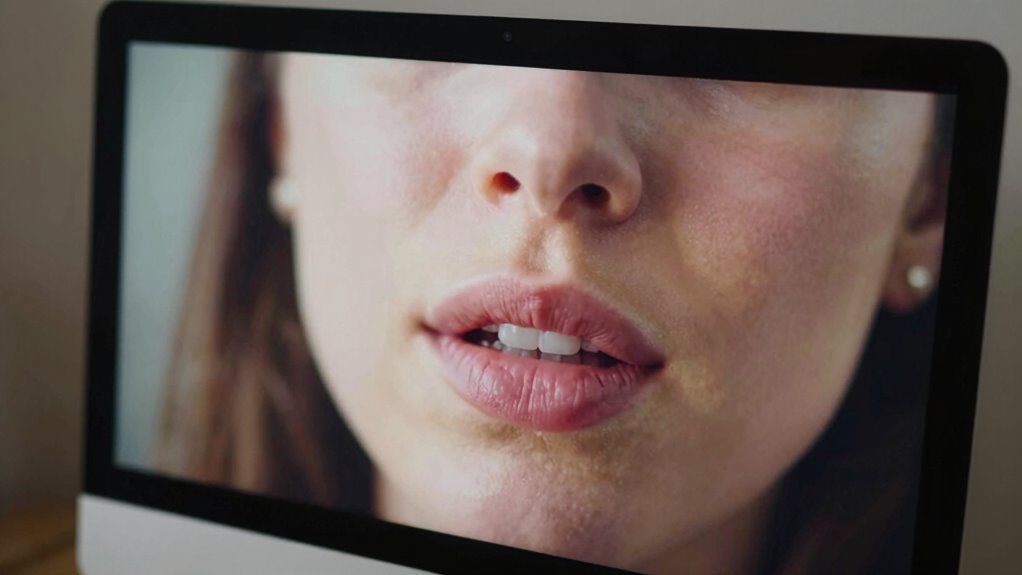

Your monitor should be positioned directly in front at eye level, so you can clearly see the speaker’s face without strain. Keep your camera steady and facing forward to capture subtle lip movements and facial cues accurately. Good lighting and a clutter-free background help you focus better and recognize expressions easily. High-quality audio enhances understanding alongside visuals. If you want to improve your lipreading skills further, there’s more you can do to optimize your setup.

Get everyday helpers delivered free with Prime
- Fast, free delivery on millions of items
- Prime Video, Amazon Music and more included
- Member-only deals all year
Key Takeaways
- Proper monitor positioning ensures clear visibility of the speaker’s face, aiding lipreading accuracy.
- Camera placement directly facing the speaker captures facial cues and lip movements effectively.
- Good lighting highlights lip shapes and facial expressions, improving visual clarity for lipreading.
- Minimizing background clutter reduces distractions, allowing better focus on facial cues during calls.
- Steady, front-facing camera angles enhance facial visibility and reduce distortion, supporting better lipreading.
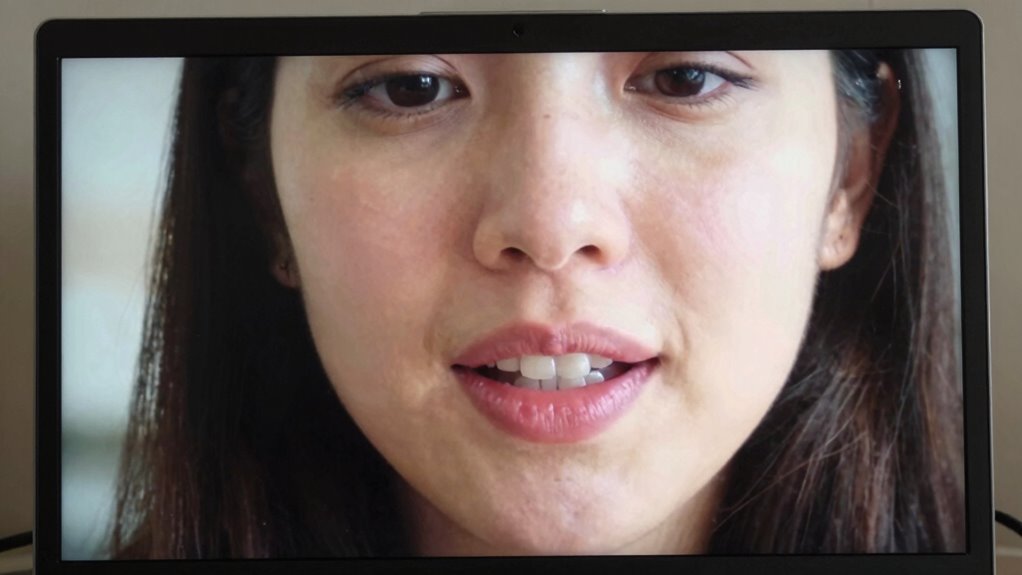
The way monitors and cameras are positioned can profoundly influence your ability to lipread effectively. When you’re on a call, your visual access to the speaker’s lips is essential, and poor placement can make understanding speech much harder. If the camera is too far to the side or too high, you might miss subtle movements or expressions that help clarify what’s being said. To optimize your understanding, position your monitor directly in front of you at eye level, making sure that the speaker’s face, especially their lips, is clearly visible without straining or craning your neck. Proper placement reduces the need to guess or fill in gaps, making communication smoother. Visual access is crucial for effective lipreading, as it directly impacts how well you can interpret facial cues. Audio quality plays a significant role in conjunction with visual cues. Even if your monitor shows the speaker clearly, if the sound is muffled, distorted, or inconsistent, it becomes difficult to follow along. High-quality audio guarantees that you catch every word, reducing the need to rely solely on lipreading. Combining good visuals with crisp, clear sound creates an environment where you can maximize understanding. If possible, use a dedicated microphone or headphones designed to enhance audio clarity, so the sound matches the quality of the video. Lighting conditions are equally essential. Poor lighting can cast shadows or obscure the speaker’s lips, making it tougher to interpret lip movements. Aim for even, soft lighting that illuminates the speaker’s face without creating glare or harsh shadows. Natural light is often best, but if that’s not an option, choose diffused artificial lighting positioned to avoid backlighting or reflections. When the face is well-lit and clearly visible, you can more easily distinguish lip shapes and facial expressions, which are necessary for effective lipreading. Additionally, minimize background clutter and distractions on your screen. A clean, focused view of the speaker’s face allows you to concentrate on lip movements and facial cues without unnecessary visual noise. Keep the camera steady and at an angle that captures the face directly from the front, avoiding tilted or skewed perspectives. This straightforward setup helps you pick up on subtle cues that are essential when relying on lipreading as part of your communication. In essence, thoughtful monitor and camera placement, combined with attention to lighting and audio quality, creates an environment where lipreading becomes more accurate and less stressful. When all these elements work together, you’re better equipped to understand conversations clearly, even when auditory information alone isn’t enough. Proper setup ensures that you are providing yourself with the best possible conditions for effective lipreading. Additionally, paying attention to lighting can significantly enhance visual clarity, making it easier to see lip movements and facial expressions. A well-optimized camera angle also plays a key role in capturing the speaker’s face clearly, further improving lipreading accuracy. Proper monitor positioning can also minimize neck strain, helping you remain more alert and focused during calls.
As an affiliate, we earn on qualifying purchases.
Frequently Asked Questions
How Does Lighting Influence Lipreading Accuracy During Video Calls?
Lighting conditions greatly impact your ability to lipread accurately during video calls by affecting visual clarity. Poor or uneven lighting creates shadows and glare, making it harder to distinguish mouth movements. Bright, even lighting enhances visibility of facial expressions and lip movements, improving comprehension. To optimize lipreading, make sure your environment is well-lit with soft, diffused light that reduces shadows and highlights your face clearly on camera.
Can Background Noise Affect the Effectiveness of Visual Cues in Lipreading?
Background noise can be a thief in the night, stealing your focus and turning visual cues into fleeting shadows. When noise levels rise, it creates a wall of chaos that clouds the clarity of lip movements, making visual distraction harder to ignore. This interference diminishes the effectiveness of lipreading, forcing your brain to work overtime to decipher what’s being said, often leading to missed or misunderstood messages.
What Are the Best Camera Features for Improving Lipreading?
You should look for cameras with adjustable angles and high resolution to improve lipreading. A camera that captures a head-on, stable view helps you see lip movements clearly. Additionally, good microphone placement ensures clear audio, reducing the need to rely solely on visual cues. Combining a well-positioned camera with ideal microphone placement enhances your ability to lipread effectively during calls, making communication smoother and more accurate.
Does Screen Size Impact the Ability to Lipread Clearly?
Research shows that larger screens can improve lipreading accuracy by up to 20%. When it comes to screen size, bigger displays enhance screen clarity and help you focus visually on the speaker’s lips. With a larger monitor, you can maintain a clear, consistent visual focus, making it easier to distinguish subtle lip movements. So, increasing your screen size can substantially boost your ability to lipread effectively during calls.
How Does Video Resolution Affect Visual Comprehension in Lipreading?
Higher video resolution enhances visual comprehension in lipreading because it improves video clarity, allowing you to see facial movements more precisely. When resolution quality is high, details like lip shapes and expressions become clearer, making it easier to interpret speech. Conversely, lower resolution results in blurry images, which hinder understanding. As a result, using high-resolution videos on your monitor can markedly boost your ability to lipread accurately during calls.
Conclusion
Imagine trying to read a friend’s lips across a crowded room—you’d struggle if they kept turning away or if the lighting was poor. Similarly, when your monitor and camera are poorly placed during calls, it’s like trying to lip-read through fog. Proper placement is your clear window, making communication smoother. By optimizing your setup, you turn a blurry, frustrating experience into a crystal-clear connection—like finally seeing that friend’s smile clearly across the room.
Fall Picks
fall essentials
As an affiliate, we earn on qualifying purchases.