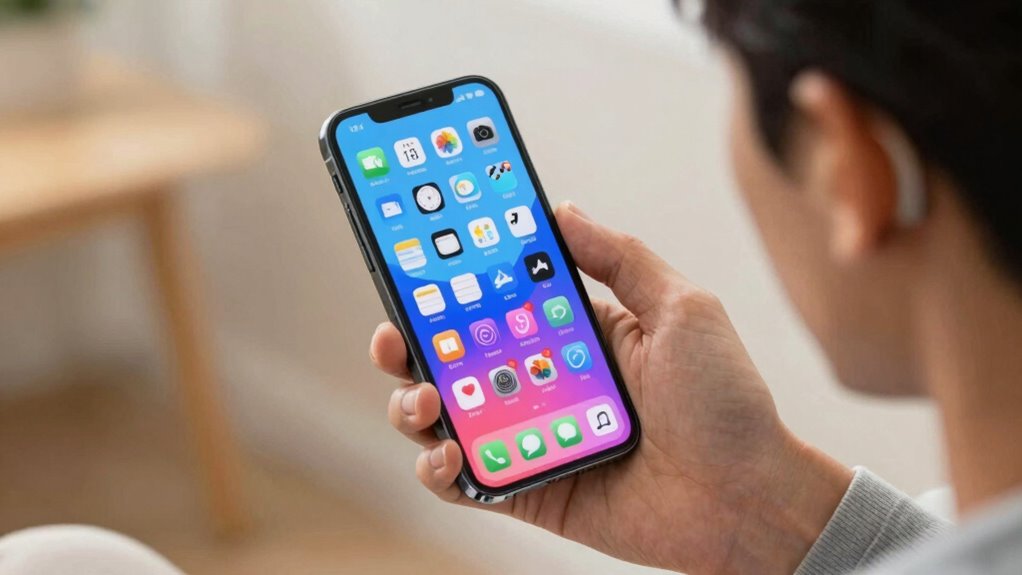

Accessible phones still matter because they make sure everyone, regardless of physical or cognitive challenges, can fully use smartphones. They offer features like voice control, tactile buttons, and larger screens that help you stay connected, work, and navigate easily. These tools promote independence and confidence, fitting seamlessly into daily life. If you want to understand how inclusive design benefits all users and discover innovative solutions, keep exploring how these features make a real difference.

Get everyday helpers delivered free with Prime
- Fast, free delivery on millions of items
- Prime Video, Amazon Music and more included
- Member-only deals all year
Key Takeaways
- Accessible phones ensure inclusivity for users with physical or cognitive challenges, promoting equal technology use.
- Physical buttons and tactile feedback provide reliable interaction options beyond touchscreens.
- Voice command features support hands-free control for users with mobility or vision impairments.
- Combining multiple interaction modes enhances independence and confidence in diverse environments.
- Inclusive design principles foster usability for all, emphasizing that accessibility remains vital in a smartphone era.
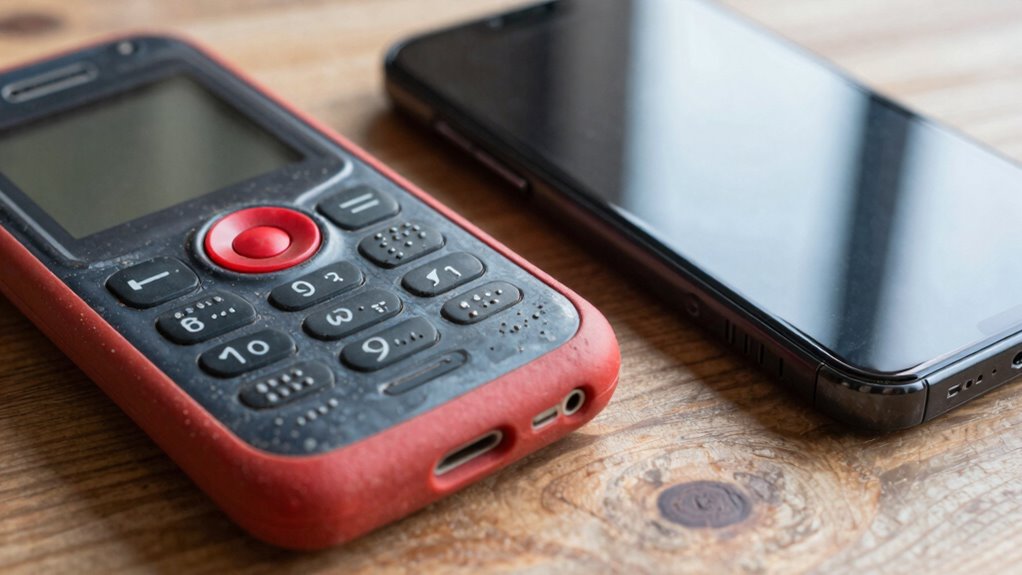
In today’s smartphone-driven world, having access to technology shouldn’t be limited by physical or cognitive challenges. Many people rely on smartphones for communication, work, navigation, and entertainment, but not everyone finds these devices equally accessible. That’s where accessible phones come into play. They’re designed to bridge the gap, ensuring everyone can use and benefit from mobile technology. Whether you have limited dexterity, impaired vision, or cognitive differences, accessible phones offer features that make daily tasks possible and less frustrating.
One key feature that highlights the importance of accessible phones is voice command technology. With voice commands, you can control your phone hands-free, which is especially helpful if physical buttons are difficult for you to press or operate. Instead of hunting for tiny icons or struggling with touchscreens, you can simply speak to your device, asking it to send a message, make a call, or open an app. Voice recognition has improved significantly, making it more accurate and reliable, even in noisy environments. This feature empowers you to stay connected and productive without the need for fine motor skills or perfect vision.
Physical buttons still hold value in accessible phone design, despite the popularity of touchscreen interfaces. For many users, physical buttons provide tactile feedback, allowing you to confirm your inputs without looking. This is crucial if you have vision impairments or find it hard to navigate complex menus on a screen. Buttons for functions like volume control, home, or power are often easier to locate and operate, especially for those with limited dexterity. Some accessible phones incorporate large, well-spaced physical buttons that can be operated with minimal effort, reducing fatigue and frustration during use. Incorporating inclusive design principles can further enhance usability for a broader range of users. Additionally, designing with universal accessibility in mind ensures that devices serve diverse needs effectively. Emphasizing user-centered design helps create more effective and adaptable solutions for everyone. Embracing assistive technology can also provide additional support tailored to individual needs, making devices even more inclusive.
Accessibility isn’t just about adding features; it’s about creating an inclusive experience. Voice commands and physical buttons complement each other, giving you multiple ways to interact with your device based on your needs. If you’re in a noisy place or your voice isn’t recognized, you can switch to physical buttons. Conversely, if pressing buttons feels uncomfortable or impossible, you can rely solely on voice commands. This flexibility ensures that you’re not dependent on a single mode of interaction, promoting independence and confidence. Incorporating biodiversity in design practices can also inspire innovative solutions that cater to diverse user needs.
accessible smartphones with physical buttons
As an affiliate, we earn on qualifying purchases.
As an affiliate, we earn on qualifying purchases.
Frequently Asked Questions
How Do Accessible Phones Differ From Standard Smartphones?
Accessible phones differ from standard smartphones by prioritizing accessibility features, making them easier to use for people with disabilities. You’ll find tools like voice commands, screen readers, and customizable buttons that enhance user independence. These features guarantee that everyone can operate the device comfortably, regardless of their abilities. In contrast, standard smartphones may lack some of these specialized functions, making accessible phones essential for inclusive communication and daily tasks.
Are Accessible Phones Compatible With All Popular Apps?
Like a sturdy bridge connecting two islands, accessible phones aim to unify diverse users. While they are compatible with many popular apps, integration challenges can arise, affecting the seamless user experience. Some apps may not fully support accessibility features, creating gaps in usability. Still, these phones serve as crucial gateways, ensuring everyone can access digital worlds, emphasizing that inclusion is essential even amidst the rapid evolution of smartphone technology.
What Is the Cost Difference Between Accessible Phones and Smartphones?
Accessible phones generally cost less than smartphones, making them more affordable for many users. The affordability comparison shows accessible phones often have simpler features and fewer advanced assistive technologies, which helps keep prices down. While smartphones offer more versatile assistive technology options and app compatibility, accessible phones focus on essential functions, providing an affordable option for those who need basic assistance, ensuring everyone has access to necessary communication tools.
Can Accessible Phones Be Customized for Different Disabilities?
Yes, accessible phones can be customized for different disabilities. You can enhance usability with voice command features, allowing you to control your device hands-free. Tactile feedback helps you feel your way through functions, making navigation easier. You can adjust settings for hearing, vision, or mobility needs, creating a personalized experience. With these options, your accessible phone adapts to your specific requirements, making technology more inclusive and user-friendly.
How Widely Available Are Accessible Phones Globally?
Accessible phones are increasingly available worldwide, but their global distribution varies markedly. In regions with strong market penetration, you’ll find more options tailored for disabilities, making these devices accessible to a broader audience. However, in developing countries, availability remains limited due to economic factors and infrastructure challenges. Overall, while accessibility features are expanding globally, ensuring widespread access still requires efforts to improve distribution and market penetration.
Conclusion
Think of accessible phones as your trusty lantern in a world filled with dazzling, bright screens. While everyone’s dazzled by the latest gadgets, your lantern quietly guarantees no one is left in the dark. It reminds us that technology’s true power lies in inclusion—lighting the way for all. So, in this smartphone world, accessible phones are your guiding stars, shining brightly to help everyone navigate life’s journey with clarity and confidence.
Halloween Picks
halloween
As an affiliate, we earn on qualifying purchases.