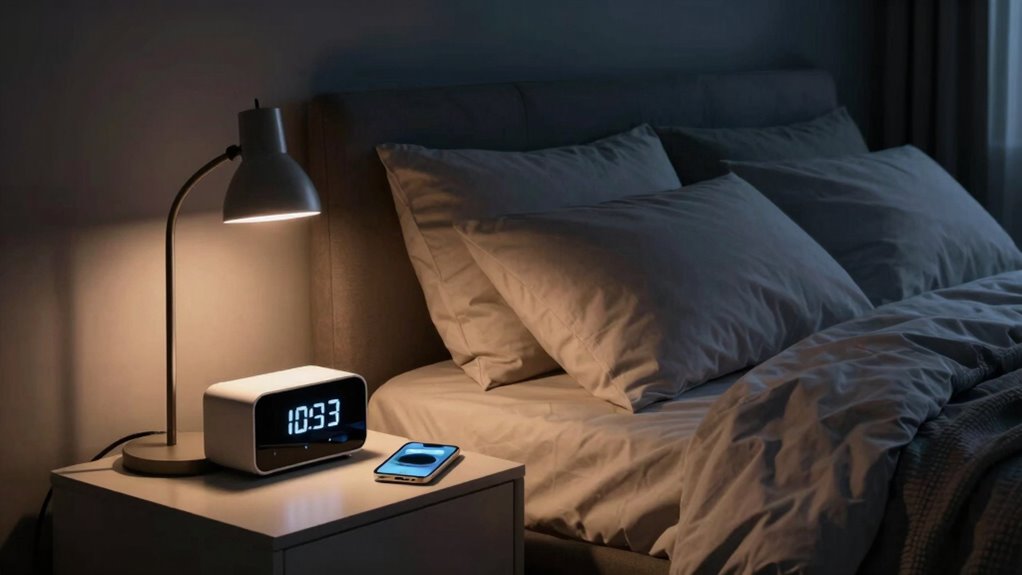

To reduce missed alerts during sleep, optimize your sleep environment by keeping it quiet, dark, and close to your devices to boost alert sound effectiveness. Personalize your alarms with louder, attention-grabbing sounds, and add vibrations or flashing lights. Regularly test and adjust your alarm settings to guarantee they’re loud enough and functioning properly. Using wearables or smart home devices can provide extra cues. Proper air quality also supports restful sleep and alertness—keep exploring for more effective strategies.

Get everyday helpers delivered free with Prime
- Fast, free delivery on millions of items
- Prime Video, Amazon Music and more included
- Member-only deals all year
Key Takeaways
- Optimize your sleep environment by placing devices closer and ensuring a dark, quiet, and comfortable space.
- Personalize alarm sounds to be loud, distinctive, and attention-grabbing, including vibrations or flashing lights.
- Regularly test and adjust alarm settings to maintain optimal volume and alert effectiveness over time.
- Use wearable devices and smart home systems to provide multiple, reinforcing alert cues.
- Maintain good indoor air quality to promote restful sleep and ensure alertness upon waking.

Missing alerts during sleep can be frustrating, especially if you rely on notifications for important updates or emergencies. Your sleep environment plays an essential role in whether you wake up to alerts or sleep through them. A quiet, dark, and comfortable space helps you rest deeply, but it can also make it harder to hear sounds like alarms or notifications. To reduce missed alerts, consider adjusting your sleep environment so it strikes a balance between restful sleep and alertness. For example, placing your device closer to your bed or using a volume that’s loud enough to wake you without disturbing your sleep can be effective. Keep in mind that environmental factors like background noise or sleeping with covers over your device might dampen alerts, so optimize your setup accordingly.
Alarm customization is another key to making sure you don’t miss critical notifications. Default alarms may not be loud or distinctive enough, so take the time to personalize them. Most devices allow you to adjust the volume, choose specific sounds, or set multiple alarms. Opt for a sound that’s loud, distinct, and unlikely to be ignored, such as a siren or a custom ringtone that you associate with urgency. Some devices also let you set vibrations or flashing lights as additional cues to wake you. You might even consider setting multiple alarms at different times or with varied sounds to guarantee you wake up for important alerts. Customizing alarms to your preferences increases the likelihood that you’ll notice and respond to them, especially when you’re in a deep sleep stage. Additionally, it’s wise to test your alarm setup periodically. Make sure the volume remains sufficient and that the alert sound is still effective. If you’re a heavy sleeper, you might need to increase the volume or choose more aggressive tones. Using wearable devices or smart home systems can further enhance your alerting system, as they often feature customizable notifications that can vibrate or light up. Combining a well-thought-out sleep environment with personalized alarm settings helps you stay connected to important alerts without compromising your sleep quality. Remember, the goal is to create a balance where you get restful sleep but are still responsive to essential notifications when needed. By paying attention to these details, you make sure you won’t miss critical alerts during your sleep, giving you peace of mind and improved safety. Incorporating proper ventilation and purification into your sleep environment can also help maintain optimal indoor air quality, which may contribute to more restful and alert sleep. Additionally, ensuring good air quality can support your overall health, making it easier to wake up when necessary. Regularly monitoring your indoor air conditions with air sensors can help identify potential issues before they affect your sleep quality. Moreover, maintaining proper ventilation can help prevent the buildup of pollutants and allergens that might disrupt your sleep or cause discomfort.
As an affiliate, we earn on qualifying purchases.
Frequently Asked Questions
What Are the Best Wearable Devices for Sleep Alert Accuracy?
You should consider wearable devices like the Fitbit Sense, Apple Watch Series 8, or Garmin Vivosmart 4 for sleep tracking, as they offer high wearable accuracy. These devices use advanced sensors to monitor your sleep stages, heart rate, and movement, providing precise insights. Their reliable sleep alerts help guarantee you wake up on time. When choosing, prioritize those with proven sleep tracking features and positive user reviews for the best results.
How Can I Customize Alert Settings for Better Sleep?
To improve your sleep experience, gently fine-tune your alert settings by focusing on sleep hygiene and choosing soothing alarm sounds. Adjust the alert volume and duration to avoid abrupt awakenings, and select gentle sounds that wake you gradually. Customizing these options helps you stay alert without disrupting your rest, ensuring you wake up refreshed and ready for the day. Small adjustments lead to better sleep quality and more reliable alerts.
Do Different Sleep Environments Affect Alert Notifications?
Your sleep environment considerably impacts alert notifications because factors like noise, light, and bed comfort can influence your alert sensitivity. A quiet, dark, and comfortable space helps you sleep more soundly, reducing the chances of missing alerts. Conversely, a disruptive environment may cause you to wake or become less responsive, making it harder to notice notifications. Adjust your sleep environment to optimize alert sensitivity, ensuring you don’t miss important alerts during sleep.
How Often Should I Update My Alert System?
You should update your alert system regularly, ideally every few months, to keep alert frequency ideal and prevent missed notifications. Consistent system maintenance ensures your alerts stay accurate, responsive, and reliable. By scheduling routine updates, checking for software patches, and adjusting alert settings as needed, you maintain a seamless connection to important notifications. Regular updates and maintenance help you stay in control, avoid missed alerts, and ensure your system adapts to your evolving needs.
Can Sleep Position Impact Alert Detection?
Yes, your sleep posture can impact alert detection. If you sleep in a position that blocks sensors or muffles sounds, alert sensitivity drops, increasing the chance of missed alerts. For example, sleeping face down might cover your device’s microphone or sensors, reducing their effectiveness. To improve detection, adjust your sleep posture to keep sensors unobstructed, ensuring your alert system stays responsive and effective throughout the night.
Conclusion
Just as Icarus learned, reaching for the sun without caution can lead to a fall, so too can ignoring alert settings cost you dearly. By fine-tuning your notifications and creating a dedicated sleep zone, you safeguard your rest without missing essential alerts. Remember, technology is a trusty guide—if you set it wisely, it can alert you without disturbing your peace. Stay vigilant, but also stay rested, and let your alerts serve you, not disrupt you.
Columbus Day / Indigenous Peoples' Day Picks
long weekend sales
As an affiliate, we earn on qualifying purchases.