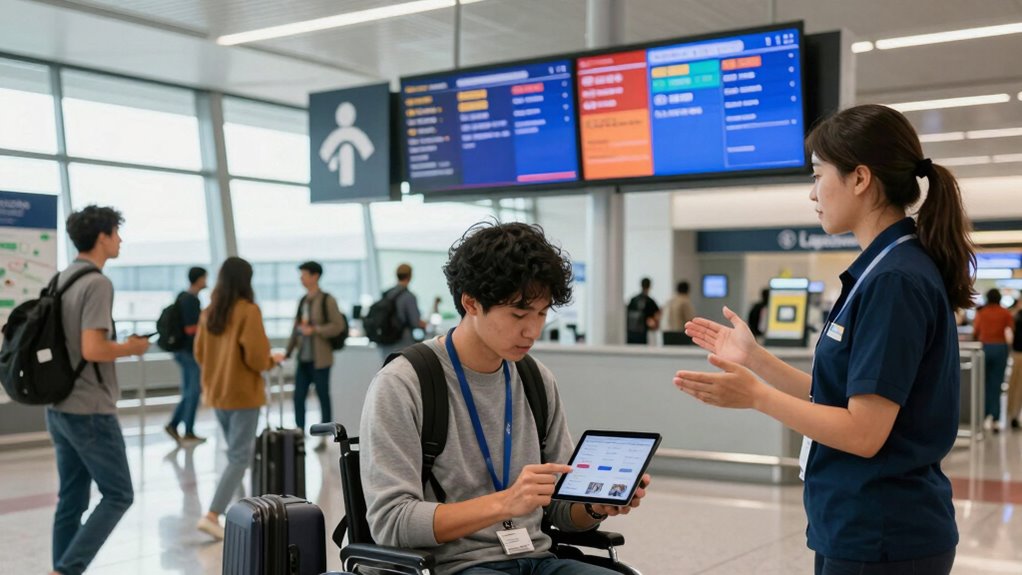

To plan accessible travel as a deaf or hard of hearing traveler, research and confirm accessibility features in accommodations, transportation, and services beforehand. Carry visual communication tools, such as apps or sign language cards, to ease communication. Prepare emergency plans with captioning apps and medical info cards. Reach out to airlines and hotels to make sure they can meet your needs. Staying organized and aware boosts your confidence—discover more tips to make your journey smoother.

Get everyday helpers delivered free with Prime
- Fast, free delivery on millions of items
- Prime Video, Amazon Music and more included
- Member-only deals all year
Key Takeaways
- Research and confirm accessibility features, such as visual alarms and sign language support, in accommodations and transportation before booking.
- Carry communication tools like sign language cards, visual apps, and medical info cards for effective interaction.
- Download captioning and instant messaging apps to receive real-time alerts and convey needs during emergencies.
- Familiarize yourself with airline and service provider policies on accessibility and sign language assistance.
- Prepare an organized travel plan with important contacts and resources to boost confidence and independence.
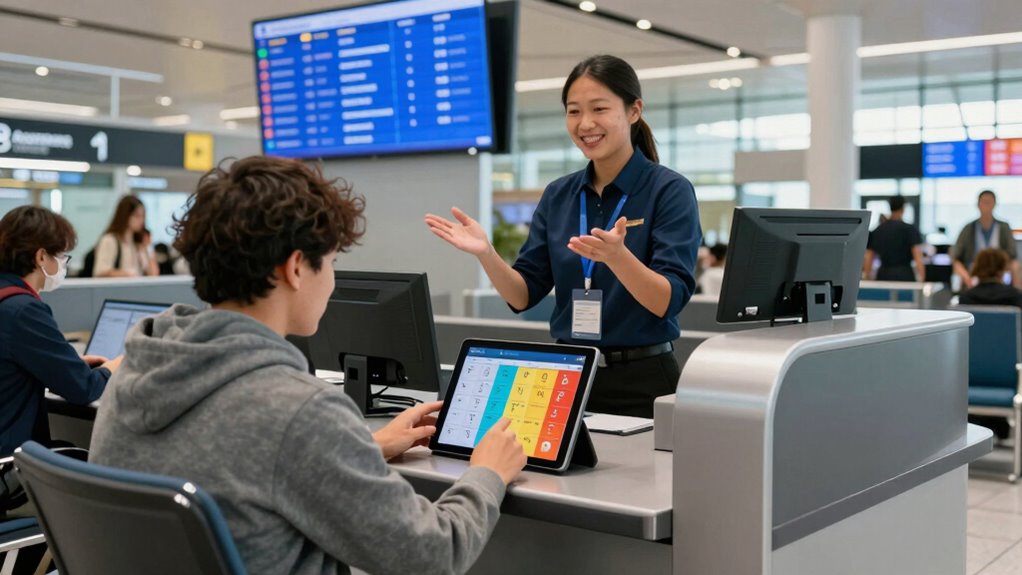
Travel planning can be especially challenging for deaf and hard of hearing flyers, but with the right strategies, you can navigate your trip confidently. One of the first steps is to research and access sign language resources that can help you communicate effectively during your journey. Many airports, airlines, and travel services now offer staff trained in sign language or have visual communication tools available. Familiarizing yourself with these resources beforehand ensures you’re prepared to ask questions, clarify instructions, or handle unexpected situations smoothly. Carrying a sign language card or a communication app can be a quick way to bridge any gaps if staff members aren’t fluent.
Emergency communication is another critical aspect to address when planning your trip. Since emergencies can happen anytime, you want to be ready with a plan that allows you to receive alerts and convey your needs clearly. Download apps that provide real-time captioning or instant messaging, so you can stay connected with airport personnel or emergency responders. It’s also wise to carry a medical information card that details your hearing needs and any necessary accommodations. Knowing how to access emergency services and having a plan in place reduces stress and helps guarantee your safety during travel.
Prepare for emergencies with real-time captioning apps and a medical info card to ensure safety and clear communication.
Booking accommodations and transportation with accessibility in mind is essential. Many hotels now provide visual alarms for emergencies and staff who are familiar with communicating via sign language or written notes. Confirm these features before booking, and don’t hesitate to request additional accommodations if needed. When arranging transportation, specify your communication preferences ahead of time. Whether it’s a ride-share driver or a shuttle service, informing them of your needs can lead to a smoother experience. Some services now offer features like visual notifications or the ability to communicate via text, which makes travel less intimidating.
Lastly, prepare for your journey by downloading relevant apps and resources that support your communication style. Many airlines have websites with detailed accessibility information, including sign language support and emergency procedures tailored for deaf and hard of hearing travelers. Keep a list of important contacts, including local emergency numbers, in a format that’s easy to access quickly. Being aware of visual communication tools and how they can assist you during your travels can significantly improve your overall experience. Staying organized and aware of the available resources helps you feel more confident and independent throughout your trip. With these planning tips, you’ll be better equipped to handle the challenges of travel and enjoy your adventure with peace of mind.
sign language communication cards for travel
As an affiliate, we earn on qualifying purchases.
As an affiliate, we earn on qualifying purchases.
Frequently Asked Questions
Are There Specific Airlines With Better Accessibility for Deaf Travelers?
Some airlines offer better accessibility for deaf travelers by providing sign language interpreters and visual alerts. Airlines like Delta, American, and Alaska Airlines often have more inclusive services, making communication smoother. You should check each airline’s policies beforehand, and request accommodations such as visual alerts for announcements and sign language support. Planning ahead guarantees you have the necessary assistance, making your journey more comfortable and stress-free.
How Can I Ensure My Emergency Communication Needs Are Met During Travel?
Like a trusty knight’s armor, you need solid emergency preparedness. Make certain to carry a card explaining your communication needs, including requesting sign language interpretation if needed. Share your plans with airline staff and travel companions, and download any relevant emergency apps. Always have a backup plan and keep emergency contact info handy. This proactive approach helps ensure your communication needs are met swiftly and effectively during your travels.
What Resources Are Available for Real-Time Captioning at Airports?
At airports, you can access real-time captioning through communication apps on your smartphone, which provide instant text updates. Sign language interpreters may also be available upon request at some airports, helping facilitate communication with staff. It’s helpful to contact your airline or airport ahead of time to arrange these resources, ensuring your travel experience is smooth. Always carry your preferred communication tools and confirm their availability before your journey.
How Can I Find Deaf-Friendly Tour Guides and Excursions?
To find deaf-friendly tour guides and excursions, start by searching online for providers that specify sign language or interpreter services. Look for tour companies with reviews highlighting accessibility for deaf travelers. Contact guides or agencies directly to confirm they offer sign language interpretation or other accommodations. Joining deaf travel groups or forums can also connect you with trusted guides and recommendations, ensuring a more inclusive and enjoyable experience.
What Devices Assist With Communication in Noisy Travel Environments?
Imagine turning up the volume on communication even when noise tries to drown it out. Assistive technology like hearing aids, FM systems, and personal amplifiers help you hear better, while devices that display sign language or provide real-time captions keep you connected. These tools amplify your experience, ensuring you catch every detail. Embrace these innovations to make noisy travel environments more accessible, comfortable, and enjoyable for you.
Conclusion
Traveling as a deaf or hard of hearing flyer might seem intimidating, but with the right planning, you open a world of adventure. Think of your trip as a story waiting to be written—each step a chapter filled with discovery and joy. By preparing ahead and staying proactive, you turn potential obstacles into opportunities for growth. So, embrace the journey with confidence—after all, your travel story is uniquely yours, and the world is ready to listen.
Halloween Picks
halloween
As an affiliate, we earn on qualifying purchases.