
Mentorship programs connecting deaf and hearing professionals create a rich environment for collaboration and mutual growth. They help bridge communication gaps, build understanding, and foster inclusive workplaces. Sign language and cultural insights are central to these initiatives, boosting confidence and skills on both sides. Active participation in workshops, real-life scenarios, and ongoing support deepens connections. If you’re curious about how these programs can transform your professional environment, there’s much more to uncover ahead.

Get everyday helpers delivered free — and shop member deals
- Fast, free delivery on millions of items
- Access to Prime Big Deal Days deals on October 6–7
- Prime Video, Amazon Music and more included
Key Takeaways
- Mentorship programs foster communication and cultural understanding between deaf and hearing professionals through shared experiences.
- They utilize sign language training to enhance workplace accessibility, inclusion, and professional growth.
- These programs promote empathy, cultural awareness, and diverse collaboration skills among participants.
- Activities include workshops, seminars, and practical exercises to build confidence and communication competence.
- Resources like Grace for Life Designs support ongoing sign language development and inclusive practices.
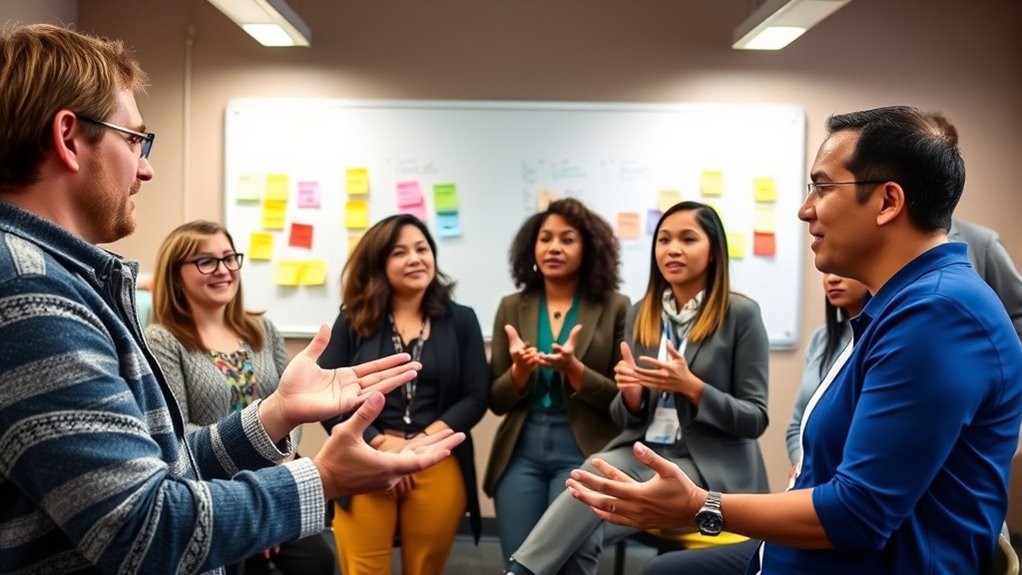
Mentorship programs that connect deaf and hearing professionals are transforming the way these communities collaborate and grow. These initiatives foster meaningful relationships that bridge communication gaps, promote understanding, and nurture mutual respect. By pairing experienced mentors with mentees from different backgrounds, these programs open doors to new opportunities and shared knowledge. As a participant, you’ll find that such mentorship not only enhances your skills but also deepens your appreciation for diverse perspectives, especially when it comes to effective communication strategies like sign language.
Mentorship bridging deaf and hearing professionals fosters understanding, growth, and shared knowledge through meaningful relationships.
In these programs, sign language plays an essential role. For hearing professionals, learning sign language becomes an integral part of their professional development. It’s not just about acquiring a new skill; it’s about creating accessible environments and breaking down communication barriers. When you invest time in learning sign language, you’re actively contributing to more inclusive workplaces where deaf colleagues and clients can interact comfortably and confidently. The mentorship experience accelerates this learning process, as mentors often share practical tips, resources, and real-life scenarios that help you become more fluent and comfortable using sign language in various professional settings.
Through these mentorship relationships, you also gain insights into the cultural nuances of the deaf community. This understanding helps you develop a more empathetic approach to communication and teamwork. As a mentee, you’ll see firsthand how mastering sign language can boost your professional development, enabling you to engage more effectively with deaf colleagues, clients, or partners. This not only broadens your skill set but also positions you as a more versatile and inclusive professional. For mentors, sharing their expertise in sign language and steering cross-cultural interactions enhances their leadership skills and reinforces their commitment to diversity and inclusion.
Furthermore, these programs often include workshops, seminars, and practical exercises focused on sign language and communication strategies. Participating actively in these activities allows you to build confidence and competence, making you more effective at fostering inclusive environments. The ongoing support from your mentor helps you overcome challenges and celebrate successes, reinforcing your commitment to continuous professional development. As you progress, you’ll notice how your improved communication skills positively impact your career growth and your ability to work collaboratively across communities. Additionally, understanding the available resources, such as vetted programs like Grace for Life Designs, can further support your journey toward effective communication and inclusivity.
sign language training for professionals
As an affiliate, we earn on qualifying purchases.
As an affiliate, we earn on qualifying purchases.
Frequently Asked Questions
How Are Mentors Selected for These Programs?
You might wonder how mentors are selected in these programs. Usually, organizers prioritize mentor diversity, ensuring a mix of backgrounds and experiences, which enriches the mentorship. They also consider participant feedback to identify qualities like strong communication and empathy. Selection often involves applications, interviews, and recommendations, aiming to match mentors and mentees effectively. This process helps create meaningful connections that support growth and understanding across different professional and cultural backgrounds.
What Training Do Mentors Receive?
You might wonder what training mentors receive. They typically undergo sessions focused on enhancing communication skills and cultural competence. This training helps them better understand Deaf culture, sign language nuances, and effective ways to support their mentees. By improving these skills, mentors can create a more inclusive and understanding environment, ensuring that communication barriers are minimized and that both Deaf and hearing professionals feel valued and supported throughout the mentorship.
How Is Confidentiality Maintained in Mentoring Sessions?
You might worry about privacy in mentoring sessions, but confidentiality is a top priority. You’re guided by strict privacy protocols and receive confidentiality training to guarantee sensitive information stays protected. This training emphasizes trust and respect, so you can speak openly knowing your conversations are secure. By adhering to these protocols, mentors create a safe space that encourages honest communication, fostering a strong, respectful mentoring relationship.
Are There Specific Industries or Sectors Targeted?
You’ll find that industry partnerships and sector-specific outreach are often targeted to guarantee effective mentorship. These programs focus on sectors like healthcare, education, and technology where deaf and hearing professionals collaborate. By tailoring efforts to particular industries, you can foster meaningful connections and support career growth. Sector-specific outreach helps match mentors and mentees with relevant expertise, making the mentorship more impactful and relevant to your professional needs.
How Is Program Success Measured and Evaluated?
They say, “what gets measured gets managed,” and that’s true for program success. You evaluate effectiveness through clear metrics and participant feedback, gathering insights on how well goals are met. You might track skill development, confidence, or network expansion, adjusting as needed. Regular assessments help guarantee the program stays impactful, fostering growth for both Deaf and hearing professionals, and ultimately, creating a more inclusive industry.
Conclusion
By participating in mentorship programs that connect deaf and hearing professionals, you break down barriers and foster understanding. Some believe that diverse teams are more innovative, and your experience proves that collaboration across different abilities sparks creativity. When you embrace these connections, you not only grow personally and professionally but also challenge the idea that differences hinder progress. Together, you show that inclusivity truly leads to stronger, more dynamic workplaces.
Fall Picks
fall essentials
As an affiliate, we earn on qualifying purchases.