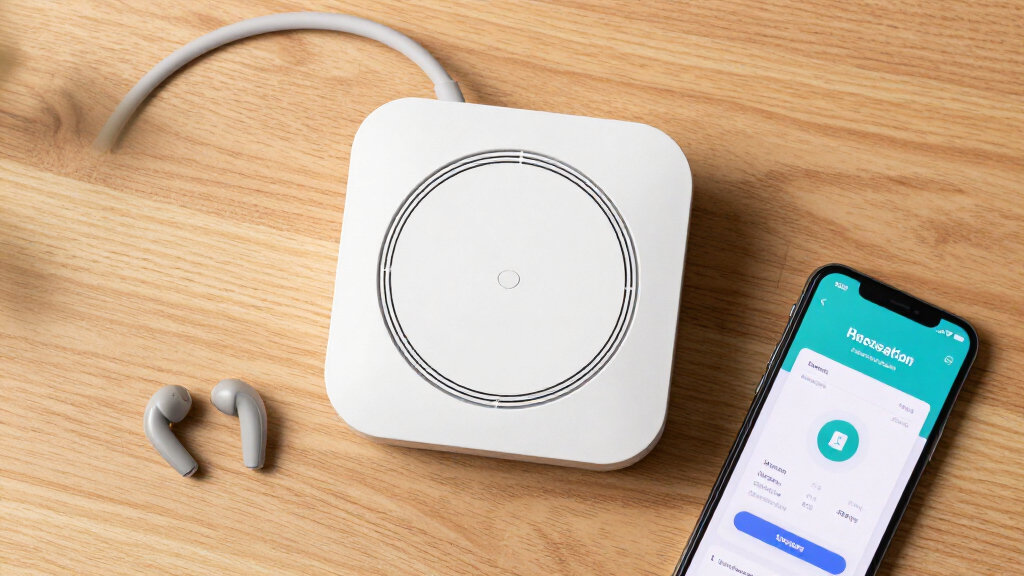

For someone choosing an induction hearing loop system, the first distinction is whether they need to listen through an existing loop or create a loop at a service point. I put the Williams Sound PLR BP1 first for people who need a dedicated portable receiver for IEC-compliant loop venues, while the Williams AV PLA90 is the clearest choice for a counter or desk that needs to send speech to nearby T-coil users. The Bellman BE9159 is a more flexible personal link between audio devices and T-coil hearing aids.

Get everyday helpers delivered free with Prime
- Fast, free delivery on millions of items
- Prime Video, Amazon Music and more included
- Member-only deals all year
These options do not all perform the same job: two are neckloops that pair with T-coil hearing aids, one is a venue-loop receiver, one is a counter loop transmitter, and the Listen Technologies LR-3200 is an RF receiver rather than an induction loop component. My ranking weighs how directly each product serves an induction loop buyer, how clearly its stated compatibility supports aid use, and what a buyer gives up in coverage, connectivity, or operating detail. Check the device type before comparing features: a receiver for a public loop cannot replace a counter transmitter, and an RF receiver requires a matching RF system.
Key Takeaways
- The Williams Sound PLR BP1 is the most direct pick for a person who needs a portable receiver for an IEC60118-4 compliant induction loop and does not have a T-coil aid.
- The Williams AV PLA90 serves a different need: it creates a short-range counter loop for visitors with T-coil hearing aids or cochlear implants.
- The Bellman BE9159 neckloop connects compatible audio sources to T-coil hearing aids, so it suits personal listening better than public loop reception.
- The NKL-402 is a simpler 3.5 mm neckloop alternative, but its listed details leave range and power requirements unclear.
- The Listen Technologies LR-3200 uses 72 MHz RF; buyers seeking an induction loop aid should confirm system compatibility before treating it as a suitable substitute.
| Williams Sound PLR BP1 Proloop Body Pack Induction Loop Receiver |  | Best Overall for Receiving Venue Loops | Type: Portable induction loop receiver | Compatibility: IEC60118-4 compliant induction loop systems | Battery life: Up to 200 hours | VIEW LATEST PRICE | See Our Full Breakdown |
| Williams AV PLA90 Portable Induction Counter Loop System with Microphone |  | Best for Service Counters | Type: Portable induction counter loop system | Coverage: 3–4 ft (1 meter) | Built-in microphone: Electret condenser | VIEW LATEST PRICE | See Our Full Breakdown |
| Bellman Neckloop BE9159 – Wireless Audio Transmission for T-Coil Hearing Aids |  | Best for Personal Audio with T-Coil Aids | Type: Neckloop for T-coil hearing aids | Compatibility: T-coil hearing aids | Named amplifiers: Bellman & Symfon Maxi Pro, Mino, Domino | VIEW LATEST PRICE | See Our Full Breakdown |
| NKL-402 Professional Neckloop with Break Away Safety Feature, 3.5mm Stereo Plug |  | Best Simple 3.5 mm Neckloop | Type: Professional neckloop | Compatibility: Hearing aids with T-coil | Connection: 3.5 mm stereo plug | VIEW LATEST PRICE | See Our Full Breakdown |
| Listen Technologies LR-3200 Intelligent DSP RF Receiver – 72MHz |  | Best for Existing 72 MHz RF Systems | Type: Wireless RF receiver | Frequency: 72 MHz | Technology: Intelligent DSP | VIEW LATEST PRICE | See Our Full Breakdown |
| induction hearing loop system | Type | Compatibility | Battery life |
|---|---|---|---|
| Williams Sound PLR BP1 Proloop | Portable induction loop receiver | IEC60118-4 compliant induction loop systems | Up to 200 hours |
| Williams AV PLA90 Portable Ind | Portable induction counter loop system | — | Up to 6 hours |
| Bellman Neckloop BE9159 | Neckloop for T-coil hearing aids | T-coil hearing aids | — |
| NKL-402 Professional Neckloop | Professional neckloop | Hearing aids with T-coil | — |
| Listen Technologies LR-3200 In | Wireless RF receiver | — | Not specified |
More Details on Our Top Picks
Williams Sound PLR BP1 Proloop Body Pack Induction Loop Receiver
The PLR BP1 is the most straightforward choice here for a person who needs to hear an existing induction loop and does not want to rely on a T-coil hearing aid. Its stated compatibility with IEC60118-4 compliant loop systems gives the buyer a useful standard to check against a venue’s installation. The simple on/off and volume controls also make its purpose clear: receive loop audio, adjust it, and listen through a connected headset or earphones.
Its biggest practical distinction is the combination of a dedicated receiver and up to 200 hours of battery life. That is a different proposition from the PLA90, which creates a small loop at a counter but only operates for up to six hours per charge. The PLR BP1 does not itself provide loop coverage or transmit speech; it depends on a compatible loop already being installed. Compared with the Bellman BE9159, it is also less versatile as a link to TVs and smart devices, since the supplied description focuses on loop reception rather than general audio-source connectivity.
The tradeoff is a conventional, self-contained design. It needs two AA batteries, which are not included, and offers no digital or Bluetooth connection. A T-coil user who already receives venue loops through their hearing aid may not need this extra receiver at all. I’d choose it when reliable access to loop venues is the main need, particularly for a user who wants the adjustable tone control and long stated battery life of a dedicated receiver.
Pros:- Compatible with IEC60118-4 compliant induction loop systems.
- Up to 200 hours of operation from two AA batteries.
- Simple on/off and volume controls with adjustable tone.
- Portable body-pack design with a 3.5 mm stereo audio output.
Cons:- Requires two AA batteries, which are not included.
- Works with compatible loop systems only and does not create loop coverage.
- No Bluetooth or digital connectivity is specified.
Best for: People who need a portable receiver for compatible public induction loops and whose listening setup does not rely on a hearing aid’s built-in T-coil.
Not ideal for: T-coil hearing aid users who can already hear venue loops directly, or buyers who want Bluetooth, digital audio, or a transmitter for a counter.
- Type:Portable induction loop receiver
- Compatibility:IEC60118-4 compliant induction loop systems
- Battery life:Up to 200 hours
- Power:Two AA batteries
- Audio output:3.5 mm stereo jack
- Tone control:Internal rotary control
- Battery indicator:Green LED flashes when battery is low
- Construction:ABS polycarbonate molded case
Our verdict“I’d choose the PLR BP1 when the goal is to receive audio from compatible venue loops with a dedicated portable aid.”
Williams AV PLA90 Portable Induction Counter Loop System with Microphone
The PLA90 is the only product in this group designed to create a local induction loop, which makes it the natural pick for a service desk, ticket booth, or information counter. Its built-in electret condenser microphone sends staff speech to nearby T-coil hearing aids or cochlear implants. Unlike the PLR BP1, which receives a signal from an existing venue loop, this is the transmitting side of the interaction.
The stated coverage is about 3–4 feet (1 meter), so this is for one nearby customer rather than a room or queue. The portable, self-contained unit can run on a rechargeable battery for up to six hours, and an optional external microphone can be connected if the built-in microphone does not suit the counter layout. Those features make it more self-contained than a neckloop, but also less useful for an individual listening to a TV or personal device.
Buyers should keep its narrow coverage and battery runtime in view. A counter that handles long shifts may need a charging plan or mains power, and the external microphone is not included as standard in the supplied details. Its accessibility-oriented design is listed as meeting ADA requirements, but the key fit question remains whether the intended customer’s aid has a working T-coil. For a venue seeking a compact counter solution, the PLA90 has a more relevant role than any other product here; for personal loop reception, the PLR BP1 is the better match.
Pros:- Self-contained portable transmitter for a counter or information desk.
- Sends speech to nearby T-coil hearing aids and cochlear implants.
- Built-in microphone plus an input for an optional external microphone.
- Rechargeable battery operation for up to six hours.
Cons:- Coverage is limited to approximately 3–4 feet.
- External microphone is optional, so it adds a separate setup need.
- Up to six hours of battery life may require charging or mains power during longer service periods.
Best for: Businesses and public-facing service desks that need to transmit staff speech to a nearby visitor with a T-coil hearing aid or cochlear implant.
Not ideal for: People seeking a personal receiver for an installed venue loop, or organizations that need broad-area coverage beyond a few feet.
- Type:Portable induction counter loop system
- Coverage:3–4 ft (1 meter)
- Built-in microphone:Electret condenser
- External microphone input:3.5 mm mono jack
- Headphone output:3.5 mm stereo jack
- Battery:12 VDC, 1300 mAh NiMH pack (10 AA cells)
- Battery life:Up to 6 hours
- Power supply:100–240 VAC input; 16 VDC, 1 A output
- Accessibility:Designed to meet ADA accessibility requirements
Our verdict“I’d pick the PLA90 for a staffed counter that needs a local loop, not for a listener trying to receive audio from a venue system.”
Bellman Neckloop BE9159 – Wireless Audio Transmission for T-Coil Hearing Aids
The Bellman BE9159 fills the gap between a hearing aid and a separate audio source. Worn around the neck, it sends audio from compatible Bellman & Symfon amplifiers and other devices through a 3.5 mm stereo connection to a T-coil equipped hearing aid. That makes it a personal listening accessory rather than a receiver for a public induction loop or a counter loop transmitter.
Its broader list of named sources gives it an edge over the NKL-402, whose compatibility is described more generally as any device with a 3.5 mm stereo output. The Bellman listing identifies the Maxi Pro, Mino, and Domino amplifiers, along with smart devices, TVs, and radios. A lightweight neck-worn fit and safety breakaway clasp suit repeated everyday use, while the listener can use the hearing aid’s T setting to receive the signal.
The limitation is that this convenience depends on both a T-coil hearing aid and a compatible source connection. It is not described as rechargeable, and the warranty is listed as 90 days, so buyers should not assume a particular battery arrangement or long-term coverage beyond the details provided. Compared with the PLR BP1, it is more flexible for personal audio but cannot stand in for a loop receiver at a venue. I’d favor it when the intended use is listening to connected devices through an existing T-coil aid.
Pros:- Connects compatible audio devices to T-coil hearing aids.
- Named compatibility includes Bellman & Symfon amplifiers, TVs, radios, and smart devices.
- Lightweight neck-worn design with a safety breakaway clasp.
- Uses a common 3.5 mm stereo headphone connection.
Cons:- Requires a T-coil hearing aid and switching to its T setting.
- Rechargeable operation is not specified.
- Listed warranty is 90 days.
Best for: T-coil hearing aid users who want a neck-worn connection to a compatible Bellman amplifier, TV, radio, or other 3.5 mm audio source.
Not ideal for: People without T-coil hearing aids, buyers looking for an installed loop receiver, or users who require confirmed rechargeable operation.
- Type:Neckloop for T-coil hearing aids
- Compatibility:T-coil hearing aids
- Named amplifiers:Bellman & Symfon Maxi Pro, Mino, Domino
- Other sources:Smart devices, TVs, and radios
- Connection:3.5 mm stereo headphone jack
- Wear style:Lightweight neck-worn design
- Safety:Breakaway clasp
- Warranty:90 days
Our verdict“I’d choose the BE9159 for personal audio through a T-coil aid when its 3.5 mm connection and supported source fit the setup.”
NKL-402 Professional Neckloop with Break Away Safety Feature, 3.5mm Stereo Plug
The NKL-402 is the straightforward neckloop choice for an audio source that already has a 3.5 mm stereo output. It couples that source to a hearing aid’s T-coil, providing a personal route for listening without requiring the listener to wear a separate receiver at the ear. Its breakaway feature is a useful design detail for a neck-worn accessory.
Compared with the Bellman BE9159, the NKL-402 has a less detailed compatibility description. The Bellman names several amplifiers and common source types, while the NKL-402 relies on the connector specification to indicate what may work. This broad plug compatibility can be appealing for a simple setup, but it leaves the buyer with more responsibility to check the source output and the hearing aid’s T-coil function. It is also not a transmitter for a service counter like the PLA90 and does not receive a venue loop like the PLR BP1.
The main drawback is missing operating information. The supplied details do not state battery life, power requirements, or range, which makes it hard to plan for extended listening or judge the expected setup. I would choose it only when the connection and T-coil requirements are already known and the simpler specification is acceptable. Buyers who want named device support or clearer product details have a stronger case for the Bellman; buyers needing a complete loop system should look to the PLA90 instead.
Pros:- Connects a compatible 3.5 mm stereo audio source to a T-coil hearing aid.
- Breakaway safety feature is included.
- Simple accessory format for personal assistive listening.
Cons:- Requires a hearing aid with a working T-coil.
- Battery life, power needs, and operating range are not specified.
- Compatibility details are less explicit than the Bellman BE9159 listing.
Best for: T-coil hearing aid users who need a basic neckloop for a compatible 3.5 mm audio source and value a breakaway design.
Not ideal for: Buyers who need published battery, range, or power details, or anyone seeking a full room or counter induction loop system.
- Type:Professional neckloop
- Compatibility:Hearing aids with T-coil
- Connection:3.5 mm stereo plug
- Source compatibility:Audio devices with 3.5 mm stereo output
- Transmission:Wireless coupling to T-coil hearing aids
- Safety feature:Breakaway
Our verdict“I’d consider the NKL-402 when a basic T-coil neckloop is all that is needed and the source’s 3.5 mm output is confirmed.”
Listen Technologies LR-3200 Intelligent DSP RF Receiver – 72MHz
The LR-3200 is a compact receiver for a 72 MHz RF audio system, with intelligent DSP technology listed for processing the received audio. That can make it relevant to professional assistive listening installations that use compatible RF transmitters. It is the least direct match for a search about induction hearing loops, though: RF reception is not the same mechanism as receiving magnetic audio from an induction loop.
This difference matters more than its compact form. The PLR BP1 is explicitly compatible with IEC-compliant induction loop systems, while the LR-3200 requires an RF system on its stated 72 MHz frequency. A buyer should confirm that the venue or transmitter uses the matching RF equipment before choosing it. The product details do not list T-coil compatibility, an induction loop standard, an audio output connector, or battery life, so those points need checking against the intended setup.
For a venue already standardized on compatible 72 MHz equipment, this may be a practical receiver to consider. For a person trying to connect directly to a loop in a public space or use an aid’s T-coil, the PLR BP1 or a suitable neckloop is better aligned. I rank the LR-3200 last because its role in assistive listening is clear enough, but its supplied details do not establish it as an induction loop aid.
Pros:- Compact wireless receiver for compatible 72 MHz RF systems.
- Intelligent DSP technology is specified.
- May suit professional assistive listening setups that already use matching RF equipment.
Cons:- Uses RF rather than an induction loop signal.
- Compatibility with a particular transmitter must be checked.
- Battery life and output connection details are not specified.
Best for: Organizations or listeners who already use a compatible 72 MHz RF assistive listening system and need a matching receiver.
Not ideal for: Buyers specifically seeking an induction loop receiver, T-coil neckloop, or counter loop system.
- Type:Wireless RF receiver
- Frequency:72 MHz
- Technology:Intelligent DSP
- Design:Compact and lightweight
- Battery life:Not specified
- Loop compatibility:Not specified
Our verdict“I’d select the LR-3200 only for a known compatible 72 MHz RF system, not as a default induction loop aid.”

How We Picked
I ranked these five products by how well their stated role matches the search for an induction hearing loop system. That means distinguishing equipment that receives audio from a venue loop, equipment that transmits speech into a local loop, and neckloops that couple a separate audio source to a T-coil hearing aid. A product can support assistive listening without being an induction loop system itself, so the category fit is part of the ranking.
I gave more weight to clearly described T-coil or IEC loop compatibility, practical setup information, and a defined use case than to broad claims about sound clarity. I also considered what the supplied details leave unanswered: battery life, range, required companion equipment, and connector needs all affect whether a buyer can use a device as intended. That is why the PLR BP1 leads for loop reception and the PLA90 ranks highly for creating a local counter loop, while the RF receiver sits last for this particular query.
The product information does not establish direct comparisons of sound quality, independent performance results, or a shared set of operating conditions. I therefore avoid claims that one will sound better in practice. My recommendations reflect the specified compatibility, controls, coverage, power, and connection details, and buyers should match those details to their hearing aid and venue or audio system before purchasing.
| induction hearing loop system | Type | Compatibility | Battery life |
|---|---|---|---|
| Williams Sound PLR BP1 Proloop | Portable induction loop receiver | IEC60118-4 compliant induction loop systems | Up to 200 hours |
| Williams AV PLA90 Portable Ind | Portable induction counter loop system | — | Up to 6 hours |
| Bellman Neckloop BE9159 | Neckloop for T-coil hearing aids | T-coil hearing aids | — |
| NKL-402 Professional Neckloop | Professional neckloop | Hearing aids with T-coil | — |
| Listen Technologies LR-3200 In | Wireless RF receiver | — | Not specified |
Factors to Consider When Choosing Induction Hearing Loop Systems
I would start by identifying the job the equipment must do. The phrase “induction hearing loop system” can refer to a venue loop, a receiver used with that loop, or a small transmitter at a service counter. The products here also include neckloops for personal audio and an RF receiver, so choosing by product name alone can lead to a mismatch.Decide whether you need to receive or create a loop
A loop receiver listens to a signal already installed in a room or venue. The PLR BP1 is the clearest example in this group, with stated compatibility for IEC60118-4 compliant systems. A counter loop works in the opposite direction: it sends nearby staff speech to a visitor’s T-coil aid. The PLA90 is built for that purpose and lists coverage of about 3–4 feet.
Neither role replaces the other. A receiver will not create an accessible counter, and a counter transmitter will not let its owner tune into an existing venue loop. Before buying, write down whether the need is reception, local transmission, or personal audio from a TV or phone. That one distinction narrows this lineup more than any secondary feature.
Check the hearing aid and source connection
A hearing aid’s T-coil is the key compatibility point for the two neckloops and the PLA90. The aid must have a functioning telecoil, and the user may need to select its T setting to hear the signal. The PLR BP1 is a separate receiver for compatible loop systems, which can help a listener who does not use a T-coil hearing aid or needs an independent listening device.
For personal audio, compare the source connection with the product listing. The Bellman BE9159 names supported amplifiers and common devices, while the NKL-402 specifies a 3.5 mm stereo source connection but gives fewer compatibility details. A matching plug does not by itself establish that every phone or adapter will work. Confirm the output path, any required adapter, and whether the listener can use the accessory comfortably.
Match coverage and operating time to the setting
Coverage changes the recommendation. The PLA90 is intended for someone standing near a service point; its 3–4 foot range is not a room-wide solution. For a public venue, buyers should check the installed loop’s coverage and standard rather than infer performance from the portable receiver. The neckloop products are worn close to the listener and serve personal audio connections rather than broadcasting to other customers.
Power details matter just as much. The PLR BP1 lists up to 200 hours using two AA batteries, whereas the PLA90 lists up to six hours from its rechargeable NiMH pack. The Bellman and NKL-402 listings do not provide comparable runtime information, and the LR-3200’s battery life is unspecified. For a daily or staffed use case, ask the supplier for the missing runtime and charging details before relying on them.
Separate induction loop equipment from RF systems
The Listen Technologies LR-3200 receives 72 MHz RF. Although RF systems can support assistive listening, they do not use the induction loop signal described by the other loop products here. That means the receiver needs a compatible RF transmitter and frequency arrangement; it should not be assumed to work with a loop installed in a room or with a T-coil simply because both are accessibility equipment.
If you are equipping a venue, inventory the transmitter or loop already installed and identify its technology before selecting a receiver. If you are an individual, ask the venue whether it offers a hearing loop or an RF listening system. This avoids buying a receiver that cannot pair with the signal available at the intended location.
Weigh simplicity against operating detail
The PLR BP1 provides a clear set of controls and detailed battery information, making its operating expectations easier to understand. The PLA90 also describes its microphone inputs, power supply, and limited coverage. By contrast, the NKL-402 and LR-3200 have important gaps in the supplied details, including runtime or connector information. That does not prove they will fail a particular use; it means the buyer should confirm the missing facts before purchase.
Safety and wearability are relevant for neck-worn products. Both neckloops include a breakaway feature, and the Bellman description also identifies a lightweight design. For users who will wear one for extended periods, check cable length, fit, and how the source device will be carried. Comfort cannot be inferred from connector specifications alone.
Frequently Asked Questions
What is the best induction hearing loop option in this comparison?
For receiving audio from a compatible installed induction loop, I would start with the Williams Sound PLR BP1 because its listing explicitly names IEC60118-4 loop compatibility and gives clear controls and battery information. It is not a transmitter, so a business creating access at a counter should choose the Williams AV PLA90 instead. The right pick depends on whether you need to receive an existing loop or provide one locally.
Can a person use these products without a T-coil hearing aid?
The PLR BP1 is a separate induction loop receiver, so it is the most relevant option here for someone who does not plan to use a hearing aid’s T-coil. The Bellman BE9159, NKL-402, and PLA90 all rely on T-coil compatibility for their described hearing aid use. The LR-3200 is an RF receiver and would need a matching RF system; the supplied details do not say it connects directly to a T-coil aid.
Is the Williams AV PLA90 suitable for a whole room?
No room-wide coverage is specified for the PLA90. Its stated coverage is approximately 3–4 feet, which makes it a short-range counter or service-desk product for a nearby visitor with a T-coil hearing aid or cochlear implant. A venue needing broader access should assess a properly installed loop or a compatible venue-wide assistive listening system instead.
How is a neckloop different from an induction loop receiver?
A neckloop worn by the listener connects an audio source to a T-coil hearing aid, usually through a cable or headphone jack on the source. A dedicated induction loop receiver listens to a loop installed in a room or venue, while a counter loop transmitter sends speech to nearby T-coil users. The Bellman and NKL-402 are personal neckloops; the PLR BP1 is a receiver and the PLA90 is a counter transmitter.
Is the Listen Technologies LR-3200 an induction loop receiver?
The supplied details identify the LR-3200 as a 72 MHz RF receiver with DSP, not as an induction loop receiver. It may fit an assistive listening setup that already uses compatible RF equipment, but a buyer should confirm the transmitter and frequency match. Someone seeking to receive an induction loop signal should look for explicit loop compatibility such as the PLR BP1 provides.
Conclusion
My recommendations depend on the listener and the setting. For an individual who needs to pick up audio from compatible public induction loops, I would choose the Williams Sound PLR BP1, especially when a separate receiver and long stated battery runtime are useful. For an organization serving visitors at a desk, the Williams AV PLA90 is the purpose-built choice, provided its short range fits the counter.
For personal TV, radio, or amplifier audio through a T-coil hearing aid, the Bellman BE9159 has the clearest source compatibility details. The NKL-402 is a simpler option when a 3.5 mm source is confirmed and the buyer accepts its missing operating details. I would reserve the Listen Technologies LR-3200 for an existing compatible 72 MHz RF system. Matching the signal type, hearing aid, and coverage to the intended use is the decision that matters most in this lineup.