
Finding the best hearing impaired phones with photo buttons can significantly improve communication for users with hearing challenges. The top picks include the ClearSounds CSC500 as the overall best for its amplification and simple photo button interface, and the Extra-Loud 110dB Landline for its loud ringer and large buttons ideal for severe hearing loss. These phones typically balance features like amplification, ease of use, and durability, but tradeoffs often involve higher prices or limited smart features. Continue reading to see a detailed comparison and find the right fit for your needs.
Key Takeaways
- Top models combine amplification with large, easy-to-press photo buttons for intuitive use.
- Phones with adjustable volume and ringer pitch are essential for users with varying hearing levels.
- Price varies widely; the most feature-rich options tend to be more expensive, but simpler models can offer good value.
- Durability and ergonomic design matter, especially for seniors or users with dexterity issues.
- Compatibility with landlines and cordless options depends on user preferences and existing home setups.
| ClearSounds CSC500 Amplified Landline Phone with Speakerphone and Photo Frame Buttons |  | Best Overall for Versatile Hearing Support and Visual Memory | Number of Batteries: 1 AA | Power Source: Corded Electric | Dialer Type: Single Keypad | VIEW LATEST PRICE | See Our Full Breakdown |
| Extra-Loud 110dB Landline Phone for Seniors & Hearing Impaired with Large Buttons and Photo Speed Dial – Black | 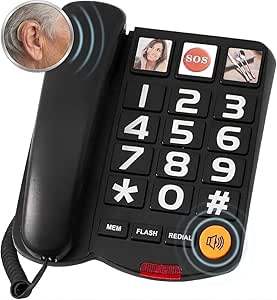 | Best Value for Loud Ring and Large Buttons in a Corded Design | Power Source: Corded Electric | Volume (Ringer): 110dB+ | Receiver Gain: 80dB+ | VIEW LATEST PRICE | See Our Full Breakdown |
| Hamilton CapTel 2400iSPNBT Captioned Telephone |  | Best for Real-Time Captioning and Internet Connectivity | Amplification Gain: 40dB | Display Type: Large Touch Screen | Connectivity: Wi-Fi and Ethernet | VIEW LATEST PRICE | See Our Full Breakdown |
| Serene Innovations Big Button Landline Phone for Seniors with Dementia and Hearing Impairment |  | Best for Memory Support and Hearing Assistance without Power | Power Source: Phone Line | Ring Volume: 85 dB | Recording Capacity: 24 Minutes | VIEW LATEST PRICE | See Our Full Breakdown |
| Big Button Landline Phone for Seniors with 10 Picture Keys (EX-LD-828) |  | Best for Simple One-Touch Dialing with Hearing Aid Compatibility | Model Number: EX-LD-828 | Button Type: 10 Picture Keys | Connection Type: Corded | VIEW LATEST PRICE | See Our Full Breakdown |
| VTech SN5147 Amplified Corded/Cordless Senior Phone with Answering Machine |  | Best Overall for Versatile Hearing and Visual Support | Model Number: SN5147 | Type: Amplified Corded/Cordless Senior Phone with Answering Machine | Ringer Volume: 90dB (amplified) | VIEW LATEST PRICE | See Our Full Breakdown |
| Big Button Landline Phone for Seniors with 10 Photo Speed Dial and 110dB Ringer |  | Best Value for Large Buttons and High-Volume Ringer | Power Source: AC adapter | Color: White | Material: Plastic (ABS) | VIEW LATEST PRICE | See Our Full Breakdown |
| Big Button Corded Landline Phone for Seniors with Amplified Volume and Picture Buttons |  | Best for Low Vision and Dementia Support | Volume Amplification: Up to 40 dB+ | Button Type: Large buttons with 3 replaceable picture buttons | Memory Retention: Data preserved when unplugged | VIEW LATEST PRICE | See Our Full Breakdown |
| SMPL Hands-Free Dial Corded Phone with Photo Memory and One-Touch Dialing |  | Best for Simplicity and One-Touch Contact Access | Power Source: Corded | Dialer Type: Single Keypad | Answering System Type: Microcassette | VIEW LATEST PRICE | See Our Full Breakdown |
| VTECH SN1127 Amplified Corded Answering System with 8 Photo Speed Dial and Enhanced Sound Features |  | Best for Enhanced Sound and Visual Alerts | Model Number: SN1127 | Speed Dial Keys: 8 (with photo customization) | Ringer Volume: 90dB | VIEW LATEST PRICE | See Our Full Breakdown |
| Clarity P300 Landline Phone with Sound Amplification, Adjustable Ringer Pitch and Volume Control |  | Best for Amplified Sound and Customizable Ringer Settings | Sound Amplification: 26 dB | Adjustable Ringer: Pitch and volume control | Design: Large buttons for limited dexterity | VIEW LATEST PRICE | See Our Full Breakdown |
More Details on Our Top Picks
ClearSounds CSC500 Amplified Landline Phone with Speakerphone and Photo Frame Buttons
The ClearSounds CSC500 stands out as the most comprehensive option, combining up to 30dB amplification with T-Coil compatibility, making it suitable for users with various hearing aids. Its eight photo memory dial keys allow for quick access, while the speakerphone and visual flasher reduce missed calls—features that surpass the basic loud ringer of the Extra-Loud 110dB Landline Phone. Compared to the Hamilton CapTel, it lacks captioned messaging but offers straightforward landline functionality. The main tradeoff is its reliance on a corded power source, limiting mobility, and its plastic enclosure feels less premium. This pick makes the most sense for users who want reliable amplification, visual cues, and multiple accessibility features without relying on internet connectivity.
Pros:- Up to 30dB amplification for enhanced hearing clarity
- T-Coil compatibility with hearing aids and cochlear implants
- Eight photo memory dial keys for quick, visual access
Cons:- No caller ID functionality
- Relies on corded electric power, limiting mobility
- Plastic enclosure may feel less durable
Best for: Hearing aid users who need amplified sound and visual memory aids in a wired landline setup
Not ideal for: People seeking wireless or internet-based solutions, or those who prefer a more premium build quality
- Number of Batteries:1 AA
- Power Source:Corded Electric
- Dialer Type:Single Keypad
- Compatible Devices:Standard Landline, Cochlear Implants, T-Coil Hearing Aids
- Conference Call Capability:3 way
- Item Dimensions:9.25 x 6 x 2.25 inches
Bottom line: This phone is ideal for users who prioritize amplification and visual dialing in a stable, wired device.
Extra-Loud 110dB Landline Phone for Seniors & Hearing Impaired with Large Buttons and Photo Speed Dial – Black
The Extra-Loud 110dB Landline Phone is designed for those who need an extremely loud ring and large, easy-to-press buttons. Its 80dB receiver gain and 110dB ringer volume make it a standout compared to the Big Button Landline Phone for Seniors with 10 Picture Keys, which has a more modest volume. While it offers three photo speed dial buttons and a sturdy corded build, it lacks caller ID and may require manual programming to set up the photo memory keys. Its corded design limits mobility, but the high decibel alert makes it very effective for users with severe hearing loss who don’t need internet features or captioning. This phone suits seniors or hearing-impaired users who want simplicity and maximum loudness.
Pros:- Ringer volume exceeds 110dB, ideal for severe hearing loss
- Large buttons with customizable photo speed dial for easy use
- Durable ABS construction with simple design
Cons:- No caller ID functionality
- Potential programming issues with photo memory
- Limited mobility due to corded design
Best for: Seniors or hearing-impaired users needing the loudest ringer and large buttons in a straightforward, corded phone
Not ideal for: Those who prefer cordless or require caller ID and advanced features, or users seeking a wireless setup
- Power Source:Corded Electric
- Volume (Ringer):110dB+
- Receiver Gain:80dB+
- Speed Dial Buttons:3 Photo + 10 Two-Touch
- Material:ABS
- Dimensions:7 x 3.4 x 7.9 inches
Bottom line: This phone is perfect for users who need maximum loudness and simplicity in a wired device without extra features.
Hamilton CapTel 2400iSPNBT Captioned Telephone
The Hamilton CapTel 2400iSPNBT is a specialized captioned phone that excels in providing real-time text of calls via its large touch screen, making it ideal for users with moderate to severe hearing loss. Its 40dB amplification and Wi-Fi capability set it apart from basic amplified phones like the ClearSounds CSC500. Compared with landlines that lack captioning, this model offers a more inclusive experience but requires internet access and setup—adding complexity and cost. The privacy concern with live captioning may be a drawback for some, and it is only available in the U.S. This device is best for those who want detailed, real-time captions and have internet access to support its features.
Pros:- Large touch screen displays clear, real-time captions
- Up to 40dB amplification for louder sound
- Wi-Fi and Ethernet connectivity for internet-based features
Cons:- Requires internet connection and setup
- Limited to U.S. users due to FCC certification
- Possible privacy concerns with live operator captions
Best for: Hearing-impaired users who need real-time captions and are comfortable with internet setup
Not ideal for: Users who prefer simple, non-internet-dependent phones or need a device outside the U.S.
- Amplification Gain:40dB
- Display Type:Large Touch Screen
- Connectivity:Wi-Fi and Ethernet
- Additional Features:Captioned Messages, Speakerphone
- Certification:FCC
Bottom line: This captioned phone is tailored for users who want detailed call transcriptions and have reliable internet access.
Serene Innovations Big Button Landline Phone for Seniors with Dementia and Hearing Impairment
The Serene Innovations Big Button Landline is ideal for seniors with visual, auditory, or memory challenges. Its large buttons and photo-dialing simplify calling, especially compared to smaller keypads like on the Big Button Landline Phone for Seniors with 10 Picture Keys. The 85dB loud ring ensures alerts are heard, and its operation without electrical power makes it reliable during power outages. However, its limited recording capacity and lack of caller ID reduce its utility for ongoing communication management. This model fits best for users who need straightforward, visual dialing and loud alerts but don’t require advanced features like caller ID or extensive recording.
Pros:- Large photo buttons for easy dialing
- Loud 85dB ring volume for hearing-impaired users
- Operates without electrical power during outages
Cons:- No caller ID functionality
- Limited 24-minute recording capacity
- Basic feature set without advanced options
Best for: Seniors with memory issues or visual impairments needing a simple, reliable phone with visual cues
Not ideal for: Users who want caller ID, lengthy message recording, or internet features
- Power Source:Phone Line
- Ring Volume:85 dB
- Recording Capacity:24 Minutes
- Color:Beige
- Material:Plastic
Bottom line: This phone suits seniors needing visual dialing and loud alerts in a simple, battery-independent device.
Big Button Landline Phone for Seniors with 10 Picture Keys (EX-LD-828)
The EX-LD-828 offers a straightforward approach with 10 large, picture-based keys for quick dialing, making it an excellent choice for users with limited vision or cognitive challenges. Its amplified sound and hearing aid compatibility ensure clear conversations, comparable to the ClearSounds CSC500. However, its corded design limits mobility, and with only 10 programmable buttons, it’s less flexible for extensive contacts. This model makes the most sense for users who want a highly accessible, easy-to-use phone that focuses on quick, visual, one-touch dialing without extra bells and whistles.
Pros:- Large, picture-based keys for easy navigation
- Hearing aid compatible for clearer conversations
- Amplified volume enhances sound clarity
Cons:- Corded design limits user mobility
- Limited to 10 pre-programmed buttons
- No advanced features like caller ID or internet connection
Best for: Seniors or hearing-impaired users who need quick, visual dialing and hearing aid compatibility in a simple, corded unit
Not ideal for: People seeking cordless options, caller ID, or extensive programmable buttons
- Model Number:EX-LD-828
- Button Type:10 Picture Keys
- Connection Type:Corded
- Hearing Aid Compatibility:Yes
Bottom line: This phone is best for users who want a simple, durable device with visual cues and hearing aid support in a corded format.
VTech SN5147 Amplified Corded/Cordless Senior Phone with Answering Machine
This model stands out for combining high-volume amplification with a large, high-contrast display and photo speed dial buttons, making it ideal for seniors who need both visual and auditory cues. Compared with the VTECH SN1127, it offers a more comprehensive call management system, including a 1,000-number call blocker. However, the SN5147’s bulkier design may be less suitable for users seeking a lightweight, space-saving device. Its ability to support corded and cordless usage adds flexibility, but setup can be complex for some users unfamiliar with call blockers or trilingual prompts. Overall, this phone makes the most sense for those prioritizing a robust, all-in-one solution with advanced features.
Pros:- Extra-large buttons and high-contrast display for easy operation
- 90dB amplified ringer with flashing alerts enhances visibility and sound
- Supports up to 1,000 blocked numbers for effective call management
- Built-in answering machine with caller ID announcements and multilingual prompts
Cons:- Potentially bulky for small spaces or users with limited mobility
- Feature-rich setup may be daunting for less tech-savvy users
Best for: Seniors who need high amplification, visual alerts, and extensive call blocking in a versatile device
Not ideal for: Users preferring compact or minimalist phones or those uncomfortable with advanced setup procedures
- Model Number:SN5147
- Type:Amplified Corded/Cordless Senior Phone with Answering Machine
- Ringer Volume:90dB (amplified)
- Audio Assist:50dB amplification
- Call Blocker Capacity:1,000 names/numbers
- Technology:DECT 6.0
Bottom line: This phone is best suited for seniors needing a highly accessible, feature-rich device with comprehensive call management.
Big Button Landline Phone for Seniors with 10 Photo Speed Dial and 110dB Ringer
This pick excels for its straightforward design, featuring large buttons with photo speed dial and an ultra-loud 110dB ringer, making it highly accessible for users with severe hearing loss. Unlike the VTECH SN5147, it lacks a digital display and caller ID, focusing instead on simplicity and maximum loudness, which is ideal for users who primarily need loud alerts and easy contact access. The absence of caller ID support means it’s less suited for those who want call screening. Its durable ABS construction makes it a practical choice, though setup for changing photo buttons requires switching to ‘Normal Mode.’ Overall, this model makes the most sense for users who prioritize loud alerts and simple operation over advanced features.
Pros:- Large 1.3×1.0 inch buttons with photo speed dial for easy recognition
- 110dB ringer volume for those with severe hearing loss
- Durable ABS plastic with no batteries required for operation
- Includes SOS function and redial capabilities for safety and convenience
Cons:- No caller ID functionality limits call screening options
- Setup for photo speed dial requires switching modes, which can be confusing
Best for: Seniors with profound hearing impairment needing a straightforward phone with large buttons and loud ringer
Not ideal for: Users who want caller ID or advanced call management features
- Power Source:AC adapter
- Color:White
- Material:Plastic (ABS)
- Dimensions:8.1 x 6.6 x 2.7 inches
- Weight:0.7 kg (1.54 lbs)
- Ringer Volume:Up to 110dB
Bottom line: Ideal for users needing a basic, loud, and easy-to-use phone with large buttons and photo dialing support.
Big Button Corded Landline Phone for Seniors with Amplified Volume and Picture Buttons
This phone strikes a balance between amplification and simplicity, offering up to 40dB+ volume and large, customizable picture buttons, making it suitable for users with low vision or cognitive challenges like dementia. Compared with the VTech SN5147, it lacks advanced call blocking but is less bulky and easier to operate for those with limited dexterity. Its wall-mountable design and nonskid feet provide stability, though installation can be a hurdle for some users. The non-volatile memory preserves contacts during outages, which is a plus for safety. This device is best for those who need large, easy-to-identify buttons and high volume, but don’t require extensive call management features.
Pros:- High amplification up to 40dB+ for hearing impairment
- Large buttons with three replaceable picture keys for quick access
- Non-volatile memory preserves contacts during power loss
- Wall-mountable with nonskid feet for stability
Cons:- Requires installation for wall mounting, which may be challenging
- Corded design limits mobility and flexibility
Best for: Seniors with low vision or cognitive impairments needing a straightforward, stable phone with picture buttons
Not ideal for: Users seeking call blocking or caller ID features
- Volume Amplification:Up to 40 dB+
- Button Type:Large buttons with 3 replaceable picture buttons
- Memory Retention:Data preserved when unplugged
- Mounting Options:Wall mountable with nonskid desktop feet
Bottom line: This phone is best for users who need large visuals and high volume, prioritizing stability and simplicity over mobility or call management features.
SMPL Hands-Free Dial Corded Phone with Photo Memory and One-Touch Dialing
This device offers a streamlined design with large buttons and one-touch dialing supported by photo memory, making it highly suitable for users who prefer minimal complexity. Unlike the VTECH SN1127, it lacks visual alerts like flashing lights and does not support caller ID, focusing instead on ease of use with familiar photos. Its microcassette answering system feels outdated, which might be a drawback for some, but the single-line operation keeps setup straightforward. The absence of advanced features makes this a good choice for users who want quick access to contacts without distraction. However, it’s not suitable for those needing modern call screening or multi-line support.
Pros:- Large buttons and flashing alerts support accessibility
- One-touch dialing with photo memory simplifies contact calls
- Single-line operation minimizes complexity
- Compact size fits easily in small spaces
Cons:- No caller ID support limits call management
- Outdated microcassette system may not appeal to tech-savvy users
- Limited to basic, single-line use
Best for: Elderly users who want a simple, one-touch dialing phone with visual cues and minimal setup
Not ideal for: People needing caller ID, modern voicemail, or multi-line features
- Power Source:Corded
- Dialer Type:Single Keypad
- Answering System Type:Microcassette
- Multiline Operation:Single-Line
- Color:White
- Dimensions:8.75 x 9 x 2.75 inches
Bottom line: Ideal for seniors seeking a simple, easy-to-use phone with quick contact access through photo memory and large buttons.
VTECH SN1127 Amplified Corded Answering System with 8 Photo Speed Dial and Enhanced Sound Features
This model combines amplification, visual cues, and a dedicated answering system, making it ideal for users with both hearing and visual impairments. Its +40dB audio booster and 90dB ringer ensure clarity and loudness, surpassing the Big Button Landline Phone for Seniors in sound support. The 8 photo speed dial keys include an emergency button, emphasizing safety and quick access. The visual ringer with blinking light enhances call awareness, while the 22-minute recording capacity offers ample voicemail. Compared with other options, this system balances advanced sound features with visual alerts, but its corded design and complex setup may limit mobility and ease of use for some.
Pros:- Enhanced sound with +40dB boost and 90dB ringer for hearing-impaired users
- Visual ringer with blinking light improves call detection
- 8 customizable photo speed dial keys, including emergency access
- Full-duplex speakerphone and remote access for convenience
Cons:- Corded design limits movement and flexibility
- Setup complexity for advanced features may challenge some users
Best for: Seniors who need amplified sound, visual alerts, and quick emergency access in one device
Not ideal for: Users seeking cordless mobility or simple, minimal setups without advanced features
- Model Number:SN1127
- Speed Dial Keys:8 (with photo customization)
- Ringer Volume:90dB
- Audio Booster:+40dB
- Answering System Capacity:22 minutes
- Additional Features:Visual ringer, slow message playback, call screening, remote access
Bottom line: This system suits users needing maximum loudness, visual alerts, and quick emergency calling with a focus on safety and clarity.
Clarity P300 Landline Phone with Sound Amplification, Adjustable Ringer Pitch and Volume Control
The Clarity P300 stands out for users who need significant sound amplification and adjustable ringer options. Unlike the ClearSounds CSC500, which offers a speakerphone and photo frame buttons, the P300 focuses solely on sound clarity, making it ideal for those with severe hearing loss who prefer a wired connection for reliability. Its 26 dB amplification and customizable ringer pitch/volume ensure users can tailor the experience to their hearing needs. However, the corded design restricts mobility, and it lacks wireless or battery backup features present in more modern models. This pick makes the most sense for seniors or individuals with limited dexterity who prioritize sound quality over wireless convenience.
Pros:- Amplifies sound up to 26 dB for clearer hearing
- Customizable ringer pitch and volume for tailored alerts
- Large, easy-to-press buttons suitable for limited dexterity
- Wired connection ensures consistent performance without batteries
Cons:- Corded design limits mobility and convenience
- No wireless or battery backup options for portability
Best for: Seniors with significant hearing loss who prefer a reliable, wired phone with customizable ringer and sound amplification.
Not ideal for: People who need mobility or wireless features, or those who prefer cordless setups for ease of movement around the home.
- Sound Amplification:26 dB
- Adjustable Ringer:Pitch and volume control
- Design:Large buttons for limited dexterity
- Connection Type:Wired (standard phone jack)
- Included Items:Phone, 25-ft cord, user guide
Bottom line: This phone is best suited for users who prioritize amplified sound and reliable wired connectivity over mobility or wireless features.
How We Picked
Each product was evaluated based on performance, usability, build quality, and value. We prioritized phones that effectively combine hearing assistance features like amplification and adjustable volume with user-friendly photo buttons, ensuring they are straightforward for seniors or those with limited dexterity. Durability, ease of setup, and customer feedback also played a key role. The ranking reflects a balance between functionality, affordability, and overall user experience, aiming to serve different needs from basic accessibility to premium features.Factors to Consider When Choosing Best Hearing Impaired Phones With Photo Buttons
Choosing the best hearing impaired phone with photo buttons involves several key considerations. First, evaluate the amplification and volume controls—these should accommodate varying degrees of hearing loss. Next, consider the size and clarity of the photo buttons—large, well-placed, and easy to press makes a significant difference for seniors or those with dexterity challenges. Compatibility with existing landline setups is also important, especially if you prefer corded options or need cordless flexibility. Additionally, think about additional features like loud rings, visual alerts, and ease of setup, which can enhance usability. Lastly, balance your budget with the features you need, as higher-priced models often include advanced customization but may not be necessary for every user.Amplification and Sound Clarity
Effective amplification is vital for those with hearing impairments. Look for phones with adjustable volume controls and sound clarity enhancements to prevent distortion. Cheaper models may lack sufficient amplification or have muffled sound, which can hinder communication. Conversely, premium options often include multiple tone settings, making it easier to customize the sound profile to your hearing needs. Remember, the best model provides enough volume without sacrificing sound quality.
Button Size and Photo Labeling
Large, tactile buttons that are easy to press are a must, especially for users with limited dexterity. Photo labels should be clear, well-illuminated, and resistant to wear. Some models incorporate customizable photo keys, allowing users to set frequently dialed contacts for quick access. Avoid phones with small or crowded buttons, which increase the risk of misdials or frustration. Prioritize models that combine size with intuitive labeling.
Compatibility and Setup
Compatibility depends on your existing setup—corded, cordless, or landline. Most hearing-impaired phones are designed for traditional landlines, but some newer models offer cordless options, providing greater flexibility. Consider whether the phone is easy to install and connect, especially if you’re not technically inclined. A model that integrates seamlessly with your home phone system reduces frustration and ensures reliable operation.
Additional Features and Alerts
Features like flashing visual alerts for incoming calls, extra loud ringer options, and adjustable pitch can make a substantial difference. If you or a loved one relies heavily on visual cues, prioritize phones with visual alert systems. Also, check whether the phone supports multiple photo buttons for speed dialing, which can streamline calling loved ones or emergency contacts. These extras often justify higher prices but significantly improve everyday usability.
Price and Budget Considerations
Prices range from budget-friendly to premium models with extensive features. Basic models with large buttons and simple photo labels are affordable and suitable for users with minimal needs. Higher-end options add features like sound customization, multiple photo keys, and visual alerts, which are worth the investment if communication is critical. Avoid overspending on features you won’t use, but don’t compromise on essential functionalities that improve hearing and ease of use.
Frequently Asked Questions
Can I use these phones with any landline service?
Most hearing impaired phones with photo buttons are compatible with standard landline services, but it’s important to verify compatibility before purchasing. Check whether the phone requires analog or digital lines, especially if you have a VoIP or fiber optic setup. Many models are designed to work universally, but some premium models may have specific requirements or need adapters. Ensuring compatibility helps prevent setup issues and guarantees reliable operation.
Are these phones suitable for users with severe hearing loss?
Yes, many of these phones are specifically designed for severe hearing loss, featuring high amplification levels, loud ringer options, and clear sound. The Extra-Loud 110dB Landline Phone, for example, is tailored for users needing maximum volume and easy-to-press buttons. However, for the most severe cases, additional assistive devices like hearing aids or cochlear implants may be necessary alongside these phones. Always check the amplification specifications and consult with an audiologist if unsure.
How durable are photo buttons, and will they wear out over time?
Photo buttons are generally designed to withstand regular use, but their durability varies by model and build quality. Higher-quality phones feature reinforced buttons with wear-resistant labels, ensuring longevity even with frequent pressing. Labels may fade or peel over time if exposed to moisture or rough handling, so look for models with protected or laminated photo labels. For long-term reliability, choose phones with sturdy construction and replaceable labels if possible.
What should I prioritize if I have limited dexterity or arthritis?
If dexterity is a concern, prioritize phones with large, well-spaced buttons and minimal force needed to press them. Tactile feedback is essential for confirming presses, and models with easy-to-press photo buttons reduce frustration. Some phones include features like one-touch speed dial or voice activation, which can further simplify calling. Avoid models with small or crowded buttons, as they can be difficult to operate comfortably.
Is it worth investing in a more expensive model with extra features?
Investing in a higher-priced model can be worthwhile if you need advanced features like multiple photo speed dial buttons, visual alerts, adjustable sound profiles, and enhanced durability. These features can substantially improve communication and reduce frustration. However, if your needs are basic—such as just large buttons and simple photo labels—a more economical option might provide all necessary functionality. Consider your specific needs and budget carefully before choosing a premium model.
Conclusion
For seniors or users with basic hearing needs, the ClearSounds CSC500 offers a great balance of amplification and user-friendly photo buttons, making it the best overall choice. Those on a tighter budget should consider simple models like the Extra-Loud 110dB Landline Phone for reliable performance without extra bells and whistles. If you require advanced features or maximum customization, premium options like the VTECH SN1127 provide extensive capabilities. Beginners or those with severe hearing loss should prioritize models with large, tactile buttons and high amplification, while tech-savvy users may benefit from feature-rich devices. Ultimately, your choice depends on your hearing level, dexterity, and budget, but these selections cover a broad range of needs for 2026.