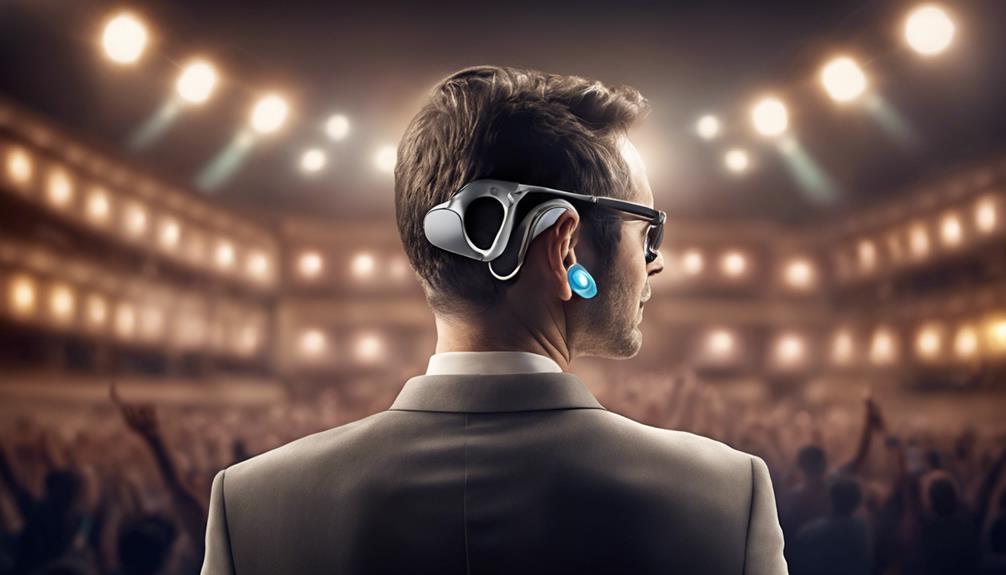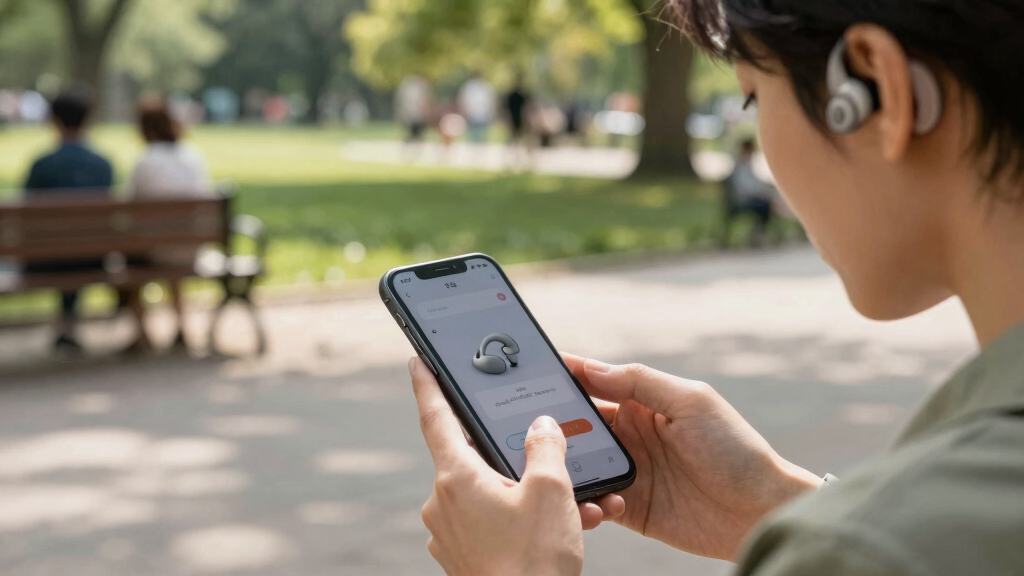
The Avantree Audiplex MX is my best overall choice among these assistive listening devices because its multi-channel design offers more flexibility than a basic personal amplifier or fixed single-group system. For one-to-one conversations, the Williams Sound PockeTalker Ultra DUO is the more approachable personal pick, while the Retekess T130 makes more sense for churches, tours, and other organized groups. The main choice is between a close-range personal amplifier and a transmitter-based system that can serve several listeners. Buyers also need to weigh receiver comfort, hearing-aid compatibility, charging demands, range, and the number of people the system must support. Continue reading for the full breakdown, including which models suit beginners, multilingual events, bone-conduction users, and ADA-focused venues.

Get everyday helpers delivered free with Prime
- Fast, free delivery on millions of items
- Prime Video, Amazon Music and more included
- Member-only deals all year
Key Takeaways
- The Avantree Audiplex MX leads this roundup because multi-channel operation gives organizations more room to manage separate speakers or groups than the single-purpose alternatives.
- Personal amplifiers and venue systems are not interchangeable: the Williams Sound and SuperEar models suit nearby conversations, while the Retekess and multi-person kits address distributed audiences.
- The Williams Sound PockeTalker Ultra DUO is the strongest beginner-oriented package because its headphone-and-earbud format avoids the setup burden of transmitters, receiver fleets, and charging stations.
- Specialized features can outweigh rank: the Retekess TT042 serves buyers who prefer bone-conduction headphones, while the TT119 targets long-range and multilingual use.
- Venue readiness depends on the whole kit, not receiver count alone; charging capacity, neckloops, storage, warranty coverage, signage, and staff workflow separate the group systems.
| Assistive Listening System with Neckloops and Carrying Case |  | Best for Fixed 10-Person Venues | Listener Capacity: 10 people | Receiver Battery Life: Up to 55 hours | Receiver Batteries: 2 AAA batteries | VIEW LATEST PRICE | See Our Full Breakdown |
| Avantree Audiplex MX Multi-Channel Assistive Listening System |  | Best Multi-Channel System | Channels: 4 | Latency: 30ms | Stated Wireless Range: 100 m / 1,028 ft | VIEW LATEST PRICE | See Our Full Breakdown |
| Williams Sound PockeTalker Ultra DUO Sound Amplifier |  | Best Personal Wired Amplifier | Acoustic Gain: 20–40 dB | Battery Life: Up to 100 hours | Batteries: 2 AAA, not included | VIEW LATEST PRICE | See Our Full Breakdown |
| ConvoAssist Personal Sound Amplifier |  | Best for Small-Group Conversations | Wireless Microphones: 2 | Battery Life: Up to 8 hours | Wireless Range: Up to 100 ft | VIEW LATEST PRICE | See Our Full Breakdown |
| Retekess TT042 Assistive Listening System |  | Best Open-Ear Option | Design: Open-ear bone conduction | Battery Capacity: 200mAh | Battery Life: Up to 8 hours | VIEW LATEST PRICE | See Our Full Breakdown |
| Retekess T130 Assistive Listening System |  | Best for Organized Group Tours | FCC certification: Yes | Transmission range: 50–60 meters | Transmission mode: One-way audio | VIEW LATEST PRICE | See Our Full Breakdown |
| Williams Sound Pocketalker Ultra Hearing Amplifier |  | Best Personal Conversation Amplifier | Maximum amplification: Up to 40dB | Sound controls: Adjustable volume and tone | Battery type: AAA | VIEW LATEST PRICE | See Our Full Breakdown |
| 4-Person Assistive Listening System with Carrying Case and ADA Plaque |  | Best Small-Venue Starter System | Listener capacity: 4 users | Carrying case: CAS-10 included | Accessibility signage: ADA plaque included | VIEW LATEST PRICE | See Our Full Breakdown |
| Rechargeable Hearing Amplifier with Headphones for Seniors and Adults |  | Best Battery Life | Maximum sound gain: 65dB | Battery life: Up to 120 hours | Charging time: 1 hour | VIEW LATEST PRICE | See Our Full Breakdown |
| SuperEar SE5000 Personal Hearing Amplifier |  | Best Compact Accessory Kit | Amplification: Up to 50 decibels | Total decibel gain: 107 dB | Battery life: Up to 30 hours | VIEW LATEST PRICE | See Our Full Breakdown |
| Retekess TT119 Assistive Listening System |  | Best for Large Multilingual Venues | Operating range: Up to 300 meters / 984 feet | Channel count: 17 channels | Receiver capacity: Up to 10 receivers per transmitter | VIEW LATEST PRICE | See Our Full Breakdown |
| 10-Person Assistive Listening System with 3-Year Warranty |  | Best for Warranty and US-Based Support | Listener capacity: 10 people | Warranty length: 3 years | Warranty location: US-based | VIEW LATEST PRICE | See Our Full Breakdown |
| assistive listening device | Battery Life |
|---|---|
| Assistive Listening System wit | — |
| Avantree Audiplex MX Multi-Cha | — |
| Williams Sound PockeTalker Ult | Up to 100 hours |
| ConvoAssist Personal Sound Amp | Up to 8 hours |
| Retekess TT042 Assistive Liste | Up to 8 hours |
| Retekess T130 Assistive Listen | — |
| Williams Sound Pocketalker Ult | — |
| 4-Person Assistive Listening S | — |
| Rechargeable Hearing Amplifier | Up to 120 hours |
| SuperEar SE5000 Personal Heari | Up to 30 hours |
| Retekess TT119 Assistive Liste | Up to 10 hours |
| 10-Person Assistive Listening | — |
More Details on Our Top Picks
Assistive Listening System with Neckloops and Carrying Case
I rank the Assistive Listening System with Neckloops as the strongest fit for churches, classrooms, and meeting rooms that regularly serve up to 10 listeners. Its 55-hour receiver runtime reduces battery changes during multi-day events, while belt clips, armbands, and neck straps let users choose a practical carrying method. Compared with the Avantree Audiplex MX, this package has a clearer fixed-capacity role and stronger ownership support through its lifetime limited warranty and free technical help. The tradeoff is reduced flexibility: it is built around 10 participants and lacks the Audiplex MX’s four-channel design and stated expandability. I would choose it for a venue wanting a tidy, transportable package, but growing organizations may outpace it quickly.
Pros:- Supports 10 listeners in one packaged system
- Receiver battery life reaches 55 hours
- Belt clip, armband, and neck-strap carrying options accommodate different users
- Lifetime limited warranty and free US-based technical support
Cons:- Fixed 10-person capacity may be restrictive for larger events
- Each receiver relies on replaceable AAA batteries
- No multi-channel capability is listed
Best for: Churches, schools, and meeting spaces that routinely provide assisted listening for no more than 10 people
Not ideal for: Growing venues that expect more than 10 listeners or need several simultaneous audio channels
- Listener Capacity:10 people
- Receiver Battery Life:Up to 55 hours
- Receiver Batteries:2 AAA batteries
- Carrying Case:CAS-10 included
- Carrying Options:Belt clip, Velcro armband, and neck strap
- Warranty:US-based lifetime limited warranty
- Technical Support:Free support included
- Intended Venues:Churches and schools
Our verdict“This is my pick for a small venue that values long receiver runtime, organized storage, and ongoing support over expansion flexibility.”
Avantree Audiplex MX Multi-Channel Assistive Listening System
The Avantree Audiplex MX takes the lead for venues running overlapping presentations, classes, or interpretation feeds because its four selectable channels help separate competing audio. Its 30ms latency keeps speech closely aligned with live presenters and video, while the 100-meter stated range gives listeners more freedom than the 100-foot ConvoAssist. Unlike the fixed 10-person Neckloop System, the Audiplex MX can expand beyond its 10 included receivers, making it the better long-term choice for a growing program. I rank it below simpler packages for ease of deployment, however: staff must manage pairing and channel assignments, and only three wired earbuds accompany 10 receivers. The supplied range data also pairs 100 meters with 1,028 feet, figures that do not match, so I would plan around the more conservative claim.
Pros:- Four channels support simultaneous audio feeds with less interference
- 30ms latency keeps amplified sound closely synchronized
- Expandable beyond the 10 included receivers
- Stated 100-meter range suits larger rooms and venues
Cons:- Pairing receivers and managing channels adds setup work
- Only three wired earbuds are supplied for 10 receivers
- Listed metric and imperial range figures are inconsistent
Best for: Schools, churches, conferences, and event operators that need multiple audio feeds or expect their listener count to grow
Not ideal for: Small groups seeking a ready-to-use personal amplifier with minimal pairing or channel management
- Channels:4
- Latency:30ms
- Stated Wireless Range:100 m / 1,028 ft
- Included Receivers:10 clip-on receivers
- Expandability:Additional receivers supported
- Transmitter:1 included
- Included Earbuds:3 wired earbuds
- Intended Venues:Schools, churches, and events
Our verdict“I recommend the Audiplex MX for organizations that need channel control and room to expand, provided staff can manage a more involved setup.”
Williams Sound PockeTalker Ultra DUO Sound Amplifier
I place the Williams Sound PockeTalker Ultra DUO at the top for one listener who wants direct, uncomplicated control over nearby speech or television audio. Its 20–40 dB acoustic gain, separate volume and tone controls, and removable microphone allow more adjustment than the open-ear Retekess TT042. The included headphone, earbud, and 12-foot TV cord also make it useful straight from the package. Compared with the ConvoAssist, it trades wireless speaker microphones and automatic charging for a wired design with up to 100 hours of battery life. That simplicity brings limits: cables can restrict movement, AAA batteries are not included, and the available gain may fall short for severe hearing loss. I see it as a flexible personal amplifier, not a substitute for a professionally fitted hearing device.
Pros:- Volume and tone controls allow personalized sound adjustment
- Up to 100 hours of battery life
- Headphone, earbud, and long TV cord are included
- Removable microphone supports more flexible placement
Cons:- 20–40 dB gain may be insufficient for severe hearing loss
- Wired accessories can limit mobility
- Required AAA batteries are not included
Best for: Individuals with mild to moderate listening difficulty who want adjustable amplification for conversations and wired TV listening
Not ideal for: People with severe hearing loss or anyone who wants rechargeable, cable-free microphones
- Acoustic Gain:20–40 dB
- Battery Life:Up to 100 hours
- Batteries:2 AAA, not included
- Sound Controls:Adjustable volume and tone
- Microphone:Removable with extension cord
- Headphone:Included
- Earbud:Included
- TV Listening Cord:12 ft
Our verdict“This is my choice for a single listener who prefers long runtime and hands-on sound control over wireless convenience.”
ConvoAssist Personal Sound Amplifier
The ConvoAssist Personal Sound Amplifier earns its place by bringing voices closer through two clip-on wireless microphones. That format makes more sense for meals, appointments, and small meetings than a conventional amplifier that also boosts surrounding noise. Automatic pairing reduces preparation, and compatibility with existing headphones lets the listener choose a familiar fit. Compared with the Williams Sound PockeTalker Ultra DUO, ConvoAssist offers greater freedom from microphone cables and handles two speakers more naturally; the PockeTalker counters with far longer battery life and direct tone control. I would not choose ConvoAssist for a church or lecture hall because its 100-foot range and eight-hour runtime trail venue systems such as the Avantree Audiplex MX. Its performance also depends on speakers agreeing to wear or position the microphones.
Pros:- Two wireless microphones can focus amplification on separate speakers
- Automatic pairing keeps operation approachable
- Works with the listener’s preferred headphones
- Rechargeable case stores and recharges the components
Cons:- Eight-hour runtime is much shorter than AAA-powered personal amplifiers
- 100-foot range is not intended for large venues
- No water or sweat resistance is stated
Best for: Adults who need clearer dialogue during meals, medical appointments, TV sessions, or conversations with two regular speakers
Not ideal for: Large-venue operators or users who cannot place microphones near the people they want to hear
- Wireless Microphones:2
- Battery Life:Up to 8 hours
- Wireless Range:Up to 100 ft
- Pairing:Automatic
- Headphone Compatibility:Works with existing headphones
- Charging:Rechargeable carrying case
- Included Earphones:Wired earbuds
- Included Cable:Charging cable
Our verdict“I favor ConvoAssist for focused, everyday dialogue when two clip-on microphones are more useful than broad room amplification.”
Retekess TT042 Assistive Listening System
I selected the Retekess TT042 for listeners who dislike earbuds or over-ear headphones. Its open-ear bone-conduction design leaves the ear canal uncovered, which can improve comfort and preserve awareness of surrounding activity. Six volume levels and dual listening modes provide straightforward adjustment, while Type-C and 3.5mm TRS connections broaden its usefulness with compatible receivers, phones, and laptops. Compared with the PockeTalker Ultra DUO, the TT042 offers a less enclosed fit and rechargeable operation, but it gives up the PockeTalker’s 100-hour runtime, tone control, and bundled TV cord. Its eight-hour battery is adequate for a day’s listening, though frequent users must recharge regularly. Bone conduction can also sound less full than conventional headphones, so I would prioritize this model for comfort and awareness rather than rich audio reproduction.
Pros:- Open-ear bone-conduction design avoids in-ear pressure
- Six volume levels provide simple adjustment
- Supports both Type-C and 3.5mm TRS connections
- Compatible with several Retekess systems, phones, and laptops
Cons:- Eight-hour runtime requires more frequent charging than AAA-powered alternatives
- Bone-conduction audio may sound less full than traditional headphones
- Some source devices require a standard 3.5mm TRS connection
Best for: Seniors and other listeners who want assisted audio without placing earbuds inside the ear canal
Not ideal for: Listeners seeking immersive sound, very long battery life, or guaranteed compatibility beyond the listed devices and connections
- Design:Open-ear bone conduction
- Battery Capacity:200mAh
- Battery Life:Up to 8 hours
- Volume Levels:6
- Listening Modes:Personalized and external sound amplification
- Connections:Type-C and 3.5mm TRS
- Retekess Compatibility:T130, TT119, and T130U
- Other Compatible Devices:Mobile phones and laptops
Our verdict“The TT042 is my open-ear pick for comfort-focused listeners who accept shorter runtime and less immersive sound.”
Retekess T130 Assistive Listening System
I place the Retekess T130 here for guides, trainers, and churches that need 10 receivers with centralized charging. Its 50–60-meter range gives listeners room to move, while the 16-port station makes equipment management easier and leaves charging capacity for future additions. Compared with the Retekess TT119, however, the T130 has a much shorter stated range and lacks the TT119’s multi-language focus. It also sends audio in one direction, so listeners cannot respond through the system. An external media source can be connected, but that requires a separate AUX cable. I favor this model over personal amplifiers such as the Pocketalker Ultra for coordinated groups, though its basic design and limited interaction make it less suitable for polished conferences or two-way training.
Pros:- 50–60-meter range suits tours, classes, and worship spaces
- Ten rechargeable receivers reduce reliance on disposable batteries
- 16-port station charges the full set simultaneously with room for added units
- External media input supports prerecorded material and presentations
Cons:- One-way transmission prevents listeners from speaking back through the system
- Range is far shorter than the stated 300-meter reach of the Retekess TT119
- Connecting a media device requires a separate AUX cable
Best for: Tour guides, church leaders, and trainers managing groups of up to 10 listeners within a single room or compact venue
Not ideal for: Conference organizers who need two-way audience communication, long-distance coverage, or built-in multi-language channels
- FCC certification:Yes
- Transmission range:50–60 meters
- Transmission mode:One-way audio
- Receiver count:10
- Transmitter count:1
- Battery type:Built-in rechargeable lithium battery
- Charging station:16-port USB
- Charging protection:Over-voltage, temperature, and short-circuit protection
Our verdict“I recommend the T130 for leaders who value orderly charging and dependable one-way audio more than long range or audience interaction.”
Williams Sound Pocketalker Ultra Hearing Amplifier
I rank the Williams Sound Pocketalker Ultra as the strongest choice here for one-to-one conversations, small groups, and television listening. Its separate volume and tone controls provide more useful personalization than the single-knob Rechargeable Hearing Amplifier, particularly when speech sounds loud but still lacks clarity. It also works with neckloops and telecoil devices, giving it broader listening options than the SuperEar SE5000. The tradeoff is lower stated amplification: its 40dB maximum trails the SuperEar’s 50dB and the rechargeable model’s 65dB. It also depends on AAA batteries, although the included supply of 20 softens that inconvenience. I would choose it for straightforward speech support, but not as a substitute for a professionally fitted hearing aid when hearing loss is severe or medically complex.
Pros:- Independent volume and tone controls help shape speech clarity
- Compatible with neckloops and telecoil-equipped devices
- Lightweight handheld form is easy to carry between rooms
- Includes headphones, an earbud, accessories, and 20 AAA batteries
Cons:- 40dB maximum amplification is lower than several alternatives in this batch
- Disposable AAA operation creates recurring battery waste and replacement needs
- Personal amplification cannot replace a licensed hearing aid for severe loss
Best for: Adults with mild to moderate hearing difficulty who want adjustable speech amplification for conversations, small gatherings, or TV viewing
Not ideal for: People with severe hearing loss or buyers who want rechargeable power and a device intended for continuous all-day wear
- Maximum amplification:Up to 40dB
- Sound controls:Adjustable volume and tone
- Battery type:AAA
- Included battery supply:20 AAA batteries
- Listening accessories:Headphones and single earbud
- Telecoil compatibility:Works with neckloops and telecoil devices
- Microphone accessory:Extension cord included
- Form factor:Lightweight handheld design
Our verdict“I favor the Pocketalker Ultra for buyers who want simple, customizable conversation support and telecoil compatibility without hearing-aid complexity.”
4-Person Assistive Listening System with Carrying Case and ADA Plaque
I place this 4-Person Assistive Listening System in the starter-system role because it packages the items a small church or school is likely to need at launch: four-user capacity, a CAS-10 carrying case, and an ADA plaque. Unlike the Retekess T130, which starts with 10 receivers and a 16-port charger, this setup avoids excess equipment when only a few listeners need assistance. It can grow through R-120 or R-100 receivers, while the three-year U.S.-based warranty and phone support provide a clearer service path than many generic systems offer. That smaller starting capacity can become expensive if demand rises quickly, though, and the supplied data omits range, battery, charging, and audio-channel details. I would shortlist it for modest venues, but larger organizations should compare the 10-Person Assistive Listening System before buying.
Pros:- Four-user package avoids overbuying for a small venue
- ADA plaque supports clear identification of available listening assistance
- CAS-10 carrying case keeps the system together for storage or transport
- Expandable with R-120 or R-100 receivers and backed by U.S.-based support
Cons:- Base package serves only four listeners
- Expansion requires separate receiver purchases
- Published data does not identify transmission range, battery life, or charging method
Best for: Small churches, classrooms, and meeting rooms that serve up to four assisted-listening users and want signage, storage, and domestic support included
Not ideal for: Busy venues expecting rapid user growth, since expanding beyond four listeners requires extra receiver purchases
- Listener capacity:4 users
- Carrying case:CAS-10 included
- Accessibility signage:ADA plaque included
- Warranty:3 years
- Support:U.S.-based phone support
- Expandable:Yes
- Compatible add-on receivers:R-120 or R-100
Our verdict“I recommend this package for small venues that prioritize a ready-to-deploy accessibility kit and strong support over high initial capacity.”
Rechargeable Hearing Amplifier with Headphones for Seniors and Adults
I give this Rechargeable Hearing Amplifier the battery-life spot because its stated 120 hours of use from a one-hour charge far exceeds the SuperEar SE5000’s 30-hour figure. The single volume-and-power knob also asks less of users who find layered controls frustrating, while automatic gain control and a directional noise-canceling microphone are aimed at keeping speech clearer around competing sound. Its 65dB maximum gain is higher than both the Pocketalker Ultra and SuperEar on paper, but more gain does not make it a replacement for a fitted hearing aid. The simplicity also limits fine adjustment: unlike the Pocketalker Ultra, there is no listed tone control. With no stated water or sweat resistance, I would treat it cautiously during exercise or wet weather. This pick favors long intervals between charges over detailed sound shaping.
Pros:- Up to 120 hours of stated battery life reduces charging frequency
- One-hour charging time suits travel and daily routines
- Single knob combines volume and power for simpler operation
- Directional microphone and automatic gain control target clearer speech
Cons:- Limited listed adjustment beyond basic volume control
- No stated water or sweat resistance
- High amplification does not make it suitable for every form of severe hearing loss
Best for: Seniors and travelers with mild to moderate hearing difficulty who want very long rechargeable runtime and a simple physical control
Not ideal for: Buyers who need audiologist-level fitting, multiple sound profiles, tone adjustment, or verified protection from moisture
- Maximum sound gain:65dB
- Battery life:Up to 120 hours
- Charging time:1 hour
- Battery type:Rechargeable
- Control:Combined volume and power knob
- Microphone:Directional noise-canceling
- Warranty:2 years
Our verdict“I would choose this amplifier for buyers who put exceptional rechargeable runtime and easy operation ahead of detailed audio controls.”
SuperEar SE5000 Personal Hearing Amplifier
I assign the SuperEar SE5000 the compact-kit role because it combines a pocketable amplifier with headphones, earbuds, a belt clip, and an included AAA battery. Its 50dB amplification exceeds the Pocketalker Ultra’s stated 40dB, and the 30-hour battery figure is enough for several listening sessions before replacement. Compared with the Pocketalker, though, the SE5000 offers less sound tailoring because only adjustable volume is listed; there is no stated tone control or telecoil compatibility. It also cannot connect wirelessly to a television, so TV listeners may need an extension cable and must remain physically tethered. Disposable earpad covers add a hygiene option when equipment is shared, but they also create an ongoing supply need. I see this as a simple portable amplifier, not the best fit for buyers seeking rechargeable power or richer speech customization.
Pros:- Compact body and belt clip support portable use
- Up to 50dB amplification exceeds the Pocketalker Ultra’s stated maximum
- Headphones and earbuds provide two listening styles
- Up to 30 hours of battery life supports multiple sessions
Cons:- No wireless television connection
- Lacks the listed tone adjustment and telecoil compatibility of the Pocketalker Ultra
- Shared use may require recurring purchases of disposable earpad covers
Best for: Occasional users who want a pocket-sized amplifier with both headphones and earbuds for conversations, events, or general ambient listening
Not ideal for: Frequent TV listeners or rechargeable-device buyers who want wireless connectivity, tone control, or telecoil support
- Amplification:Up to 50 decibels
- Total decibel gain:107 dB
- Battery life:Up to 30 hours
- Power source:AAA battery
- Listening accessories:Headphones and earbuds
- Carry attachment:Belt clip included
- Accessory compatibility:Disposable earpad covers and extension cable
- Wireless TV connection:Not supported
Our verdict“I recommend the SuperEar SE5000 for occasional users who want a compact, ready-to-use accessory bundle and can accept basic controls and wired listening.”
Retekess TT119 Assistive Listening System
I rank the Retekess TT119 as the strongest option for churches, courts, and conferences that need audio across a wide site. Its 300-meter range and 17 channels support multiple language feeds and give event staff more flexibility than the 10-Person Assistive Listening System, which offers little published technical detail. XLR, AUX, RCA, and USB connections also make the TT119 easier to integrate with professional sound equipment. Each transmitter serves up to 10 receivers, while one-click muting and recording can simplify managed events. The compromises are mono sound by default and a battery-dependent design that may create extra upkeep. Unlike the Williams Sound PockeTalker Ultra DUO, this is not a simple personal amplifier; I would choose it for organized, multilingual group listening, not casual conversations.
Pros:- 300-meter range accommodates large venues and dispersed groups
- 17 channels can support separate language or program feeds
- XLR, AUX, RCA, and USB inputs suit varied professional audio sources
- Lightweight 90-gram receivers reduce listener fatigue
Cons:- Default mono output may need adjustment when stereo sound is preferred
- Battery operation adds charging or replacement management
- Ten-receiver limit per transmitter may require added hardware for larger audiences
Best for: Churches, courts, conference organizers, and tour operators that need long-range multilingual audio for groups of up to 10 listeners per transmitter
Not ideal for: Individuals seeking a simple personal conversation amplifier, since the channel setup and professional connectivity add unnecessary complexity
- Operating range:Up to 300 meters / 984 feet
- Channel count:17 channels
- Receiver capacity:Up to 10 receivers per transmitter
- Receiver weight:90 grams
- Battery life:Up to 10 hours
- Audio inputs:XLR, AUX, RCA, and USB
- Audio mode:Mono by default; adjustable for stereo use
- Control functions:One-click operation, mute, and recording
Our verdict“I recommend the TT119 for venue teams that value long range, multiple channels, and broad audio connectivity more than personal-use simplicity.”
10-Person Assistive Listening System with 3-Year Warranty
I place this 10-Person Assistive Listening System highest for organizations that want clear post-purchase help rather than the most detailed feature sheet. Its three-year US-based warranty and phone support provide a service advantage over the Retekess TT119, while the included ADA plaque saves a separate compliance-related purchase. It also offers expansion, accessory customization, and a multichannel upgrade path, giving a small venue room to adapt its setup later. The drawback is uncertainty: published information does not state the range, battery life, input connections, or channel count. That makes direct performance comparison difficult and leaves the TT119 as the safer choice for large or technically demanding sites. Compared with the 4-Person Assistive Listening System, however, its 10-listener capacity better fits medium-sized groups. I favor it for support-conscious US buyers.
Pros:- Supports 10 listeners in the standard configuration
- Three-year US-based warranty offers longer-term purchase protection
- Phone support provides direct help with setup or service questions
- Included ADA plaque supports visible accessibility communication
Cons:- Range, battery life, connectivity, and channel specifications are not provided
- Serving more than 10 listeners requires expansion purchases
- Customized accessories and multichannel capability cost extra
Best for: US-based houses of worship, schools, and meeting venues serving up to 10 listeners and prioritizing phone support, warranty coverage, and an included ADA plaque
Not ideal for: Technical buyers who need confirmed range, battery, input, and channel specifications before selecting equipment
- Listener capacity:10 people
- Warranty length:3 years
- Warranty location:US-based
- Customer support:Phone support
- Included signage:ADA plaque
- Expansion:Expandable beyond the standard 10-user configuration
- Accessory options:Customizable through additional purchases
- Upgrade option:Multichannel system upgrade available
Our verdict“I would choose this system for a small or midsize US venue that values dependable support and a ready 10-listener package over fully documented technical performance.”

How We Picked
I ranked these assistive listening devices by how well each one solves a defined listening problem rather than by the length of its feature list. My main criteria were speech-access potential, ease of setup, receiver comfort, hearing-aid compatibility, usable range, group capacity, charging workflow, and portability. I also weighed ownership demands, including storage, cleaning, accessory replacement, staff training, and warranty coverage. Products that can adapt to more listeners or environments ranked higher when their added complexity remained reasonable. Personal models earned stronger positions when they offered a clearer path from opening the package to hearing a nearby speaker.
The resulting order favors the Avantree Audiplex MX as best overall, followed by simpler personal options and then systems whose value depends on a narrower venue need. The Williams Sound PockeTalker Ultra DUO fills the flexible personal-kit role, the standard Pocketalker Ultra suits beginners, the SuperEar SE5000 is the value pick, and the rechargeable senior-focused amplifier emphasizes low-maintenance daily use. The ConvoAssist is my premium personal choice, while the Retekess TT042 owns the bone-conduction role. Among group systems, the T130 fits churches and tours, the TT119 serves long-range multilingual events, the four-person kit suits small ADA-minded spaces, and the three 10-person packages separate into neckloop compatibility, warranty-led ownership, and ready-made group capacity. This role-based ranking explains why a specialized model may be the right purchase even when it appears below a more versatile product.
| assistive listening device | Battery Life |
|---|---|
| Assistive Listening System wit | — |
| Avantree Audiplex MX Multi-Cha | — |
| Williams Sound PockeTalker Ult | Up to 100 hours |
| ConvoAssist Personal Sound Amp | Up to 8 hours |
| Retekess TT042 Assistive Liste | Up to 8 hours |
| Retekess T130 Assistive Listen | — |
| Williams Sound Pocketalker Ult | — |
| 4-Person Assistive Listening S | — |
| Rechargeable Hearing Amplifier | Up to 120 hours |
| SuperEar SE5000 Personal Heari | Up to 30 hours |
| Retekess TT119 Assistive Liste | Up to 10 hours |
| 10-Person Assistive Listening | — |
Factors to Consider When Choosing Assistive Listening Devices
The right device depends less on maximum amplification than on where speech begins, how it reaches the listener, and who manages the equipment. I would define the listening situation before comparing prices: one speaker across a table calls for a different tool than a sermon, guided tour, or multilingual event. The following factors help separate useful capability from features that may add cost without improving access.
Choose Between Personal and Group Listening
A personal amplifier captures nearby sound and sends it directly to one listener, making it suitable for conversations, appointments, television viewing, or small meetings. A transmitter-and-receiver system moves a chosen speaker’s voice to several listeners and usually works better in churches, classrooms, tours, and public venues. Buying a personal model for a large room often leads to amplified room noise rather than cleaner speech. Buying a group system for occasional kitchen-table conversations adds equipment, pairing steps, and charging work with little benefit. I would estimate both the normal audience and the busiest plausible event before choosing receiver capacity. A venue expecting growth should also confirm that extra receivers can be added without replacing the transmitter.
Match the Receiver to the Listener
The receiver format can matter as much as the electronics because an uncomfortable earpiece will stay in its case. Headphones and earbuds are familiar and easy to distribute, but they may conflict with behind-the-ear hearing aids or personal comfort preferences. Neckloops can send sound to a compatible hearing aid or cochlear implant through its telecoil, reducing the need to place another earpiece over the ear. Bone-conduction headphones leave the ear canal open, yet they are not a universal answer for every type or degree of hearing loss. Venues serving the public benefit from offering more than one coupling method instead of assuming every listener uses the same hearing technology. I would also check connector type and replacement availability, since a proprietary accessory can raise long-term costs.
Prioritize Speech Capture Over Raw Range
A long transmission figure does not guarantee intelligible speech if the microphone is poorly placed. Microphone proximity usually has more influence on clarity than extra amplifier power because it increases the speaker’s voice relative to room noise. Directional or wireless microphones can help in meetings where the active speaker changes, though they add handling and charging steps. Advertised range is commonly measured under favorable conditions, while walls, bodies, radio congestion, and building materials can shorten it. I would choose range with a practical margin rather than paying for the largest number on the box. For multi-room or multilingual events, separate channels may be more useful than extra distance because they prevent audiences from hearing the wrong source.
Plan Charging and Daily Operation
Rechargeable equipment reduces disposable-battery purchases, but only when someone owns the charging routine. A multi-receiver venue should have clearly numbered units, a charging station with enough ports, and a check-in process that identifies weak batteries before an event. Replaceable batteries may be easier for occasional programs because a fresh set can restore service immediately. Sealed rechargeable batteries are convenient for personal use, though battery aging may shorten the product’s useful life if replacement is unavailable. A carrying case helps with transport, but organized storage matters more when microphones, neckloops, cables, and receivers must remain together. I would calculate runtime against the longest real session and leave reserve power for late starts or back-to-back events.
Separate Included Accessories From Accessibility Readiness
An ADA plaque can identify available assistance, but the plaque alone does not make a venue accessible or legally compliant. Receiver quantity, hearing-aid-compatible coupling, signage, maintenance, and staff response all contribute to a workable program. Requirements can vary by venue type, seating capacity, renovation status, and local rules, so buyers should verify the standards that apply to their property. Staff members also need a short script for offering equipment without making assumptions about a visitor’s hearing. Regular listening checks are better than relying on indicator lights, since a powered receiver can still have a damaged cable or weak audio path. I would treat accessibility as an operating process, not as an accessory bundled in the case.
Know When Paying More Makes Sense
Higher prices are easier to justify when they buy capabilities that match repeat use, such as multiple channels, wireless microphones, a full charging station, or scalable receiver support. A basic personal amplifier can offer better value when one person mainly needs help with nearby speech. For organizations, cost per usable listening position is more informative than the package price because missing chargers, neckloops, or receivers may require later purchases. Warranty length carries more weight for shared systems that are handled by many users and expected to remain in service for years. Premium personal models make sense when microphone placement and charging convenience remove barriers that would keep a simpler unit unused. I would avoid paying extra for extreme range, oversized capacity, or extra channels unless a real listening scenario calls for them.
Frequently Asked Questions
Can an Assistive Listening Device Replace Hearing Aids?
An assistive listening device and a hearing aid solve related but different problems. Personal amplifiers and venue systems can improve access to a selected voice by bringing the microphone closer to the sound source, but they do not provide an individualized hearing prescription. A person may use one without hearing aids, or pair a venue receiver with hearing aids through a telecoil-compatible neckloop. Buyers with sudden, uneven, painful, or worsening hearing changes should seek a professional hearing evaluation rather than relying only on amplification. I view these products as situational listening tools, not substitutes for medical care or properly fitted hearing technology.
Will a Neckloop Work With Any Hearing Aid?
A neckloop normally requires a hearing aid or cochlear implant with an active telecoil, often labeled T or MT. Some hearing devices include the hardware but need a hearing professional to activate or configure it. Models without a telecoil will need another output method, such as headphones, earbuds, or a compatible direct-audio accessory. Before buying a neckloop-based kit, I would verify both the hearing device settings and the assistive receiver’s connector. Compatibility should be confirmed for each listener rather than inferred from the hearing-aid brand alone.
Do I Need a Multi-Channel Listening System?
Multiple channels are useful when separate groups, languages, speakers, or rooms operate within radio range of one another. A single-channel system is usually simpler for one guide, one sanctuary, or one meeting source. Extra channels add value only if staff can label, assign, and troubleshoot them without confusing listeners. For multilingual events, I would confirm how many channels can run at once and whether interpreters need separate transmitters. Choose multi-channel flexibility for a defined workflow, not merely because it appears more advanced.
How Much Wireless Range Does a Church, School, or Tour Need?
I would measure the farthest real speaker-to-listener distance and add room for movement, seating changes, and signal obstacles. Indoor walls and crowded spaces can reduce practical range below the advertised open-area figure. Churches and classrooms often need dependable coverage within one room, while outdoor tours may benefit from a larger distance rating. Excess range can also let signals travel beyond the intended group, making channel planning more relevant at busy sites. A short on-site trial or a seller with a workable return policy is valuable when building conditions are unpredictable.
Is a Four-Person or 10-Person Kit Enough for an Accessible Venue?
The right receiver count depends on audience size, venue rules, attendance patterns, and whether some receivers must support telecoil users. A four-person package may fit a small meeting room, while a 10-person system gives a larger church, school, or event space more breathing room. I would not base the purchase only on average requests because peak events can create shortages. Check whether the system allows extra compatible receivers and whether the charger can support them. For regulated public accommodation, confirm current local requirements and build a documented maintenance and distribution process around the hardware.
Conclusion
For most buyers comparing these 12 assistive listening devices, I recommend the Avantree Audiplex MX as the best overall because its multi-channel architecture offers the broadest path across group listening situations. The SuperEar SE5000 is my best-value choice for straightforward personal amplification without the cost and administration of a venue system. Beginners should start with the Williams Sound PockeTalker Ultra DUO, whose included headphone and earbud make the intended one-person use easy to understand. Buyers wanting a more polished personal setup should choose the ConvoAssist as the premium pick, especially when wireless microphones and rechargeable storage justify the added expense. For specific needs, I would choose the Retekess TT042 for bone-conduction listening, the T130 for organized churches and tours, the TT119 for long-range multilingual events, or one of the multi-person kits when receiver count, neckloops, ADA signage, or warranty coverage drives the purchase. The best final choice is the one that matches the sound source, listener count, receiver style, and daily management routine rather than the model with the longest feature list.
Halloween Picks
halloween
As an affiliate, we earn on qualifying purchases.