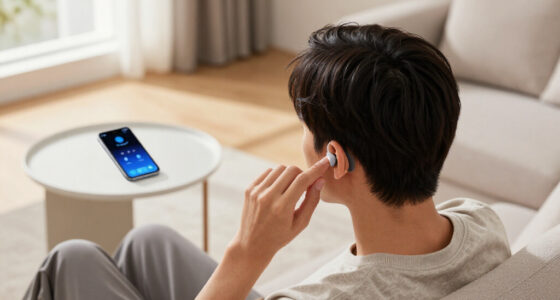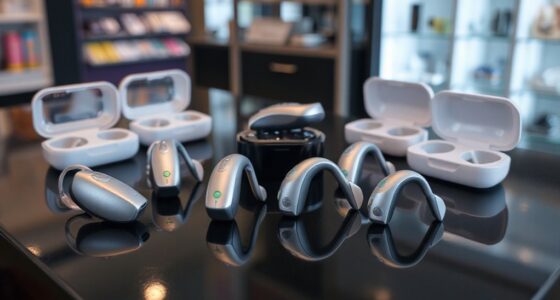

Among hearing amplification devices, the Williams Sound Pocketalker 2.0 is my best overall pick because its focused listening design and separate tone and volume controls make speech easier to manage. The Reizen Loud Ear 110dB is the stronger value choice for buyers who prioritize powerful amplification, while the Flaygo Hearing Aids for Seniors offer simpler one-button operation for beginners. The main choices are between wearable discretion and handheld control, rechargeable convenience and replaceable-battery flexibility, plus maximum loudness and better background-noise management. No amplifier suits every kind of hearing difficulty, and products marketed for severe loss deserve extra caution. Continue reading for my full breakdown of which designs fit different listeners and where paying more makes sense.

Get everyday helpers delivered free with Prime
- Fast, free delivery on millions of items
- Prime Video, Amazon Music and more included
- Member-only deals all year
Complete the kit


Key Takeaways
- Williams Sound Pocketalker 2.0 ranked first because its dedicated listening controls provide a clearer, more manageable experience than basic amplifiers built mainly around high volume.
- Reizen Loud Ear 110dB delivered the clearest value case, but its visible handheld format and emphasis on amplification make it less discreet than Audien Atom One or the behind-the-ear models.
- Simple operation separated the beginner-friendly products: Flaygo‘s one-button layout is less intimidating than devices with several listening modes, small dials, or accessory combinations.
- Compact wearable models trade control for discretion, while Pocketalker, SuperEar, and Reizen devices make volume adjustments and microphone placement easier during conversations or television viewing.
- Claims of extreme gain or severe-loss support did not guarantee a higher rank; controllable sound, background-noise handling, fit, and safe listening mattered more than the largest number on the product page.
| Rechargeable Hearing Aids for Seniors with Noise Cancelling, Behind-The-Ear Severe Hearing Loss Amplifier |  | Best for Severe Hearing Loss | Device type: Behind-the-ear hearing amplifier | Intended hearing level: Severe hearing loss | Weight: 5.5g | VIEW LATEST PRICE | See Our Full Breakdown |
| Reizen Loud Ear 120dB Gain Personal Amplifier |  | Best for Maximum Amplification | Device type: Personal hearing amplifier | Gain: 120dB | Sound pickup range: Up to 100 feet | VIEW LATEST PRICE | See Our Full Breakdown |
| Williams Sound Pocketalker Ultra Hearing Amplifier |  | Best for Simple Conversation and TV Listening | Device type: Portable personal sound amplifier | Amplification: Up to 40dB | Sound controls: Adjustable volume and tone | VIEW LATEST PRICE | See Our Full Breakdown |
| Reizen Loud Ear 110dB Gain Personal Amplifier |  | Best for Two-Ear Long-Distance Listening | Device type: Personal hearing amplifier | Advertised model gain: 110dB | Sensitivity: 120dB | VIEW LATEST PRICE | See Our Full Breakdown |
| Audien Atom One OTC Hearing Aids | 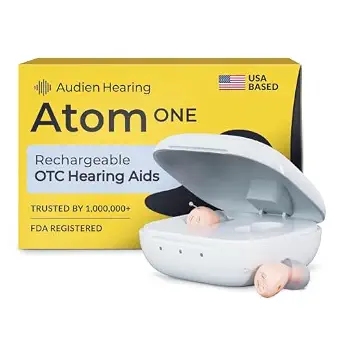 | Best Overall | Device type: OTC hearing aids | Design: Small, discreet in-ear | Battery life: Up to 24 hours | VIEW LATEST PRICE | See Our Full Breakdown |
| Flaygo Hearing Aids for Seniors |  | Best Discreet In-Ear Pick | Audio Processing: 16-channel digital chip | Sound Profile: Hi-Fi with sound restoration | Noise Management: Intelligent filtering and whistling suppression | VIEW LATEST PRICE | See Our Full Breakdown |
| Williams Sound Pocketalker 2.0 Hearing Amplifier |  | Best for Simple Assisted Listening | Maximum Amplification: Up to 40dB | Controls: Adjustable volume and tone | Power Source: Two AAA batteries | VIEW LATEST PRICE | See Our Full Breakdown |
| Hearing Amplifier for Seniors with Rechargeable Battery and Directional Microphone |  | Best Battery Life | Battery Type: Rechargeable lithium-ion | Battery Quantity: One included battery | Battery Life: Up to 120 hours | VIEW LATEST PRICE | See Our Full Breakdown |
| Behind-the-Ear Sound Amplifier for Seniors |  | Best Two-Ear BTE Pair | Form Factor: Behind-the-ear | Quantity: Two amplifiers | Dimensions: 0.39 x 0.39 x 0.39 inches | VIEW LATEST PRICE | See Our Full Breakdown |
| Hearing Amplifier with 16-Channel Digital Chip |  | Best Listening Modes | Audio Channels: 16 | Sound Processing: Hi-Fi digital sound with speech clarity | Noise Management: Noise reduction and anti-howling technology | VIEW LATEST PRICE | See Our Full Breakdown |
| SuperEar SE5000 Personal Hearing Amplifier |  | Best for Simple Controls | Device Type: Personal sound amplifier | Amplification: Up to 50 dB | Listed Decibel Gain: 107 dB | VIEW LATEST PRICE | See Our Full Breakdown |
| Rechargeable Hearing Aids for Seniors with Noise Cancelling and Charging Case |  | Best Rechargeable Pair for Daily Wear | Device Format: One pair of hearing aids | Intended Hearing Range: Mild to moderate hearing loss | Noise Cancelling: Yes | VIEW LATEST PRICE | See Our Full Breakdown |
| Williams Sound PockeTalker Ultra DUO Sound Amplifier |  | Best Battery Life | Device Type: Portable personal sound amplifier | Acoustic Gain: 20–40 dB | Battery Life: Up to 100 hours | VIEW LATEST PRICE | See Our Full Breakdown |
| Personal Sound Amplifier with 50dB Gain and 100-Foot Range |  | Best for Long-Distance Listening | Device Type: Personal sound amplifier | Sound Gain: 50 dB | Pickup Range: Up to 100 feet | VIEW LATEST PRICE | See Our Full Breakdown |
| WallarGe Rechargeable Neckband Hearing Amplifier with Bluetooth |  | Best Bluetooth Hybrid | Device Format: Rechargeable neckband amplifier | Listening Modes: Hearing amplification and Bluetooth headphones | Bluetooth Version: 5.3 | VIEW LATEST PRICE | See Our Full Breakdown |
| hearing amplification device | Battery life | Device type |
|---|---|---|
| Rechargeable Hearing Aids for | Up to 25 hours | Behind-the-ear hearing amplifier |
| Reizen Loud Ear 120dB Gain Per | — | Personal hearing amplifier |
| Williams Sound Pocketalker Ult | — | Portable personal sound amplifier |
| Reizen Loud Ear 110dB Gain Per | — | Personal hearing amplifier |
| Audien Atom One OTC Hearing Ai | Up to 24 hours | OTC hearing aids |
| Flaygo Hearing Aids for Senior | Up to 80 hours standby | — |
| Williams Sound Pocketalker 2.0 | Up to 100 hours | — |
| Hearing Amplifier for Seniors | Up to 120 hours | — |
| Behind-the-Ear Sound Amplifier | — | — |
| Hearing Amplifier with 16-Chan | Up to 80 hours | — |
| SuperEar SE5000 Personal Heari | Up to 30 hours | Personal sound amplifier |
| Rechargeable Hearing Aids for | Up to 40 hours | — |
| Williams Sound PockeTalker Ult | Up to 100 hours | Portable personal sound amplifier |
| Personal Sound Amplifier with | — | Personal sound amplifier |
| WallarGe Rechargeable Neckband | At least 35 hours | — |
More Details on Our Top Picks
Rechargeable Hearing Aids for Seniors with Noise Cancelling, Behind-The-Ear Severe Hearing Loss Amplifier
I rank the Rechargeable Behind-the-Ear Hearing Aids above the personal amplifiers here for buyers who need stronger everyday amplification in a wearable format. Their 5.5g earpieces, physical buttons, and double noise cancellation are geared toward seniors who may find tiny in-ear controls frustrating. Compared with the Audien Atom One, this pair is less discreet but easier to handle and specifically positioned for severe hearing loss. The 25-hour runtime also narrowly beats Audien’s 24-hour rating, while cable and case charging add flexibility. I would still expect an adjustment period, and the reported operating noise could distract users who are sensitive to background hiss. Unlike the Williams Sound Pocketalker Ultra, this is worn behind the ears rather than carried as a separate listening unit.
Pros:- I like the lightweight 5.5g construction for extended daily wear.
- Physical adjustment buttons are easier for users with limited dexterity.
- Up to 25 hours of runtime supports full-day use.
- Double noise cancellation is designed to improve speech clarity around competing sound.
Cons:- The behind-the-ear shape is more visible than the Audien Atom One.
- Slight operating noise may be distracting in quiet settings.
- New users may need time to adapt to the amplified sound.
Best for: I recommend this pair for seniors with severe hearing loss who want large physical controls, long rechargeable runtime, and a stable behind-the-ear fit.
Not ideal for: I would skip it for buyers who prioritize nearly invisible in-ear devices or are especially bothered by low-level operating noise.
- Device type:Behind-the-ear hearing amplifier
- Intended hearing level:Severe hearing loss
- Weight:5.5g
- Battery life:Up to 25 hours
- Charging methods:Cable or charging case
- Noise control:Double noise cancellation technology
- Controls:Physical adjustment buttons
- Earpiece design:Ergonomic
Our verdict“I would choose this for severe hearing loss when accessible controls and long rechargeable use matter more than discretion.”
Reizen Loud Ear 120dB Gain Personal Amplifier
I place the Reizen Loud Ear 120dB first for buyers whose priority is very high advertised gain rather than discreet, all-day wear. Its built-in microphone can pick up sound from as far as 100 feet, making it better suited to distant speakers or television listening than the 40dB Williams Sound Pocketalker Ultra. A mini earphone and separate headphones let buyers choose between a lighter or fuller listening setup, and the included AAA batteries make it usable immediately. The tradeoff is a bulkier personal-amplifier format that may become uncomfortable during long sessions. I also prefer the rechargeable Audien Atom One for routine daily wear because the Reizen depends on replaceable batteries. Its high output calls for careful volume adjustment, particularly when nearby sounds suddenly become loud.
Pros:- The advertised 120dB gain provides the strongest amplification claim in this batch.
- Sound pickup reaches up to 100 feet under the supplied product data.
- Both a mini earphone and headphones are included.
- Two included AAA batteries allow immediate use.
Cons:- The personal-amplifier format is less discreet than an in-ear or behind-the-ear device.
- Replaceable AAA batteries add recurring cost and waste.
- The listening accessories may become uncomfortable during extended wear.
Best for: I recommend this model for buyers who need powerful amplification for television, lectures, or voices heard from across a room.
Not ideal for: I would skip it for people seeking discreet all-day hearing support or freedom from disposable batteries.
- Device type:Personal hearing amplifier
- Gain:120dB
- Sound pickup range:Up to 100 feet
- Microphone:Built-in
- Primary earpiece:Mini earphone included
- Additional listening accessory:Headphones included
- Power source:2 AAA batteries
Our verdict“I would pick this for maximum volume and long-distance pickup, but not as the most comfortable everyday wearable.”
Williams Sound Pocketalker Ultra Hearing Amplifier
The Williams Sound Pocketalker Ultra earns my recommendation for buyers who value simple, controlled listening over maximum output. Separate volume and tone controls can make speech or television audio easier to tailor, while the microphone extension cord helps place sound pickup closer to the source. Its 40dB amplification is far lower than the advertised output of the Reizen Loud Ear 120dB, so this model makes more sense for conversation support than profound hearing impairment. The generous bundle—including 20 AAA batteries, headphones, earbuds, a lanyard, and a five-year warranty—also gives it more complete accessories than most options here. Still, manual adjustments may be tedious when moving between rooms, and the carried body unit is less discreet than the Audien Atom One. Compatibility with neckloops and telecoil devices broadens its appeal.
Pros:- Separate volume and tone controls allow more precise sound tailoring.
- The microphone extension cord supports closer pickup from a speaker or television.
- The package includes multiple listening accessories and 20 AAA batteries.
- A five-year warranty provides unusually long coverage.
Cons:- Amplification is limited to 40dB and may be insufficient for profound impairment.
- Users must adjust sound manually when listening conditions change.
- The external body unit is less discreet than an in-ear hearing device.
Best for: I recommend it for adults who want straightforward help hearing conversations or television and prefer tactile volume and tone controls.
Not ideal for: I would skip it for profound hearing loss or for buyers who want a tiny, rechargeable device worn entirely in the ear.
- Device type:Portable personal sound amplifier
- Amplification:Up to 40dB
- Sound controls:Adjustable volume and tone
- Listening accessories:Headphones and earbuds
- Microphone accessory:Extension cord included
- Battery supply:20 AAA batteries included
- Compatibility:Neckloops and telecoil devices
- Carry accessories:Lanyard and microfiber cloth
- Warranty:5 years
Our verdict“I would choose the Pocketalker Ultra for accessible conversation and TV amplification, especially when flexible accessories matter more than discreet wear.”
Reizen Loud Ear 110dB Gain Personal Amplifier
I see the Reizen Loud Ear 110dB as the better Reizen choice for buyers who want dual-ear listening while following a speaker from across a large room. The supplied specifications list 120dB sensitivity and pickup from up to 100 feet, pairing strong sound capture with adjustable volume. Compared with the Reizen Loud Ear 120dB Gain Personal Amplifier, its main distinction is the included dual earphones rather than a mini earphone-and-headphone bundle. That makes this version more focused on two-ear listening, but less flexible for buyers who alternate accessory styles. It also lacks the rechargeable convenience and discreet fit of the Audien Atom One. I would reserve it for occasional lectures, television, or conversation support; replaceable AAA batteries and an external amplifier body make it a weaker choice for continuous mobile use.
Pros:- Dual earphones provide two-ear listening from the included setup.
- Sound pickup is rated for distances up to 100 feet.
- Adjustable volume lets users reduce or raise output for different settings.
- Two AAA batteries are supplied in the package.
Cons:- It relies on replaceable batteries rather than rechargeable power.
- The external personal-amplifier format is conspicuous for daily wear.
- It is intended for personal amplification rather than professional hearing assistance.
Best for: I recommend this model for buyers who want amplified sound in both ears while listening to television, talks, or distant conversations.
Not ideal for: I would skip it for buyers seeking professional hearing assistance, discreet wear, or a rechargeable device for continuous use.
- Device type:Personal hearing amplifier
- Advertised model gain:110dB
- Sensitivity:120dB
- Maximum sound pickup distance:100 feet
- Microphone:Built-in
- Volume control:Adjustable
- Earphones:Dual earphones included
- Power source:2 AAA batteries included
Our verdict“I would select this Reizen for strong two-ear listening at a distance, provided portability and discretion are secondary.”
Audien Atom One OTC Hearing Aids
I rank the Audien Atom One as the strongest all-around choice because it combines discreet daily wear, rechargeable power, and adjustable sound in one small in-ear design. Unlike the Reizen personal amplifiers, it does not require a separate body unit or disposable AAA batteries, making it better suited to conversations throughout a normal day. Its 24-hour rating falls just behind the 25-hour Rechargeable Behind-the-Ear Hearing Aids, but the smaller profile will appeal more to buyers who dislike visible earpieces. The charging dock, six pairs of earbuds, and wax guard kit support fit and upkeep. My reservations are the reliance on expert-guided setup, the lack of supplied water-resistance information, and a likely price premium over basic amplifiers. The Williams Sound Pocketalker Ultra remains easier for buyers who prefer large tactile controls.
Pros:- The small in-ear design is more discreet than body-worn personal amplifiers.
- Up to 24 hours of rechargeable use covers a typical day.
- Adjustable settings support more personalized sound.
- Six earbud pairs and a wax guard kit help with fit and routine upkeep.
Cons:- Expert-guided setup may be difficult to access in some locations.
- No water or sweat resistance rating is supplied.
- It may cost more than basic personal amplifiers.
Best for: I recommend the Atom One for adults seeking a discreet, rechargeable OTC option for regular conversations and daily activities.
Not ideal for: I would skip it for buyers who lack access to setup guidance, need confirmed water resistance, or prefer large physical controls.
- Device type:OTC hearing aids
- Design:Small, discreet in-ear
- Battery life:Up to 24 hours
- Charging:USB-C charging dock or case
- Sound settings:Adjustable
- Fit accessories:6 pairs of earbuds
- Maintenance accessories:Cleaning brush and wax guard kit
- Power accessories:USB-C cable and power adapter
- Setup:Expert-guided
Our verdict“I would choose the Atom One for discreet, rechargeable everyday support when guided setup and a higher price are acceptable.”
Flaygo Hearing Aids for Seniors
I rank the Flaygo Hearing Aids as the strongest choice here for buyers who prioritize discreet, low-effort daily wear. The 3.5-gram in-ear design is far less conspicuous than the body-style Williams Sound Pocketalker 2.0, while its 16-channel processing, noise filtering, and whistle suppression aim to keep voices clearer without making every sound equally harsh. Four volume levels and one-button control also reduce fiddling. Compared with the Hearing Amplifier with 16-Channel Digital Chip, however, Flaygo offers fewer listening adjustments and lists 80 hours as standby time rather than clearly stated continuous use. I would also factor in the digital-only instructions: buyers who dislike QR codes or websites may find setup less friendly than the hardware itself. The beige-only finish limits personal preference, despite the otherwise discreet shape.
Pros:- 16-channel sound processing with intelligent noise filtering
- Very light 3.5-gram in-ear design
- Whistling suppression supports more comfortable listening
- Simple one-button control with four volume levels
Cons:- Operating instructions require access to a website or QR code
- 80-hour figure refers to standby rather than clearly documented listening time
- Only available in beige
Best for: Seniors with mild-to-moderate hearing difficulty who want a very light, discreet in-ear amplifier with simple controls
Not ideal for: Buyers who need printed setup guidance, multiple listening modes, or support for severe hearing loss
- Audio Processing:16-channel digital chip
- Sound Profile:Hi-Fi with sound restoration
- Noise Management:Intelligent filtering and whistling suppression
- Battery Life:Up to 80 hours standby
- Charging:USB-C; approximately 2 hours
- Weight:3.5 grams
- Design:Ergonomic in-ear
- Controls:One button with four volume levels
Our verdict“I would choose Flaygo for discreet everyday amplification when simplicity matters more than detailed sound customization.”
Williams Sound Pocketalker 2.0 Hearing Amplifier
The Williams Sound Pocketalker 2.0 takes a different route from tiny in-ear models: it keeps the controls visible and places the microphone closer to the sound a buyer wants to hear. I see that as a strong fit for one-on-one conversations and TV listening, especially when miniature buttons would be frustrating. Its separate tone and volume controls provide more useful personalization than the single dial on the Hearing Amplifier for Seniors with Directional Microphone. The included earbuds, headphones, extension cord, and lanyard also let buyers adapt the setup rather than depend on one earpiece. The tradeoff is portability: wires and a pocket-sized control unit are more conspicuous than Flaygo’s in-ear design. Its 40dB amplification ceiling may fall short for severe hearing loss, and rechargeable use requires separately purchased batteries and charging equipment.
Pros:- Separate volume and tone controls support personalized listening
- Up to 100 hours of battery life
- Broad accessory set includes earbuds, headphones, extension cord, and lanyard
- Five-year warranty provides stronger long-term coverage
Cons:- Wired body-style design is more visible than an in-ear amplifier
- 40dB maximum amplification may be insufficient for severe hearing loss
- Rechargeable batteries and charging equipment are not included
Best for: Seniors who want large, understandable controls for conversations, television, or other seated listening situations
Not ideal for: Buyers seeking an invisible all-day device or amplification intended for severe hearing loss
- Maximum Amplification:Up to 40dB
- Controls:Adjustable volume and tone
- Power Source:Two AAA batteries
- Battery Life:Up to 100 hours
- Rechargeable Option:Supported with separately sold rechargeable batteries
- Listening Accessories:Earbuds and headphones
- Other Accessories:Microphone, extension cord, lanyard, batteries, and manual
- Warranty:5 years
Our verdict“I favor the Pocketalker 2.0 for buyers who value accessible controls and flexible listening accessories over discreet wear.”
Hearing Amplifier for Seniors with Rechargeable Battery and Directional Microphone
I place this rechargeable hearing amplifier highest for buyers who want long intervals between charges. Its rated 120-hour battery life exceeds the Pocketalker 2.0’s 100 hours and the 80-hour figures attached to both in-ear models in this batch. A directional noise-canceling microphone concentrates pickup toward a speaker or television, while auto-gain control reduces the need for constant manual correction. The one-dial layout is easier to learn than the four-mode controls on the Hearing Amplifier with 16-Channel Digital Chip. That simplicity also creates its main compromise: there is no listed tone control or selectable sound profile, so buyers have fewer ways to correct a sound that feels too sharp or muffled. At 6 inches long and 4.8 ounces, this is portable rather than invisible, and its charging accessories may be harder to replace than ordinary AAA batteries.
Pros:- Rated for up to 120 hours of battery use
- Directional microphone helps focus on nearby speech or television audio
- Auto-gain control limits frequent volume corrections
- Single-dial operation is approachable for buyers with limited dexterity
Cons:- No listed tone adjustment or extra sound modes
- Six-inch body is less discreet than an in-ear model
- Replacement charging accessories may need to match the included lithium-ion battery
Best for: Buyers who need a rechargeable personal amplifier for long TV sessions, travel, or frequent conversations between charges
Not ideal for: People who want an in-ear device, adjustable tone, or several environment-specific listening modes
- Battery Type:Rechargeable lithium-ion
- Battery Quantity:One included battery
- Battery Life:Up to 120 hours
- Microphone:Directional noise-canceling microphone
- Gain Management:Automatic gain control
- Control Type:Manual one-dial control
- Dimensions:6 x 2.5 inches
- Weight:4.8 ounces
- Material:Plastic
Our verdict“I recommend this model when maximum time between charges matters more than discreet styling or detailed sound controls.”
Behind-the-Ear Sound Amplifier for Seniors
This behind-the-ear sound amplifier set earns its place by including two units, making it the most direct choice in this group for buyers who want amplification on both sides. Its physical volume controls and on/off buttons avoid programming, while the BTE shape may be easier to handle than Flaygo’s tiny 3.5-gram in-ear pieces. Noise reduction and feedback control also address two common annoyances with basic amplifiers. I would rank it below Flaygo for discretion and below the Pocketalker 2.0 for battery convenience: the units use specific LR754 cells, and frequent replacement can add upkeep. Comfort also depends on finding compatible silicone domes, so the included format does not guarantee a good seal. The listed dimensions suggest a compact housing, but the stated 3.53-ounce weight lacks per-device clarification. This is a simple bilateral option, not a substitute for individually programmed hearing support.
Pros:- Package includes two behind-the-ear amplifiers
- Physical volume and power controls require no programming
- Digital noise reduction helps limit distracting background sound
- Feedback control reduces unwanted whistling
Cons:- LR754 disposable batteries can create recurring cost and maintenance
- Comfort may depend on purchasing suitable silicone domes
- Not designed for severe hearing loss
Best for: Buyers with mild-to-moderate difficulty in both ears who prefer physical controls and a behind-the-ear fit
Not ideal for: People who need severe-loss amplification, rechargeable power, or a guaranteed fit without sourcing compatible domes
- Form Factor:Behind-the-ear
- Quantity:Two amplifiers
- Dimensions:0.39 x 0.39 x 0.39 inches
- Listed Weight:3.53 ounces
- Battery Type:LR754
- Color:Black
- Controls:Volume control and on/off button
- Sound Processing:Digital amplification with noise reduction
Our verdict“I would pick this set for straightforward two-ear amplification if replaceable batteries and dome fitting are acceptable.”
Hearing Amplifier with 16-Channel Digital Chip
I rank this 16-channel hearing amplifier above Flaygo for buyers who want more control over changing environments. Both models pair digital processing with noise reduction, anti-howling support, USB-C charging, and an 80-hour rating, but this one adds four listening modes for general use, leisure, outdoor settings, and conversation. Stepless volume adjustment also permits finer changes than Flaygo’s four fixed levels, which can help when speech is close to comfortable but not quite right. Those extra choices make the initial learning curve steeper, especially when modes must be changed through a small in-ear control. The lightweight design is easier to wear discreetly than the Pocketalker 2.0, although it lacks that model’s visible tone dial, accessory choices, and five-year warranty. I see it as the most adaptable in-ear pick here, provided the buyer does not need support for severe hearing loss.
Pros:- Four listening modes adapt amplification to different environments
- 16-channel processing supports clearer speech reproduction
- Stepless volume control allows finer adjustment than fixed levels
- USB-C charging reaches a full charge in about two hours
Cons:- Mode selection requires more familiarization than a basic one-dial device
- Small in-ear controls may challenge buyers with limited dexterity
- May not provide enough support for severe hearing loss
Best for: Buyers with mild-to-moderate hearing difficulty who move between conversations, outdoor spaces, and quieter leisure settings
Not ideal for: Seniors who want the fewest possible settings, large controls, or amplification for severe hearing loss
- Audio Channels:16
- Sound Processing:Hi-Fi digital sound with speech clarity
- Noise Management:Noise reduction and anti-howling technology
- Listening Modes:General, Leisure, Outdoor, and Conversation
- Volume Control:Stepless adjustment
- Battery Life:Up to 80 hours
- Charging:USB-C; approximately 2 hours
- Design:Lightweight, nearly invisible in-ear
Our verdict“I would select this model for discreet wear across varied settings when finer volume control and listening modes justify added setup.”
SuperEar SE5000 Personal Hearing Amplifier
I place the SuperEar SE5000 here for buyers who favor a straightforward handheld amplifier over tiny in-ear controls. Its tactile volume dial and belt clip make adjustments easier for people with limited dexterity, while the supplied headphones and earbuds offer more choice than the Personal Sound Amplifier with 50dB Gain. Both reach 50dB amplification, but the SuperEar is better suited to nearby conversations, lectures, and general ambient listening than distant sound pickup. Its 30-hour battery life is respectable, though far shorter than the Williams Sound PockeTalker Ultra DUO’s 100 hours. It also lacks Bluetooth and direct TV connectivity. I see it as a practical, portable listening tool, but results may vary by hearing profile, particularly when background noise competes with speech.
Pros:- Tactile volume control is easier to operate than small in-ear buttons
- Up to 50dB amplification supports conversations and ambient listening
- Headphones and earbuds accommodate different wearing preferences
- Belt clip and 30-hour battery suit extended portable use
Cons:- No Bluetooth or wireless television connection
- Ambient amplification can make competing background sounds more prominent
- Effectiveness varies with the user’s hearing profile
Best for: Seniors and adults with limited dexterity who want a portable amplifier with a tactile dial and a choice of headphones or earbuds
Not ideal for: TV viewers seeking wireless audio or people who need targeted support for severe or complex hearing loss
- Device Type:Personal sound amplifier
- Amplification:Up to 50 dB
- Listed Decibel Gain:107 dB
- Battery Life:Up to 30 hours
- Microphone:Highly sensitive compact microphone
- Included Listening Accessories:Headphones and earbuds
- Included Power:AAA battery
- Carrying Feature:Belt clip
Our verdict“Choose the SE5000 if easy physical controls and flexible listening accessories matter more than wireless features or discreet styling.”
Rechargeable Hearing Aids for Seniors with Noise Cancelling and Charging Case
I rank this rechargeable hearing-aid pair as the most convenient choice here for seniors who want both ears supported without handling disposable batteries. The claimed noise cancellation gives it a speech-focused advantage over the SuperEar SE5000, which broadly amplifies surrounding sound through a handheld microphone. Six dome sizes also provide more fitting flexibility than the Personal Sound Amplifier’s single set of mini earphones. A charge takes two to four hours and supplies up to 40 hours of use, making overnight charging realistic rather than an all-day interruption. The tradeoff is suitability: it is intended for mild to moderate hearing loss, not severe loss, and regular charging becomes another routine to manage. I favor it for comfortable everyday amplification, but buyers wanting replaceable-battery independence should choose the PockeTalker Ultra DUO.
Pros:- Noise cancellation helps reduce competing background sound
- Up to 40 hours of use supports full-day wear
- Six ear-dome sizes improve the chances of a comfortable fit
- One-touch operation reduces control complexity
Cons:- Not intended for severe hearing loss
- Two-to-four-hour charging period requires advance planning
- In-ear fit may still vary despite the included dome choices
Best for: Seniors with mild to moderate hearing difficulty who want a two-ear rechargeable setup with simple controls and multiple dome sizes
Not ideal for: People with severe hearing loss or buyers who cannot maintain a regular charging routine
- Device Format:One pair of hearing aids
- Intended Hearing Range:Mild to moderate hearing loss
- Noise Cancelling:Yes
- Power Type:Rechargeable
- Battery Life:Up to 40 hours
- Charging Time:2–4 hours
- Included Ear Domes:6 sizes
- Charging Accessory:Charging case
- Color:Black
Our verdict“This pair makes sense for mild to moderate hearing needs when rechargeable convenience and two-ear coverage outrank maximum amplification.”
Williams Sound PockeTalker Ultra DUO Sound Amplifier
The Williams Sound PockeTalker Ultra DUO earns its place through endurance and control rather than maximum gain. Its 20–40dB acoustic gain trails the 50dB offered by the SuperEar SE5000, yet separate volume and tone adjustments give buyers more ability to shape speech clarity instead of merely making every sound louder. The claimed 100-hour battery life is more than triple the SuperEar’s 30 hours and well beyond the rechargeable models in this group, which suits travel or users who dislike frequent power maintenance. A removable microphone with an extension cord can also be placed nearer a speaker. In return, the body-worn design is less discreet than an in-ear pair, two AAA batteries are not supplied, and the gain may fall short for severe loss. I give extra weight to its five-year warranty.
Pros:- Up to 100 hours of battery life reduces power maintenance
- Separate volume and tone controls allow more tailored listening
- Removable microphone and extension cord support closer sound pickup
- Five-year warranty is stronger than typical coverage in this lineup
Cons:- Lower maximum gain than the 50dB amplifiers in this batch
- Two required AAA batteries are not included
- Body-worn receiver and wired accessories are less discreet
Best for: Frequent travelers, lecture attendees, and battery-conscious users who want adjustable tone and long operating time
Not ideal for: People seeking a discreet in-ear device or amplification beyond the listed 20–40dB gain range
- Device Type:Portable personal sound amplifier
- Acoustic Gain:20–40 dB
- Battery Life:Up to 100 hours
- Power Source:Two AAA batteries
- Sound Controls:Adjustable volume and tone
- Microphone:Removable microphone with extension cord
- Listening Accessories:Headphones and earbud
- Warranty:5 years
Our verdict“Pick the PockeTalker Ultra DUO when battery endurance and tone control matter more than maximum gain or an unobtrusive fit.”
Personal Sound Amplifier with 50dB Gain and 100-Foot Range
I reserve the Best for Long-Distance Listening role for this amplifier because its stated 100-foot pickup range separates it from conversation-oriented choices such as the Rechargeable Hearing Aids for Seniors. The 50dB gain and adjustable tone can help with lectures, presentations, outdoor observation, or hearing a television from across a room, while the compact body remains easier to carry than a neckband. Compared with the SuperEar SE5000, it offers the same listed amplification but places greater emphasis on distant sound pickup. That reach can also collect unwanted surrounding noise, so it is less appealing in busy restaurants or crowds. It runs on a replaceable AAA battery, lacks Bluetooth, and includes mini earphones that may not suit every ear. I view it as a special-purpose distance amplifier, not the strongest all-day wearable.
Pros:- Stated pickup range of up to 100 feet supports distance listening
- 50dB gain provides stronger amplification than the PockeTalker Ultra DUO
- Adjustable volume and tone offer more control over audibility
- Compact body is easy to carry between indoor and outdoor settings
Cons:- Long-range pickup may amplify distracting background sounds
- Mini earphones may be uncomfortable or poorly fitting for some users
- Requires periodic AAA battery replacement and offers no Bluetooth
Best for: Lecture attendees, outdoor observers, and TV listeners who need amplified sound from across a room or other moderate distance
Not ideal for: People who spend time in noisy crowds or need comfortable, discreet amplification worn continuously throughout the day
- Device Type:Personal sound amplifier
- Sound Gain:50 dB
- Pickup Range:Up to 100 feet
- Microphone:Built-in
- Sound Controls:Adjustable volume and tone
- Power Source:One AAA battery
- Included Listening Accessory:Mini earphones
- Listed Compliance:CMS MDS 3.0/ADA
Our verdict“Choose this model for occasional long-range listening, especially when distance matters more than noise management or all-day comfort.”
WallarGe Rechargeable Neckband Hearing Amplifier with Bluetooth
The WallarGe Rechargeable Neckband is my connectivity pick because it combines conversation amplification with Bluetooth 5.3 headphones. That dual role makes it more versatile for television, phone audio, and streamed media than the SuperEar SE5000, which has no wireless connection. It also provides independent volume adjustment for each ear, a useful advantage when hearing needs differ from side to side. Battery life reaches at least 35 hours, falling short of the PockeTalker Ultra DUO’s 100 hours but avoiding disposable batteries. The neckband format is easier to locate and handle than tiny in-ear controls, yet it is bulkier and more visible than the rechargeable hearing-aid pair. With no stated water or sweat resistance, it is a questionable exercise companion. I rank it for mixed amplification and entertainment use, not buyers seeking the smallest wearable.
Pros:- Bluetooth 5.3 supports wireless television, phone, and media audio
- Independent controls accommodate different volume needs in each ear
- At least 35 hours of battery life supports extended listening
- Single-switch operation and neckband controls are easy to locate
Cons:- Neckband is bulkier and more visible than in-ear alternatives
- No stated water or sweat resistance
- Offers fewer hearing-focused sound-processing features than dedicated noise-cancelling models
Best for: TV viewers and smartphone users who want one neckband for amplified conversations, stereo listening, and separate left-right volume control
Not ideal for: Buyers seeking a discreet in-ear design or an exercise-ready device with stated sweat resistance
- Device Format:Rechargeable neckband amplifier
- Listening Modes:Hearing amplification and Bluetooth headphones
- Bluetooth Version:5.3
- Battery Life:At least 35 hours
- Charging Time:About 3.5 hours
- Volume Controls:Independent adjustment for both ears
- Main Operation:Single switch button
- Intended Uses:Conversations and TV watching
Our verdict“The WallarGe is the right choice for buyers who value Bluetooth media playback and easy bilateral controls more than discreet wear.”

How We Picked
I ranked these devices by how well their stated designs address speech-focused amplification, not by maximum volume alone. My comparison weighed tone and volume control, microphone directionality, noise-management features, ease of setup, comfort, battery upkeep, and the usefulness of included headphones, earbuds, or charging cases. I also examined whether each format works best for conversation, television, mobile use, or discreet all-day wear. Products rose when they paired clear buyer benefits with controls that appear manageable for their intended audience.
The Pocketalker models placed highly because their dedicated controls and focused microphones give buyers more command than many generic wearable amplifiers. Reizen earned value recognition for accessible high-output amplification, while Flaygo gained ground through one-button simplicity. Audien Atom One, WallarGe, SuperEar, and the directional-microphone model fill narrower roles involving discretion, wireless audio, accessory choice, or targeted pickup. I gave less weight to vague severe-loss claims and large gain figures because more volume can also magnify room noise. Build, maintenance, and price then acted as tie-breakers, producing a ranking that favors usable amplification over specification chasing.
| hearing amplification device | Device type |
|---|---|
| Rechargeable Hearing Aids for | Behind-the-ear hearing amplifier |
| Reizen Loud Ear 120dB Gain Per | Personal hearing amplifier |
| Williams Sound Pocketalker Ult | Portable personal sound amplifier |
| Reizen Loud Ear 110dB Gain Per | Personal hearing amplifier |
| Audien Atom One OTC Hearing Ai | OTC hearing aids |
| Flaygo Hearing Aids for Senior | — |
| Williams Sound Pocketalker 2.0 | — |
| Hearing Amplifier for Seniors | — |
| Behind-the-Ear Sound Amplifier | — |
| Hearing Amplifier with 16-Chan | — |
| SuperEar SE5000 Personal Heari | Personal sound amplifier |
| Rechargeable Hearing Aids for | — |
| Williams Sound PockeTalker Ult | Portable personal sound amplifier |
| Personal Sound Amplifier with | Personal sound amplifier |
| WallarGe Rechargeable Neckband | — |
Factors to Consider When Choosing Hearing Amplification Devices
Choosing among hearing amplification devices starts with the listening problem rather than the largest advertised gain. I recommend identifying whether the device is needed for one-to-one speech, television, group settings, or mobile use, since each situation favors a different microphone and wearing style. The points below explain how to separate helpful controls from inflated specifications and when a hearing evaluation is the better next step.
Know Whether You Need an Amplifier or an OTC Hearing Aid
A personal sound amplifier makes nearby sounds louder, while an OTC hearing aid is designed for adults with perceived mild-to-moderate hearing loss. That distinction matters because a basic amplifier may raise voices and background noise together. Models such as Pocketalker and SuperEar make sense for situational listening, including television or a conversation across a table. A small OTC model such as Audien Atom One is aimed more toward wearable hearing support, though fit and sound adjustment remain major variables. Sudden hearing changes, one-sided loss, pain, drainage, or severe difficulty call for a clinician rather than a more powerful amplifier. I would treat any promise of correcting severe hearing loss as a reason to seek professional guidance before purchase.
Match the Form Factor to the Listening Situation
Handheld amplifiers provide visible controls and let the microphone sit closer to the person speaking, which can improve the signal-to-noise balance. Their wires and pocket-sized bodies are less convenient for walking, errands, or discreet wear. Behind-the-ear and in-ear designs are easier to leave in place, yet their small buttons can frustrate buyers with limited dexterity or vision. A neckband model such as WallarGe adds stability and wireless features but is more conspicuous than a compact ear-level device. For television or seated conversation, I favor control and microphone placement over appearance. For daily mobility, comfort, retention, and quick adjustment carry more weight.
Treat Gain and Noise Reduction as Separate Questions
A large gain or output figure tells me little about whether speech will sound comfortable in a busy room. Strong amplification can help with quiet voices, but it can also make dishes, fans, and traffic unpleasantly loud. Directional microphones can favor sound from the front, while multichannel processing may divide incoming audio into bands for finer adjustment. Neither feature guarantees natural sound if the microphone position, ear tip, or volume setting is wrong. I would prioritize gradual volume control and a useful tone setting over a headline such as 110dB or 120dB. Buyers who spend time in restaurants or family gatherings should place background-noise control above maximum loudness.
Check Controls, Charging, and Daily Maintenance
A device that sounds capable on paper may stay in a drawer if charging, cleaning, or adjustment becomes a chore. One-button products reduce the learning curve, though they offer less room to tailor sound across changing environments. Separate volume and tone controls provide more flexibility but demand some experimentation and enough finger control to use small dials. Rechargeable models remove recurring battery purchases, while replaceable batteries can be easier during travel or a long day away from power. Charging cases add convenience only when the contacts align reliably and the case itself is easy to handle. I would favor simple, repeatable operation, clearly marked controls, and ear tips that can be cleaned or replaced without specialized tools.
Know When Paying More Produces a Real Benefit
A higher price is easier to justify when it buys better microphone placement, independent tone control, durable accessories, or support from an established hearing-assistance brand. Paying extra for a bundle can also make sense when both a headphone and an earbud are needed for different users or settings. Bluetooth adds value for calls and media, but it does not automatically improve live conversation. Likewise, a 16-channel chip sounds advanced, yet channel count matters less when the user cannot adjust the processing or obtain a comfortable fit. I would compare the return window, warranty, replacement tips, and charging accessories before paying for marketing language. The best value comes from a device that fits the intended routine, not merely the one with the longest feature list.
Frequently Asked Questions
Can a Personal Hearing Amplifier Replace a Hearing Aid?
A personal amplifier can help with situational listening, such as hearing television dialogue or one speaker in a quiet room. It does not diagnose hearing loss or provide the individualized frequency adjustment available from a professionally fitted hearing aid. OTC hearing aids occupy a different category and are intended for adults with perceived mild-to-moderate loss. If amplification makes every sound louder without making speech clearer, increasing the volume is unlikely to solve the problem. I would seek a hearing evaluation when difficulty is persistent, unequal between ears, or interfering with everyday communication.
Should I Choose a Wearable Model or a Pocket Amplifier?
I would choose a wearable model for mobility and discretion, provided its controls and ear tips are comfortable enough for regular use. A pocket amplifier is often easier for television, appointments, lectures, or conversations because the microphone can be aimed toward the sound source. Pocket models also accommodate larger controls and full-size headphones, which may help buyers with dexterity concerns. Their cables and visible body make them less appealing for continuous wear. The better choice depends on whether hands-free convenience or direct control matters more in the intended setting.
Does a Higher Gain Rating Mean Better Speech Clarity?
No, a higher gain rating mainly indicates greater amplification potential, not cleaner speech. In a quiet setting, extra power may help a soft voice become audible. In a noisy room, that same power can amplify competing sounds and cause discomfort or feedback. Tone controls, microphone direction, ear-tip fit, and multichannel processing often have more influence on speech separation. I would choose controllable sound over maximum output, especially for a first device.
Are Rechargeable Hearing Amplification Devices Better for Seniors?
Rechargeable devices can remove the difficulty of handling tiny disposable batteries, making them appealing for users with reduced vision or finger control. They still require regular charging and accurate placement in a dock or case. Long advertised standby time does not reveal how many hours the device will run while actively amplifying sound. Replaceable batteries may suit travel or users who do not want to rely on a charging cable. I would base the choice on daily handling ability, access to power, and whether the charger has clear status indicators.
What Should I Do If a Product Claims to Handle Severe Hearing Loss?
I would not rely on a product-page claim as proof that an amplifier is suitable for severe loss. Strong output without personalized fitting can create uncomfortable loudness while leaving speech difficult to understand. Severe or rapidly changing hearing difficulty may involve needs that a general-purpose amplifier cannot address. A hearing professional can measure the pattern of loss, check for treatable causes, and discuss fitted options. The amplifier may still have a role as a temporary or situational aid, but professional guidance should shape that decision.
Conclusion
For most buyers, my best overall choice is the Williams Sound Pocketalker 2.0 because its focused microphone, tone control, and accessible format balance clarity with ease of adjustment. The Reizen Loud Ear 110dB is my value pick for someone who wants powerful situational amplification and accepts a visible handheld design. Beginners should start with the Flaygo Hearing Aids for Seniors if one-button operation matters more than detailed sound control. For a premium accessory bundle, I would choose the Williams Sound PockeTalker Ultra DUO, while Audien Atom One better suits buyers prioritizing compact, discreet wear. WallarGe makes more sense for Bluetooth and neckband stability, and the rechargeable directional-microphone model is better aligned with targeted conversation pickup. Buyers reporting severe, sudden, or one-sided hearing difficulty should skip specification comparisons and arrange a hearing evaluation before choosing any amplifier.
Halloween Picks
halloween
As an affiliate, we earn on qualifying purchases.