

Personal sound amplifiers make nearby sounds louder, but the right choice depends on where you listen and how you want to wear or position the microphone. I rank the Williams Sound Pocketalker Ultra Duo as the best overall for its flexible headphone and earbud setup; the SuperEar SE5000 is a straightforward alternative, while the SuperEar SE10 suits listeners who need a remote microphone. The lineup ranges from simple pocket units to rechargeable, single-ear, and multi-pack options, with tradeoffs in fit, controls, and how you capture sound. These devices are not a substitute for a hearing evaluation or prescribed hearing aids. Read on for the full comparison, selection criteria, and advice on matching a device to your listening routine.

Get everyday helpers delivered free with Prime
- Fast, free delivery on millions of items
- Prime Video, Amazon Music and more included
- Member-only deals all year
Key Takeaways
- The Pocketalker Ultra Duo ranks first because its included headphone and earbud options make it more adaptable to different listening preferences than a single-output setup.
- The SuperEar SE10 fills a distinct role: its remote microphone can help when the sound source is away from the listener, a different need from simply turning up a nearby conversation.
- The two Reizen Loud Ear models trade on stated gain, but a higher listed gain alone does not show how comfortable, clear, or manageable a device will be in daily use.
- Rechargeable and multi-pack models solve different problems: rechargeable designs reduce disposable battery handling, while a four-pack is aimed at having multiple units available.
- Included listening accessories matter as much as amplification claims; headphone, earbud, and single-ear configurations affect comfort, discretion, and whether a device suits one or both ears.
| Reizen Loud Ear 110dB Gain Personal Amplifier |  | Best for Long-Range Listening | Sensitivity: 110 dB ±3 dB | Frequency range: 20 Hz–20 kHz | Pickup distance: Up to 100 ft | VIEW LATEST PRICE | See Our Full Breakdown |
| 4-Pack Personal Hearing Amplifiers with Noise Reduction |  | Best for Multi-Listener Households | Quantity: 4 amplifiers | Volume controls: 8 levels | Sound gain: 50 dB | VIEW LATEST PRICE | See Our Full Breakdown |
| MSA PRO Rechargeable Sound Amplifier, Nude |  | Best Rechargeable Single-Ear Pick | Amplification: Up to 30 times | Continuous use: Up to 20 hours | Charging: Rechargeable with fast-charging base | VIEW LATEST PRICE | See Our Full Breakdown |
| Rechargeable Hearing Amplifier with Directional Microphone for Seniors |  | Best for Simple Controls and Long Runtime | Maximum sound gain: 65 dB | Charging time: 1 hour | Battery life: Up to 120 hours | VIEW LATEST PRICE | See Our Full Breakdown |
| SuperEar SE5000 Personal Sound Amplifier with Headphones and Earbuds |  | Best for Flexible Listening Accessories | Amplification: Up to 50+ dB | Battery: 1 AAA battery included | Battery life: Up to 30 hours | VIEW LATEST PRICE | See Our Full Breakdown |
| Silver Sonic Personal Sound Amplifier |  | Best for Flexible Listening Distance | Amplification range: Up to 90 feet | Maximum amplification: 50 dB | Frequency control: HI/LOW switch | VIEW LATEST PRICE | See Our Full Breakdown |
| Williams Sound Pocketalker Ultra Duo Sound Amplifier with Headphone & Earbud |  | Best for TV and Long Listening Sessions | Acoustic gain: 20–40 dB | Battery life: Up to 100 hours | Power source: 2 AAA batteries | VIEW LATEST PRICE | See Our Full Breakdown |
| Reizen Loud Ear 120dB Gain Personal Amplifier |  | Best for Maximum Stated Gain | Gain: 120 dB | Pickup range: Up to 100 feet | Battery life: Up to 48 hours | VIEW LATEST PRICE | See Our Full Breakdown |
| Rechargeable Personal Sound Amplifier for Seniors with Noise Cancelling (Single Ear) |  | Best Rechargeable Single-Ear Pick | Maximum output: 130 dB | Battery life: Up to 100 hours continuous use | Volume levels: 10 | VIEW LATEST PRICE | See Our Full Breakdown |
| SuperEar SE10 Personal Sound Amplifier with Remote Microphone | 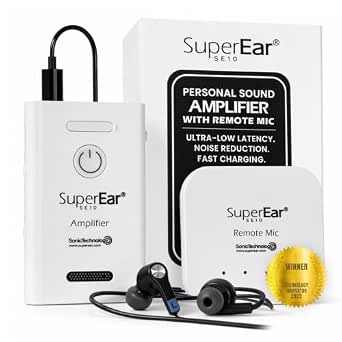 | Best for Private TV Listening | Function: 2-in-1 remote microphone and TV audio transmitter | Compatibility: SuperEar SE10 earbuds and compatible accessories only | Wireless range: Up to 65 feet | VIEW LATEST PRICE | See Our Full Breakdown |
| SuperEar Plus SE7500 Personal Sound Amplifier for Seniors |  | Best for Long Battery Life | Sound gain: Up to 50+ dB | Battery life: Up to 80 hours | Power: 2 AAA batteries | VIEW LATEST PRICE | See Our Full Breakdown |
| Rechargeable Hearing Amplifier with Headphones |  | Best Rechargeable Pick | Sound gain: Up to 65 dB | Battery life: Up to 120 hours per charge | Charging time: About 1 hour | VIEW LATEST PRICE | See Our Full Breakdown |
| MEDca Personal Sound Amplifier with 50dB Sound Gain and Built-in Microphone | 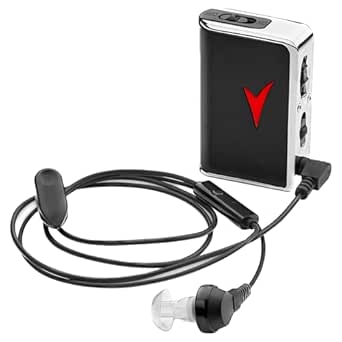 | Best for Tone Adjustment | Sound gain: 50 dB | Specified range: Up to 100 feet | Microphone: Built-in multi-element | VIEW LATEST PRICE | See Our Full Breakdown |
| Joanbro Personal Sound Amplifier for Seniors with Headphones and Earbud |  | Best for Microphone Flexibility | Additional acoustic gain: 50 dB | Total gain: Up to 108 dB | Microphone options: 3 removable microphones | VIEW LATEST PRICE | See Our Full Breakdown |
| Williams Sound Pocketalker Ultra Hearing Amplifier |  | Best for Speaker-Positioned Listening | Amplification: Up to 40 dB | Controls: Separate volume and tone controls | Included batteries: 20 AAA batteries | VIEW LATEST PRICE | See Our Full Breakdown |
| personal sound amplifier | Battery life | Power |
|---|---|---|
| Reizen Loud Ear 110dB Gain Per | — | 2 AAA batteries |
| 4-Pack Personal Hearing Amplif | — | AAA battery per amplifier; included |
| MSA PRO Rechargeable Sound Amp | — | — |
| Rechargeable Hearing Amplifier | Up to 120 hours | — |
| SuperEar SE5000 Personal Sound | Up to 30 hours | — |
| Silver Sonic Personal Sound Am | Up to 14 hours of continuous use | 2 button cell batteries included |
| Williams Sound Pocketalker Ult | Up to 100 hours | — |
| Reizen Loud Ear 120dB Gain Per | Up to 48 hours | 2 AAA batteries included |
| Rechargeable Personal Sound Am | Up to 100 hours continuous use | Rechargeable |
| SuperEar SE10 Personal Sound A | Up to 6 hours with a 10-minute charge; up to 24 hours on a full charge | — |
| SuperEar Plus SE7500 Personal | Up to 80 hours | 2 AAA batteries |
| Rechargeable Hearing Amplifier | Up to 120 hours per charge | — |
| MEDca Personal Sound Amplifier | — | 1 AAA battery |
| Joanbro Personal Sound Amplifi | Up to 40 hours of moderate use | 2 AAA batteries, included |
| Williams Sound Pocketalker Ult | — | — |
More Details on Our Top Picks
Reizen Loud Ear 110dB Gain Personal Amplifier
The Reizen Loud Ear suits listeners who want to pick up voices from farther away: its stated pickup range reaches 100 feet, and its 110 dB ±3 dB sensitivity is aimed at boosting faint sounds. A belt clip and 2.4-ounce body make it easier to carry than a stationary listening aid. Compared with the SuperEar SE5000, which comes with both headphones and earbuds, the Reizen package is simpler and centers on an in-ear fit. That keeps the setup compact, though an in-ear piece may be uncomfortable for some people. Its adjustable volume gives basic control, but there is no noise control, so nearby background sounds may be amplified too. Battery operation avoids charging waits, at the cost of replacing two AAA cells.
Pros:- Claimed pickup distance of up to 100 feet
- Adjustable volume for adapting amplification
- Belt clip and compact 2.4-ounce design
- Includes two AAA batteries and an earphone
Cons:- No noise control to reduce competing sounds
- Requires two AAA batteries rather than recharging
- Basic in-ear fit may not suit every listener
Best for: Listeners who want a clip-on amplifier for conversations or sounds at a distance and are comfortable with an in-ear earpiece.
Not ideal for: People who need background-noise filtering, dislike in-ear listening, or prefer a rechargeable device.
- Sensitivity:110 dB ±3 dB
- Frequency range:20 Hz–20 kHz
- Pickup distance:Up to 100 ft
- Power:2 AAA batteries
- Estimated battery life:48 hours
- Dimensions:2.5 × 1.75 × 0.75 in
- Weight:2.4 oz
- Warranty:90 days
Our verdict“Choose the Reizen Loud Ear if long-range pickup and a portable belt-clip design matter more than noise filtering or a rechargeable battery.”
4-Pack Personal Hearing Amplifiers with Noise Reduction
Four amplifiers make this set a practical choice for households that want several listeners to have their own device, or to keep spares in different rooms. Each unit offers eight volume levels and a noise-reduction chip intended to make speech easier to follow. That gives it more adjustment steps than the Reizen Loud Ear 110dB, whose description specifies adjustable volume without multiple levels. The tradeoff is that listeners must set the volume manually, and the product data does not explain how much background noise the chip reduces. Each amplifier uses an included AAA battery and pairs with mini headphones and silicone earplugs. The pocket-sized design favors portability, but missing dimensions make it harder to judge how it will sit in a pocket or bag.
Pros:- Four amplifiers provide devices for several listeners or locations
- Eight volume levels allow incremental manual adjustment
- Built-in noise-reduction chip is intended to support speech clarity
- AAA batteries and silicone-earplug headphones are included
Cons:- Manual adjustment may take trial and error to find a comfortable level
- No dimensions are provided for judging portability
- Noise-reduction performance is not quantified in the product data
Best for: Families or caregivers who need multiple portable amplifiers for different listeners, rooms, or backup use.
Not ideal for: Buyers who need detailed sizing information, automatic volume adjustment, or clearly documented noise-filtering performance.
- Quantity:4 amplifiers
- Volume controls:8 levels
- Sound gain:50 dB
- Claimed listening distance:Up to 100 ft
- Noise reduction:Built-in chip
- Power:AAA battery per amplifier; included
- Included accessories:Mini headphones with silicone earplugs
- Material and color:Plastic; black
Our verdict“Pick this set when having four individually adjustable amplifiers matters more than knowing exact dimensions or relying on automatic volume control.”
MSA PRO Rechargeable Sound Amplifier, Nude
The MSA PRO is for listeners who prefer a discreet, rechargeable device worn on either ear. Its up-to-20-hour runtime and charging base remove the routine of keeping spare AAA batteries, unlike the battery-powered Reizen Loud Ear 110dB. The clear tubing and six silicone tips let buyers adjust the fit, which may help when a standard earpiece feels uncomfortable. Its stated amplification is up to 30 times, but the product data does not give specific sound settings or gain measurements, so it is harder to compare its output directly with models that list decibels. Compared with the four-unit amplifier set, this is a single personal device with a charging base rather than a multi-listener bundle. Charging is convenient, but it requires planning around the battery.
Pros:- Rechargeable design with up to 20 hours of use per charge
- Clear tubing fits either the right or left ear
- Six silicone tips offer fit adjustments
- Includes a fast-charging base and cleaning brush
Cons:- Requires charging rather than quick battery replacement
- No specific amplification settings or decibel gain are listed
- Single-ear device offers less flexibility than a multi-unit set
Best for: A solo listener seeking a discreet rechargeable amplifier with ear-fit options and either-ear wear.
Not ideal for: People who want multiple amplifiers, quantified sound-gain specifications, or a device that can run without charging breaks.
- Amplification:Up to 30 times
- Continuous use:Up to 20 hours
- Charging:Rechargeable with fast-charging base
- Fit:Right or left ear
- Included accessories:Recharging base, 6 silicone tips, cleaning brush
- Color:Nude
Our verdict“Choose the MSA PRO if rechargeable convenience and adjustable single-ear fit outweigh the lack of detailed amplification figures.”
Rechargeable Hearing Amplifier with Directional Microphone for Seniors
This model pairs a one-knob control with a directional noise-canceling microphone, making it a straightforward option for listeners who want to focus on speech without managing several settings. Its stated up-to-120-hour battery life and one-hour charge are a marked step up in listed runtime from the MSA PRO’s 20 hours per charge. The tradeoff is a less customizable control scheme: the product data does not mention app tuning or other advanced adjustments. Its claimed 65 dB maximum gain gives buyers a concrete output figure, unlike the MSA PRO’s “up to 30 times” description. It is described as a sound amplifier rather than a medically certified hearing aid, so it is best viewed as a simple listening aid, not a substitute for a hearing evaluation.
Pros:- Up to 120 hours of use after a one-hour charge
- One-knob on/off and volume control keeps operation simple
- Directional noise-canceling microphone is intended to clarify speech
- Two-year warranty with lifetime repair service
Cons:- No app connectivity or advanced tuning is listed
- Product is described as an amplifier, not a medically certified hearing aid
Best for: Older adults or caregivers seeking a rechargeable amplifier with simple one-knob operation and long intervals between charges.
Not ideal for: Listeners who want app-based tuning, detailed sound customization, or a medically certified hearing aid.
- Maximum sound gain:65 dB
- Charging time:1 hour
- Battery life:Up to 120 hours
- Controls:One-knob on/off and volume
- Microphone:Directional, noise-canceling
- Warranty:2 years; lifetime repair service
Our verdict“This is a strong fit for buyers prioritizing simple controls and extended rechargeable use over fine-grained tuning.”
SuperEar SE5000 Personal Sound Amplifier with Headphones and Earbuds
The SuperEar SE5000 stands out for giving buyers two listening options: deluxe stereo headphones and stereo earbuds. That makes it easier to switch between a more enveloping headphone fit and a smaller earbud setup than with the Reizen Loud Ear 110dB, which comes with an earphone. Its swivel microphone and adjustable volume wheel support ambient listening for conversations or nearby TV sound. It does not connect directly or wirelessly to a television, though, so TV use still depends on picking up sound through the microphone. The SE5000 lists up to 50+ dB amplification and 30 hours from one AAA battery, a middle ground between the Reizen’s stated 48-hour life and the rechargeable MSA PRO’s 20-hour per-charge runtime.
Pros:- Includes both deluxe stereo headphones and stereo earbuds
- Swivel microphone supports aiming toward nearby sound
- Adjustable volume wheel offers simple level control
- Portable handheld design includes a stainless steel belt clip
Cons:- Does not connect directly or wirelessly to a TV
- Requires an AAA battery rather than recharging
Best for: Listeners who want to alternate between headphones and earbuds while amplifying nearby conversations or ambient TV sound.
Not ideal for: TV viewers who need a direct or wireless television connection, or buyers who want rechargeable power.
- Amplification:Up to 50+ dB
- Battery:1 AAA battery included
- Battery life:Up to 30 hours
- Included accessories:Deluxe stereo headphones, stereo earbuds, belt clip, screw
- Controls:Adjustable volume wheel
- Microphone:Swivel microphone
- Portability:Lightweight handheld design with stainless steel belt clip
Our verdict“Choose the SE5000 if included headphone and earbud options matter more than direct TV connection or rechargeable power.”
Silver Sonic Personal Sound Amplifier
The Silver Sonic suits listeners who want to pick up conversation, television audio, or lectures from farther away: its stated range reaches 90 feet, and the flexible ear hook can fit either ear. A HI/LOW switch offers a simple way to adjust frequency emphasis, while three soft tips give some choice in fit. Compared with the Reizen Loud Ear 120dB Gain Personal Amplifier, it lists less gain but provides a two-position frequency control and ambidextrous ear hook. That makes its appeal more about adaptable everyday listening than maximum stated amplification. The tradeoffs are its button cell batteries and up to 14 hours of continuous use, a shorter run time than the Pocketalker Ultra Duo’s listed 100 hours. It makes most sense for shorter listening sessions where distance and a flexible fit matter.
Pros:- Stated amplification range reaches up to 90 feet
- Flexible ear hook fits either ear
- HI/LOW frequency switch and adjustable volume
- Includes three soft tips and two batteries
Cons:- Up to 14 hours of continuous use is less than the Pocketalker Ultra Duo’s listed battery life
- Uses button cell batteries rather than AAA or rechargeable power
Best for: Listeners who want a lightweight, single-ear amplifier for conversations or TV from across a room, with a choice of left or right ear.
Not ideal for: People who need all-day use between battery changes or prefer common AAA batteries or rechargeable power.
- Amplification range:Up to 90 feet
- Maximum amplification:50 dB
- Frequency control:HI/LOW switch
- Fit:Flexible ear hook for left or right ear
- Included ear tips:3 soft tips
- Power:2 button cell batteries included
- Battery life:Up to 14 hours of continuous use
Our verdict“Choose the Silver Sonic for flexible, longer-distance listening in shorter sessions; skip it if extended battery life is your priority.”
Williams Sound Pocketalker Ultra Duo Sound Amplifier with Headphone & Earbud
The Pocketalker Ultra Duo is the most adaptable wired listening kit in this group. Its removable microphone and extension cord let listeners position voice pickup where it works best, while the included headset, single earbud, and two TV cords support more than one setup. Compared with the Silver Sonic Personal Sound Amplifier, which hooks over one ear and is suited to simpler, room-distance listening, the Pocketalker offers more ways to connect and place the microphone. Its listed 20–40 dB acoustic gain is a more measured figure than some high-amplification claims elsewhere in the roundup. The two AAA batteries are not rechargeable, but up to 100 hours of listed use means fewer changes than the Silver Sonic’s 14-hour maximum. Buyers should accept cables and a single-ear option; this is less convenient for anyone seeking a compact, wireless wearable.
Pros:- Up to 100 hours of battery life on two AAA batteries
- Removable microphone with extension cord allows flexible placement
- Includes headset, single earbud, and 12-foot and 2-foot TV cords
- External volume and tone controls
Cons:- Requires separate AAA batteries and does not offer rechargeable power
- Cords and multiple accessories make it less streamlined than the Silver Sonic
- Included earbud is single-ear rather than stereo
Best for: TV viewers and conversation-focused listeners who want microphone placement options, included headset accessories, and long battery life.
Not ideal for: People who want a rechargeable, cable-free device or a compact ear-hook amplifier for quick outings.
- Acoustic gain:20–40 dB
- Battery life:Up to 100 hours
- Power source:2 AAA batteries
- TV listening cords:12 ft and 2 ft
- Controls:External volume and tone
- Microphone:Removable with extension cord
- Included accessories:Headset, single earbud, user’s guide, removable belt clip
- Manufacturer warranty:5 years
Our verdict“Pick the Pocketalker Ultra Duo for flexible TV and voice listening with long battery life, provided its wired setup suits you.”
Reizen Loud Ear 120dB Gain Personal Amplifier
The Reizen Loud Ear is the pick for buyers drawn to the highest stated gain in this batch: it lists 120 dB and a pickup range of up to 100 feet. A built-in microphone feeds sound to the included mini earphone or headphones, and the belt clip keeps the small unit accessible during use. Compared with the Williams Sound Pocketalker Ultra Duo, it is simpler and more portable, but the Pocketalker provides a removable microphone, tone control, and more varied listening accessories. Reizen’s 48-hour battery life sits between the Pocketalker’s 100 hours and Silver Sonic’s 14, using included AAA batteries. The central compromise is limited sound shaping: there is no noise control, so nearby background sound may rise along with voices. Its right-ear styling and single mini earphone also limit fit choices.
Pros:- Lists 120 dB gain and pickup up to 100 feet
- Up to 48 hours of battery life
- Includes two AAA batteries, a single earphone, and headphones
- Compact 1.76-ounce unit with a belt clip
Cons:- No noise control, so background sounds may also be amplified
- Right-ear styling and single mini earphone constrain wearing options
- Short 90-day manufacturer warranty
Best for: Listeners seeking a compact, belt-clipped amplifier with a high stated gain and a long pickup range for portable use.
Not ideal for: People sensitive to background noise, left-ear-only users, or those who need more microphone placement and tone options.
- Gain:120 dB
- Pickup range:Up to 100 feet
- Battery life:Up to 48 hours
- Power:2 AAA batteries included
- Included accessories:Single earphone and headphones
- Special features:Built-in microphone and belt clip
- Fit:In-ear; right-ear style
- Frequency response:20 Hz–20 kHz
- Manufacturer warranty:90 days
Our verdict“Choose the Reizen Loud Ear for portable amplification with high stated gain, but look elsewhere if noise control or flexible fit matters more.”
Rechargeable Personal Sound Amplifier for Seniors with Noise Cancelling (Single Ear)
This model’s case for inclusion is practical: it combines rechargeable power, up to 100 hours of stated use, and digital processing that the product says reduces squealing by 95%. Ten volume levels give users more steps to adjust than the Silver Sonic’s HI/LOW frequency switch, while the clip-on design lets the amplifier sit on a pocket, collar, or strap. Compared with the Reizen Loud Ear 120dB Gain Personal Amplifier, this one adds rechargeable operation and a stated squeal-reduction feature; Reizen instead lists a longer pickup range and includes both an earphone and headphones. Its main limitation is the single-ear format, and the single-button operation may make fine adjustments less direct than separate controls. The 130 dB maximum output is a product specification, not a promise that every listener will find the sound suitable.
Pros:- Rechargeable battery with up to 100 hours of continuous use
- Ten volume levels for incremental adjustment
- Digital processing is specified to reduce squealing by 95%
- Lightweight clip-on design can attach to clothing or a strap
Cons:- Single-ear design does not provide two-ear listening
- Single-button controls may limit fine tuning
- Plastic and silicone construction may not suit buyers seeking a more substantial device
Best for: Listeners who prefer a rechargeable single-ear amplifier with many volume steps and a clip for hands-free carrying.
Not ideal for: Buyers who want two-ear listening, separate fine-grained controls, or a familiar ear-hook design.
- Maximum output:130 dB
- Battery life:Up to 100 hours continuous use
- Volume levels:10
- Squeal reduction:Up to 95%
- Fit and design:Single-ear, in-ear with clip-on unit
- Power:Rechargeable
- Controls:Button
- Material:Plastic and silicone
Our verdict“Pick this model for rechargeable, adjustable single-ear listening with a clip-on design, if its one-ear format fits your needs.”
SuperEar SE10 Personal Sound Amplifier with Remote Microphone
The SuperEar SE10 is the specialist option here: its accessory works as both a remote microphone and TV audio transmitter, sending sound wirelessly up to 65 feet with listed 16 ms latency. That setup targets private television listening and clearer voice pickup more directly than the Pocketalker Ultra Duo, whose included TV cords and microphone extension are wired. Five bass and treble tone levels give listeners a way to tailor the sound, and the stated noise reduction reaches 16 dB. This flexibility comes with a firm ecosystem limit: the accessory is designed exclusively for SE10 earbuds and compatible accessories, so owners of unrelated earbuds cannot simply pair them. TV connection also depends on a 3.5 mm output, and a full charge is listed for up to 24 hours, less than the Pocketalker’s 100-hour battery life.
Pros:- Combines a remote microphone and TV audio transmitter
- Wireless range up to 65 feet with listed 16 ms latency
- Five adjustable bass and treble tone levels
- Noise reduction specified up to 16 dB
Cons:- Works exclusively with SuperEar SE10 earbuds and compatible accessories
- TV connection requires a 3.5 mm audio output
- Up to 24 hours on a full charge is shorter than the Pocketalker Ultra Duo’s listed 100 hours
Best for: SuperEar SE10 owners who want wireless TV audio and remote voice pickup with adjustable tone settings.
Not ideal for: Buyers without compatible SE10 earbuds, or TV owners whose set lacks a 3.5 mm audio output.
- Function:2-in-1 remote microphone and TV audio transmitter
- Compatibility:SuperEar SE10 earbuds and compatible accessories only
- Wireless range:Up to 65 feet
- Audio latency:16 ms
- Noise reduction:Up to 16 dB
- Sound control:5 adjustable bass and treble tone levels
- Battery life:Up to 6 hours with a 10-minute charge; up to 24 hours on a full charge
- Charging time:Approximately 50 minutes
- TV connection:3.5 mm audio output
Our verdict“Choose the SE10 accessory for wireless TV listening and remote voice pickup if you already have compatible SuperEar equipment.”
SuperEar Plus SE7500 Personal Sound Amplifier for Seniors
The SuperEar Plus SE7500 suits listeners who want a straightforward amplifier with accessories ready for different everyday settings. Its up to 80 hours of battery life means fewer battery changes than the Joanbro, which is rated for up to 40 hours of moderate use. The included headphones and earbuds also make it easier to choose a listening style without buying those separately. With up to 50+ dB of ambient gain and a volume wheel, it can help bring conversations and television dialogue forward, though it does not offer the separate tone control found on the MEDca or Pocketalker Ultra. Its main tradeoff is power: it uses two AAA batteries instead of a rechargeable battery. I’d choose it for extended use and a bundled kit, but skip it if USB charging is a priority.
Pros:- Up to 50+ dB of ambient gain with an adjustable volume wheel
- Up to 80 hours of stated battery life
- Includes headphones, earbuds, batteries, and a carry case with belt clip
- Automatic shut-off helps conserve battery power
Cons:- Requires two AAA batteries rather than charging by cable
- Does not list a tone control like the MEDca or Pocketalker Ultra
- Compatible extension cable and disposable ear pad covers are not included
Best for: People who want a ready-to-use amplifier for TV and conversations, with long stated battery life and both headphones and earbuds included
Not ideal for: Buyers who prefer rechargeable equipment or need tone adjustment to shape sound
- Sound gain:Up to 50+ dB
- Battery life:Up to 80 hours
- Power:2 AAA batteries
- Control:Adjustable volume control wheel
- Power feature:Automatic shut-off
- Included listening accessories:Lightweight earbuds and headphones
- Included carrying accessory:Carry case with belt clip
- Compatible accessories:Disposable ear pad covers and SuperEar extension cable
Our verdict“Choose the SE7500 if you want a long-running, accessory-rich amplifier and are comfortable replacing AAA batteries.”
Rechargeable Hearing Amplifier with Headphones
For listeners who would rather charge than keep spare batteries on hand, this model has the clearest power advantage in this group. Its up to 120 hours per charge and roughly one-hour charging time compare favorably with the battery-powered SuperEar Plus SE7500 and Joanbro. The automatic gain control adjusts amplification as surroundings change, while its directional microphone is intended to bring speech forward and reduce background noise. That makes it a simpler choice for moving between everyday settings, though it offers only a single power and volume knob. The MEDca and Joanbro provide tone controls for more hands-on adjustment. I’d pick this one for convenient charging and automatic adjustment; skip it if you want to fine-tune sound or need a prescription hearing aid.
Pros:- Up to 120 hours of stated battery life per charge
- Charging takes about one hour
- Automatic gain control adjusts amplification to the surroundings
- Directional microphone focuses on speech and helps reduce background noise
Cons:- Single-knob control provides no listed tone adjustment
- Not intended as a replacement for prescription hearing aids
Best for: Listeners who want a pocket-sized, rechargeable amplifier with automatic gain adjustment for everyday conversations and errands
Not ideal for: People who need separate tone or advanced sound controls, or are seeking a prescription hearing aid
- Sound gain:Up to 65 dB
- Battery life:Up to 120 hours per charge
- Charging time:About 1 hour
- Control:Single knob for power and volume
- Microphone:Directional microphone with background noise reduction
- Automatic adjustment:Automatic gain control
- Portability:Lightweight and pocket-sized
- Warranty and service:2-year manufacturer warranty plus lifetime repair service
Our verdict“Choose this model if rechargeability and automatic adjustment matter more than detailed sound controls.”
MEDca Personal Sound Amplifier with 50dB Sound Gain and Built-in Microphone
The MEDca stands out for giving listeners both volume and tone controls in a compact, belt-clipped unit. That extra adjustment can be useful when a simple volume increase, like the SuperEar Plus SE7500 offers, does not make speech sound clear enough. Its built-in multi-element microphone avoids the removable microphone choices supplied with the Joanbro, and the stated range of up to 100 feet may suit listening to distant sounds such as birds. That range does not make it a focused conversation system, though: the Pocketalker Ultra’s microphone can be placed near the person speaking, which may help in noisy surroundings. The MEDca uses one AAA battery and includes earphones, but comfort may be a weak point for extended wear. I’d shortlist it for portable listening with tone adjustment.
Pros:- Volume and tone controls allow more adjustment than a volume-only model
- Built-in multi-element microphone avoids a separate removable mic
- Pocket-sized body includes a stainless steel belt clip
- Specified range is up to 100 feet
Cons:- Uses a single AAA battery rather than a rechargeable power source
- Included earphone comfort may not suit all-day wear
- Does not offer the Pocketalker Ultra’s microphone extension cord for positioning near a speaker
Best for: Listeners who want a compact amplifier with both tone and volume adjustment for TV, conversations, or outdoor sounds
Not ideal for: People who need a rechargeable battery, all-day earphone comfort, or a microphone that can be positioned near a speaker
- Sound gain:50 dB
- Specified range:Up to 100 feet
- Microphone:Built-in multi-element
- Controls:Volume and tone controls
- Power:1 AAA battery
- Belt clip:Stainless steel
- Included listening accessory:Earphones/stereo headphones
- Compliance:CMS MDS 3.0/ADA
Our verdict“Choose the MEDca if you want portable listening with tone control and a built-in microphone.”
Joanbro Personal Sound Amplifier for Seniors with Headphones and Earbud
The Joanbro’s defining advantage is choice of microphone: its three removable microphone options and extension cables can suit different listening arrangements, from a nearby conversation to a more distant sound source. That makes it more adaptable than the MEDca, whose microphone is built in, while the Pocketalker Ultra offers a single microphone that can be placed near a speaker. Joanbro also gives users tone and volume controls, unlike the simpler one-knob rechargeable model in this roundup. The tradeoff is a more involved wired setup; cables can restrict movement, and its stated battery life is up to 40 hours of moderate use, half the SuperEar Plus SE7500’s figure. I’d choose it when microphone placement matters more than wireless convenience or long intervals between battery changes.
Pros:- Three removable microphone options support different listening arrangements
- Adjustable tone and volume controls
- Includes headphones, a single earbud, belt clip, and two AAA batteries
- Includes 2 m and 6 m extension cables
Cons:- Wired microphones and accessories can limit mobility
- Uses AAA batteries and is rated for up to 40 hours of moderate use
- More components to manage than the MEDca’s built-in microphone design
Best for: Listeners who want multiple microphone choices and cable lengths for TV, conversations, or other listening setups
Not ideal for: People who move around while listening, want a rechargeable amplifier, or prefer a low-accessory setup
- Additional acoustic gain:50 dB
- Total gain:Up to 108 dB
- Microphone options:3 removable microphones
- Extension cables:2 m and 6 m
- Controls:Adjustable tone and volume knob with on/off switch
- Power:2 AAA batteries, included
- Battery life:Up to 40 hours of moderate use
- Included accessories:Headphones, single earbud, belt clip, suction cup microphone, and fastening strap
Our verdict“Choose the Joanbro if microphone placement options are more useful to you than a simple, untethered setup.”
Williams Sound Pocketalker Ultra Hearing Amplifier
The Pocketalker Ultra is the most focused choice here for listeners who can place a microphone near the person or sound they want to hear. Its 12-foot microphone extension cord can help bring a speaker’s voice closer to the pickup point, a different approach from the MEDca’s built-in microphone or the Joanbro’s collection of removable mic options. Separate volume and tone controls make adjustments direct, while the SE7500 provides a simpler volume wheel and longer stated battery life. Pocketalker’s listed amplification is up to 40 dB, lower than the 50 dB figures for the MEDca and SE7500, so it may not be the right fit for someone prioritizing maximum stated gain. It includes headphones, a mini earbud, and 20 AAA batteries. I’d favor it for small groups or TV listening where mic placement is practical.
Pros:- Microphone can be placed near the desired sound source
- Separate fingertip-adjustable volume and tone controls
- Includes headphones, mini earbud, and a 12-foot microphone extension cord
- Includes 20 AAA batteries and lists a 5-year warranty
Cons:- Up to 40 dB amplification is lower than the listed gain of the MEDca and SE7500
- Wired microphone placement may be inconvenient when moving around
- It is an assistive listening device, not a hearing aid
Best for: People listening to a nearby speaker, small group, or television who can place the microphone close to the sound source
Not ideal for: Listeners who need a compact, untethered setup or are seeking a hearing aid for severe hearing impairment without professional guidance
- Amplification:Up to 40 dB
- Controls:Separate volume and tone controls
- Included batteries:20 AAA batteries
- Microphone extension cord:12 ft
- Included listening accessories:Headphones and mini earbud
- Other included accessories:Neck lanyard, microfiber cloth, and user manual
- Warranty:5 years
- Device type:Assistive listening device; not a hearing aid
Our verdict“Choose the Pocketalker Ultra for adjustable listening when you can position its microphone near the sound you want to hear.”

How We Picked
I compared these 15 personal sound amplifiers by the practical questions a buyer faces: how sound is picked up, how it reaches the listener, what accessories are included, and whether the design favors portability, rechargeable use, or a particular listening setup. Product titles and stated features guided the comparison; a gain figure or noise-reduction claim by itself was not treated as proof of clearer speech or better sound quality.
The ranking favors options with a clear use case and useful flexibility. The Pocketalker Ultra Duo leads for its choice of headphone or earbud, while the SuperEar SE10 earns a separate place for its remote microphone. More specialized choices, including single-ear, rechargeable, and multi-pack models, follow because they suit narrower needs. Buyers should confirm fit, controls, power requirements, and return terms before choosing, since these details can matter more than a headline amplification number.
Factors to Consider When Choosing Personal Sound Amplifiers
Before choosing a personal sound amplifier, I would start with the listening situation rather than the biggest gain claim. The questions below help narrow the field by how you hear sound, wear the device, and manage it day to day.
Match the microphone to where sound happens
A built-in microphone is simplest when the person or sound source is close by. If you often want to hear someone speaking from farther away, a remote microphone can place the pickup closer to that source. Think through actual settings, such as a one-to-one conversation, television listening, or a group table, because each creates different distance and background-noise challenges. A directional microphone may help focus pickup toward what is in front, but it does not guarantee that competing sounds disappear. A common mistake is buying for a stated noise feature without checking where the microphone must sit. Prioritize placement flexibility if your listening situations vary.
Choose an output you can wear comfortably
Headphones, earbuds, and single-ear fittings feel and function differently, so the included accessory is part of the product rather than a minor extra. Over-ear headphones may be easier to put on and remove, while earbuds can feel less bulky but may be uncomfortable or difficult to position for some people. Single-ear designs can suit someone who wants one ear free, though they may not match a listener who prefers sound delivered to both ears. If you wear glasses, use a phone, or need to hear people around you, consider those habits before choosing a style. Check whether replacement or alternate accessories are supported. Do not assume an included pair will fit every listener.
Treat gain as one clue, not the decision
Gain figures describe amplification, but they do not tell you whether speech will sound natural, whether handling noise will be distracting, or how easy the controls are to adjust. More amplification can also make unwanted sounds more noticeable. Look for accessible volume controls and a way to reduce the level quickly, especially if someone else may help operate the device. If you are comparing models with different gain claims, weigh the full setup and listening purpose rather than choosing the largest number. A useful decision is one that lets you adjust to different environments without discomfort. If sound remains unclear even when louder, seek a hearing assessment instead of continuing to increase volume.
Plan for charging, batteries, and daily handling
Rechargeable models can reduce the need to keep spare disposable batteries, but they still require a charging routine and access to the correct cable or charger. Battery-powered units may be easier to keep ready if you already manage spare batteries, though small battery doors and cells can be fiddly. Consider who will charge or change batteries and whether the device needs to be ready at a predictable time. A multi-pack can make sense when several units are needed, but check what accessories and power supplies are included with each one. Build a habit around charging or battery checks so the amplifier is available when needed. Convenience depends on the user’s routine, not only the power type.
Check controls and portability before committing
A pocket amplifier can be practical if its controls are easy to reach and the microphone can be placed without awkward cable handling. Smaller or more discreet equipment may be easier to carry, yet tiny switches can be harder to operate for people with limited dexterity or vision. Consider where the unit will sit, how the cable routes, and whether clothing will rub against the microphone. If a caregiver helps, simpler controls can make shared use less frustrating. Look for clear information about dimensions, accessories, and storage rather than relying on a product name to suggest portability. The easiest device to carry is not necessarily the easiest one to use.
Know when an amplifier is the wrong tool
Personal sound amplifiers make nearby sound louder; they are not individually programmed hearing aids. If difficulty hearing is persistent, affects one ear more than the other, or comes with a sudden change, arrange a hearing evaluation rather than relying on amplification alone. A clinician can help identify whether hearing aids or another treatment is more appropriate. Buyers should also consider whether the intended listener can adjust and wear the device comfortably. Check the seller’s return policy and warranty before purchase, since fit and sound preference are personal. These steps can prevent choosing a device that increases volume without addressing the underlying need.
Frequently Asked Questions
How is a personal sound amplifier different from a hearing aid?
A personal sound amplifier makes nearby sounds louder, while hearing aids are prescribed and fitted to address an individual’s hearing loss. Amplification alone does not selectively improve speech or account for a hearing profile. If you often struggle to understand speech even when it is loud enough, a hearing assessment may point to a better option. Sudden hearing changes also call for prompt medical advice. Treat an amplifier as a listening aid for specific situations, not a diagnosis or replacement for care.
Should I choose a remote microphone or a built-in microphone?
A built-in microphone is generally the simpler arrangement when the speaker or sound source is nearby. A remote microphone can be useful when the person speaking is at a distance, since the microphone can be placed closer to them. That added flexibility means another component to position and keep track of. Think about your most common listening setting and whether you can ask someone to wear or place the microphone. For varied situations, compare accessory compatibility as well as the amplifier itself.
Does a higher decibel gain mean I will hear speech more clearly?
No; a larger gain claim indicates more amplification, not necessarily clearer speech or greater comfort. Background noise and handling sounds can become louder too. Clear speech depends on microphone placement, the listening environment, output fit, and the listener’s hearing needs. Start at a low comfortable setting and avoid raising the level to compensate for persistent difficulty understanding words. If louder sound still seems unclear, consult a hearing professional.
Is a rechargeable amplifier a better choice than a battery-powered one?
Rechargeable models may suit someone who prefers a regular charging routine and wants to avoid handling small batteries. Battery-powered devices can be a better fit for a person who prefers replaceable power or cannot reliably charge the unit. Neither option is automatically more convenient: think about dexterity, memory, access to charging, and how often the device will be used. Check whether the charger or spare batteries are included and how replacements are obtained. Choose the power system that fits the listener’s routine.
When should I stop using an amplifier and seek a hearing evaluation?
Arrange an evaluation if hearing difficulty is ongoing, interferes with conversations, or remains even after increasing volume. A clinician can check for hearing loss and recommend a suitable device or treatment. A sudden change in hearing, especially in one ear, warrants prompt medical attention. Amplifiers can make sound louder but do not identify the cause of a problem. Getting assessed can help avoid relying on a device that does not match your needs.
Conclusion
For the broadest mix of listening setups, I recommend the Williams Sound Pocketalker Ultra Duo as best overall, with its headphone and earbud options. The best value depends on what is included and how you plan to use it; compare the four-pack with single-unit options only after confirming accessories and charging or battery needs. For a more feature-led choice, consider the SuperEar SE10 as best for remote listening, while the SuperEar SE5000 is a sensible beginner pick for someone seeking a simpler setup with headphones and earbuds. The roundup does not establish a best premium model from product names alone, so I would choose a premium option only after checking verified specifications, warranty, and fit. A single-ear rechargeable model may suit someone who values that specific arrangement. Match the device to the listener’s routine, and seek a hearing evaluation if louder sound does not make speech clearer.
Fall Picks
fall essentials
As an affiliate, we earn on qualifying purchases.