Visual fire alarms for deaf people range from strobe-equipped smoke alarms to systems that flash a lamp when an alert is received. My best overall pick is the First Alert BRK 7030BSL, which combines smoke and carbon monoxide detection with a strobe in one hardwired alarm. The Kidde hardwired model stands out for its stated 10-year battery backup, while the Sonic Alert HomeAware II offers a broader home-alert approach. The main tradeoffs are direct alarm coverage versus system flexibility, plus hardwired installation versus a simpler setup. Read on for the full breakdown and guidance on choosing a setup that fits your home.

Get everyday helpers delivered free with Prime
- Fast, free delivery on millions of items
- Prime Video, Amazon Music and more included
- Member-only deals all year
Key Takeaways
- The BRK 7030BSL combines smoke and carbon monoxide alerts with a strobe, making it the most versatile single-alarm option in this lineup.
- Kidde’s 10-year battery backup is a standout resilience feature, but buyers should still confirm how the alarm connects to existing detectors and whether its strobe meets their needs.
- The First Alert SLED177 is a strobe accessory, not a standalone smoke detector, so it makes more sense as part of a compatible alarm setup than as a single-device purchase.
- HomeAware II and Clarity AlertMaster AL12 take a system-based approach, which can suit people who want visual alerts beyond a single alarm location but may involve extra setup and compatible components.
- The ZAICOLER unit’s 12V/24V power and 115 dB audible output point to a different use case; buyers should verify its detection function and suitability before treating it as a residential smoke alarm.
| Kidde Hardwired Smoke Detector with LED Strobe and 10-Year Battery Backup |  | Best Overall Smoke-Only Pick | Model: 50SA10-S | Power: 120V AC hardwired | Battery backup: Built-in 10-year battery backup | VIEW LATEST PRICE | See Our Full Breakdown |
| First Alert SLED177 Hardwired LED Strobe Light for Hearing-Impaired Residents, White |  | Best Dedicated Strobe | Model: SLED177 | Light output: 177 candela | Power source: 120 VAC hardwired | VIEW LATEST PRICE | See Our Full Breakdown |
| First Alert BRK 7030BSL Hardwired Smoke and Carbon Monoxide Alarm with LED Strobe | 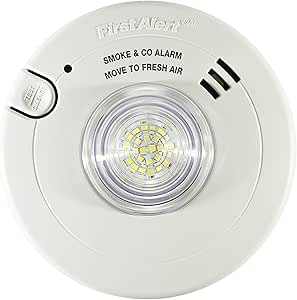 | Best for Smoke and CO Coverage | Model: 7030BSL | Alarm type: Combination smoke and carbon monoxide alarm | Power source: Corded electric | VIEW LATEST PRICE | See Our Full Breakdown |
| Clarity AlertMaster AL12 Visual Alert System with Built-In Lamp Flasher |  | Best Lamp-Based Room Alert | Model: AL12 | Manufacturer: Clarity | Alert feature: Built-in lamp flasher | VIEW LATEST PRICE | See Our Full Breakdown |
| ZAICOLER LED Audible and Visual Alarm with Strobe, 3 Sound Modes, 115 dB, DC 12V/24V |  | Best for Flexible Low-Voltage Installations | Material: ABS | Working voltage: DC 12V or 24V | Working temperature: -10°C to 50°C | VIEW LATEST PRICE | See Our Full Breakdown |
| Sonic Alert HomeAware II Basic Starter Kit |  | Best for Multi-Mode Alerts | Brand: Sonic Alert | Model: HA360MBK | Power: Corded electric with rechargeable battery backup | VIEW LATEST PRICE | See Our Full Breakdown |
| First Alert BRK 7020BSL Hardwired Smoke Alarm with LED Strobe for Hearing-Impaired Residents |  | Best for Synchronized Whole-Home Strobes | Brand: First Alert | Model: 7020BSL | Power: Hardwired with sealed 10-year battery backup | VIEW LATEST PRICE | See Our Full Breakdown |
| visual fire alarms for deaf people | Model | Dimensions |
|---|---|---|
| Kidde Hardwired Smoke Detector | 50SA10-S | — |
| First Alert SLED177 Hardwired | SLED177 | — |
| First Alert BRK 7030BSL Hardwi | 7030BSL | 2.5 × 5.4 × 6.8 in (D × W × H) |
| Clarity AlertMaster AL12 Visua | AL12 | 7.2 × 4.8 × 4.7 in |
| ZAICOLER LED Audible and Visua | — | — |
| Sonic Alert HomeAware II Basic | HA360MBK | 5 x 6 x 6.5 inches |
| First Alert BRK 7020BSL Hardwi | 7020BSL | 2.3 x 5.2 x 5.2 inches |
More Details on Our Top Picks
Kidde Hardwired Smoke Detector with LED Strobe and 10-Year Battery Backup
For buyers who need a visual warning built into a standard smoke alarm, the Kidde 50SA10-S is the most direct fit in this group. Its LED strobe and 85 dB alarm provide two kinds of alerts, while the 10-year battery backup keeps the unit powered through an outage. Compared with the First Alert BRK 7030BSL, it focuses on smoke rather than adding carbon monoxide detection, but its stated strobe output is clearer: the BRK listing gives conflicting candela figures. Kidde can also interconnect with compatible alarms, which can extend alerts across a home; compatibility depends on the existing models. The tradeoff is installation: this is a 120V hardwired alarm, not a portable alert system or a standalone strobe. Check local requirements and have the wiring handled appropriately.
Pros:- Combines an 85 dB audible alarm with a flashing LED strobe.
- Built-in 10-year battery backup supports operation during power outages.
- Can interconnect with compatible Kidde alarms for linked alerts.
- Sensing technology is designed to help reduce false alarms from cooking or steam.
Cons:- Requires a 120V AC hardwired connection.
- Interconnection depends on compatibility with the other installed alarm models.
Best for: Deaf or hard-of-hearing homeowners replacing a hardwired smoke alarm who want an integrated strobe and battery backup.
Not ideal for: Renters, people without a compatible 120V hardwired connection, or buyers who need carbon monoxide detection in the same unit.
- Model:50SA10-S
- Power:120V AC hardwired
- Battery backup:Built-in 10-year battery backup
- Alarm volume:85 dB
- Visual alert:High-intensity LED strobe flashes 3 times when smoke is detected
- Interconnection:Hardwired connection with compatible Kidde alarms
- Standards:UL 217 10th Edition, UL 1638, FCC; ETL Listed
- Warranty:10-year limited warranty
Our verdict“Choose the Kidde if you want a smoke-only hardwired alarm with an integrated strobe and long-term battery backup.”
First Alert SLED177 Hardwired LED Strobe Light for Hearing-Impaired Residents, White
The First Alert SLED177 makes sense when the priority is a dedicated visual signal rather than replacing a smoke detector. Its 177-candela strobe can mount on a wall or ceiling, and multiple units can synchronize their flashes so an alert is visible in more than one area. Unlike the Kidde 50SA10-S, this is a strobe light, not a smoke-sensing alarm: it needs to work with an appropriate alarm system that triggers it. That separation can suit a planned installation, but it adds a compatibility and wiring step that the Kidde’s integrated design avoids. Quick-connect wiring and a slim profile help with placement, though the unit still requires 120 VAC hardwired power. I would shortlist it for buyers building a coordinated visual-alert setup, not anyone seeking a self-contained smoke alarm.
Pros:- 177-candela LED strobe provides a dedicated visual warning.
- Multiple units can synchronize their flashes.
- Slim design supports ceiling or wall mounting.
- Quick-connect wiring simplifies the connection process.
Cons:- Does not detect smoke on its own and needs a compatible alarm system.
- Requires 120 VAC hardwired installation.
Best for: Homeowners or property managers who already have compatible alarms and need synchronized visual strobes in multiple rooms.
Not ideal for: Buyers seeking a standalone smoke detector, a battery-powered alert, or an installation that avoids 120V wiring.
- Model:SLED177
- Light output:177 candela
- Power source:120 VAC hardwired
- Wiring:Quick-connect
- Synchronization:Multiple units flash in unison
- Mounting:Ceiling or wall
- Color:White
- Standards:Meets UL standards and ADA requirements
Our verdict“Choose the SLED177 when you need a dedicated, synchronizing strobe to pair with a compatible alarm system.”
First Alert BRK 7030BSL Hardwired Smoke and Carbon Monoxide Alarm with LED Strobe
Where a visual alarm also needs to cover carbon monoxide, the First Alert BRK 7030BSL combines smoke and CO detection with an integrated LED strobe. Its separate flash patterns are intended to distinguish the two warning types, giving residents a visual cue about which hazard triggered the alarm. Compared with the smoke-only Kidde 50SA10-S, this unit covers an additional threat in one device, but its listing is less clear about strobe brightness: one section says 77 candela while the product description says 177. That conflict makes it harder to compare the visual output on paper. The photoelectric sensor and 10-year battery backup add useful coverage, while synchronization with compatible units can extend alerts. It still needs a hardwired connection, so it is better suited to a planned replacement than a quick plug-in solution.
Pros:- Combines smoke and carbon monoxide detection in one alarm.
- Integrated LED strobe provides a visual warning.
- Separate flash patterns identify smoke and CO alerts.
- Includes a 10-year battery backup and supports synchronization with compatible units.
Cons:- Requires a hardwired power connection.
- Product information conflicts on strobe output, listing both 77 and 177 candela.
Best for: Homeowners replacing a hardwired alarm who want smoke and carbon monoxide detection with visual alerts in one unit.
Not ideal for: Buyers who need a clearly specified strobe output, a battery-only alarm, or a smoke-only device without CO detection.
- Model:7030BSL
- Alarm type:Combination smoke and carbon monoxide alarm
- Power source:Corded electric
- Backup power:10-year battery backup
- Sensor type:Photoelectric
- Strobe:Integrated LED; product information lists conflicting outputs of 77 and 177 candela
- Operating humidity:10–95% RH
- Dimensions:2.5 × 5.4 × 6.8 in (D × W × H)
Our verdict“Choose the BRK 7030BSL if combined smoke and CO detection matters more than having an unambiguous published strobe rating.”
Clarity AlertMaster AL12 Visual Alert System with Built-In Lamp Flasher
The Clarity AlertMaster AL12 takes a different route from the integrated strobes in the Kidde 50SA10-S and First Alert BRK 7030BSL: its visual alert uses a built-in lamp flasher. That may suit someone who wants an alert tied to a room lamp rather than another ceiling-mounted alarm, but the supplied information does not establish that the AL12 detects smoke or connects directly to a fire alarm. Buyers should verify how it receives fire alerts and whether it works with their existing equipment before relying on it for life-safety notification. At 7.2 × 4.8 × 4.7 inches and 1.4 pounds, it is a self-contained unit, though not as small as a simple strobe. It also requires two product-specific batteries, a less convenient power arrangement than the hardwired alarms’ documented backup systems.
Pros:- Built-in lamp flasher provides a visual alert.
- Self-contained alert unit does not require the stated 120V hardwiring used by several other picks.
- Compact dimensions support placement in a room where a lamp-based cue is useful.
Cons:- Available product information does not specify smoke detection or fire-alarm compatibility.
- Requires two product-specific batteries.
- At 1.4 pounds, it is heavier than a simple strobe light.
Best for: Deaf or hard-of-hearing residents who need a lamp-flashing visual alert and can confirm that the system connects to their fire-alert source.
Not ideal for: Anyone seeking a confirmed standalone smoke detector or a system with clearly documented alarm compatibility and common battery power.
- Model:AL12
- Manufacturer:Clarity
- Alert feature:Built-in lamp flasher
- Batteries:2 product-specific batteries
- Dimensions:7.2 × 4.8 × 4.7 in
- Weight:1.4 lb
Our verdict“Consider the AL12 only if its lamp-flashing alert is compatible with your fire-warning setup and its battery requirements suit your household.”
ZAICOLER LED Audible and Visual Alarm with Strobe, 3 Sound Modes, 115 dB, DC 12V/24V
The ZAICOLER LED alarm is the lineup’s flexible low-voltage option: it accepts 12V or 24V DC, mounts on a wall or ceiling, and combines an LED strobe with a stated 115 dB sounder. Its three sound modes may help adapt the audible signal to different settings, but that flexibility also means someone must select and verify the right mode. Compared with the Kidde 50SA10-S, ZAICOLER is not described as a smoke detector and does not list battery backup or smoke-alarm interconnection. I would treat it as a signaling device for a compatible system, not as a replacement life-safety detector. Its broad operating-temperature range and compact ABS housing may fit some residential or commercial installations, but buyers need a suitable DC power supply and a clear plan for triggering it.
Pros:- LED strobe pairs visual signaling with a stated 115 dB audible alarm.
- Supports both DC 12V and 24V power.
- Three selectable sound modes offer flexibility for different installations.
- Includes hardware for wall or ceiling mounting.
Cons:- Requires a separate DC 12V or 24V power supply.
- Product information does not specify smoke detection, battery backup, or alarm interconnection.
- Sound mode must be selected to suit the installation.
Best for: Installers or property owners with a compatible 12V or 24V DC system who need a wall- or ceiling-mounted audible and visual signal.
Not ideal for: Households looking for a standalone smoke alarm, built-in backup power, or a simple mains-powered replacement with established alarm interconnection.
- Material:ABS
- Working voltage:DC 12V or 24V
- Working temperature:-10°C to 50°C
- Sound pressure:115 dB
- Lighting:LED strobe
- Flash frequency:120 times per minute
- Sound modes:3
- Mounting and dimensions:Ceiling or wall mount; 3.54 × 3.54 × 2.36 in
Our verdict“Choose ZAICOLER only for a compatible low-voltage signaling setup, not as a standalone visual fire alarm.”
Sonic Alert HomeAware II Basic Starter Kit
The HomeAware II suits buyers who need more than a flashing light: it combines a strobe, bed shaker, audio tones, and scrolling text, giving household members different ways to receive an alert. Unlike the hardwired First Alert BRK 7020BSL, it does not detect smoke or carbon monoxide itself. It listens for the sound patterns of existing alarms, so placement in the same room and regular trigger testing matter. Its screen can also display cellphone calls and texts through the app, plus landline calls when connected, making it useful beyond emergency alerts. The tradeoff is dependence on compatible existing alarms and careful positioning. Choose it for flexible notification options; choose the BRK 7020BSL for a directly installed smoke alarm with a synchronized strobe.
Pros:- Combines strobe, bed shaker, audio tones, and scrolling text alerts.
- Can display cellphone notifications and connected landline call alerts.
- Rechargeable battery backup can provide alerts during a power outage.
- Works with existing alarms without replacing them with a hardwired strobe alarm.
Cons:- Does not detect smoke or carbon monoxide directly; it relies on existing alarms sounding.
- Must be placed in the same room as the alarm it monitors and tested regularly.
- Requires setup of the app or a landline connection for phone notifications.
Best for: Deaf or hard-of-hearing households with existing smoke and carbon monoxide alarms that want visual, tactile, and text alerts in one system.
Not ideal for: Buyers seeking a standalone smoke or carbon monoxide detector, or anyone unable to place the unit in the same room as the existing alarms.
- Brand:Sonic Alert
- Model:HA360MBK
- Power:Corded electric with rechargeable battery backup
- Sensor type:Acoustic; listens for existing alarms
- Alert methods:Strobe, bed shaker, audio tones, scrolling text display
- Connectivity:Bluetooth app and landline phone connection
- Smoke and CO detection:Does not detect directly
- Dimensions:5 x 6 x 6.5 inches
Our verdict“Choose the HomeAware II if your household wants several alert methods and already has alarms it can monitor.”
First Alert BRK 7020BSL Hardwired Smoke Alarm with LED Strobe for Hearing-Impaired Residents
The BRK 7020BSL is the more direct choice for buyers who want a smoke alarm with a built-in visual alert, rather than a system that listens for another alarm. Its 177-candela LED strobe can synchronize with compatible units, helping spread the alert across connected rooms. Separate flash patterns distinguish smoke from carbon monoxide alerts, a useful cue that the Sonic Alert HomeAware II’s general combination of strobe, shaker, tones, and scrolling text does not provide in the same way. This model is a photoelectric smoke alarm with hardwired power and a sealed 10-year battery backup. The main limitation is installation: it needs a junction box and hardwired power, and a single unit covers only its own location. Pick it for a compatible wired alarm network; skip it if you need a portable alert system or a CO detector in this unit.
Pros:- Built-in 177-candela LED strobe provides a direct visual alarm.
- Distinct strobe patterns indicate smoke and carbon monoxide alerts.
- Compatible units can synchronize strobes across connected areas.
- Hardwired power is backed by a sealed 10-year battery.
Cons:- Installation requires hardwired power and a junction box.
- This model is a smoke alarm, not a standalone carbon monoxide detector.
- Synchronization depends on using compatible devices.
Best for: Homeowners with hardwired smoke-alarm wiring who want a built-in strobe and synchronized visual alerts across compatible devices.
Not ideal for: Renters or households without a junction box and hardwired power, and buyers who need this unit itself to detect carbon monoxide.
- Brand:First Alert
- Model:7020BSL
- Power:Hardwired with sealed 10-year battery backup
- Alarm sensor:Photoelectric
- Visual alert:177-candela synchronized LED strobe
- Interconnection:Up to 18 compatible devices, including up to 12 smoke alarms
- Dimensions:2.3 x 5.2 x 5.2 inches
- Unit count:1
Our verdict“Choose the BRK 7020BSL if you have hardwired alarm wiring and want synchronized strobes rather than a separate listening system.”
How We Picked
I ranked these options by how directly they address fire awareness for deaf and hard-of-hearing residents, giving priority to a visible alarm that is clearly tied to smoke or carbon monoxide detection. I also weighed whether a product is a complete alarm or an accessory/system component, its stated backup and power arrangements, and how much setup or compatibility checking a buyer may need. Those differences matter: a bright strobe is only useful if it activates reliably when the household needs it.
The ranking favors products with a clear connection between hazard detection and visual alerting, followed by options that add useful coverage or flexibility. A dual smoke-and-CO alarm ranks ahead of a strobe accessory because it covers more hazards in one device; a backup-power feature adds value but does not replace checking local code and installation requirements. System products can serve more rooms or alert types, yet they require buyers to confirm components and coverage. I treat the ZAICOLER unit more cautiously because its stated electrical supply and audible output do not by themselves establish that it is a certified residential smoke alarm.
Factors to Consider When Choosing Visual Fire Alarms For Deaf People
Choosing a visual alarm is not just a question of brightness. I would start by matching the alert to the actual hazard, the room where it must be noticed, and the way the home’s alarms are connected.
Check Whether It Detects Smoke or Only Signals an Alert
Product names can make a strobe accessory sound like a complete fire alarm, so verify what starts the alert. A smoke detector senses smoke; an add-on strobe may only flash when paired with a compatible detector or signaling system. Confirm the exact compatible models and whether interconnection is required before buying. A visible beacon without a dependable detection source leaves a gap, while a detector with no visual signal may not meet the household’s needs. For carbon monoxide protection, check for explicit CO detection rather than assuming a smoke alarm covers it. If the product information does not clearly state its role, ask the manufacturer or an electrician before relying on it.
Plan for Sleeping Rooms and Alert Coverage
A visual alert needs to be noticeable where a person sleeps, not only in a hallway or living room. Consider the number of bedrooms, closed doors, room layout, and whether one unit can signal another. A whole-home system may cover more locations than a single strobe alarm, but its range and included components need checking. Do not assume a bright flash in one room will wake someone in another. Some households may need a dedicated notification device near the bed or an additional alert method. Map the locations where an alarm must be seen before deciding how many units to buy.
Distinguish Strobe Alerts From Other Wake-Up Methods
A strobe can provide a strong visual cue, but people differ in how reliably they notice flashing light during sleep or from different positions. Some alert systems can work with additional notification devices, such as a bed shaker, but that capability should be confirmed rather than presumed. Think about whether the resident sleeps facing away from the alarm, uses a sleep mask, or shares a room with someone who has different alert needs. Multiple alert methods can add resilience, though they also bring more components to install and maintain. Choose based on the individual’s ability to notice the alert, not on the assumption that one type suits everyone.
Compare Hardwired Power, Backup, and Installation Needs
Hardwired models can fit homes with an existing interconnected alarm setup, but they may require matching wiring and professional installation. Battery backup can preserve operation during a power outage, yet it does not necessarily make a hardwired unit a simple replacement for every existing detector. Check the model’s wiring, battery type, backup duration, and replacement instructions. A system that uses a separate power supply introduces another point to inspect and maintain. Before purchase, confirm local fire-code requirements and whether a qualified installer should handle the work. Avoid removing or disabling a working alarm while waiting for a new device or installation.
Verify Certification and Compatibility Before Buying
Electrical details such as 12V or 24V input and a loud sound output do not prove that a device is a listed residential smoke alarm. Look for clear information about the hazard detected, relevant safety certification, intended setting, and connection to other alarms. The same check applies to strobe accessories: confirm that the detector and accessory are designed to work together. In a rental or shared building, building rules may restrict changes to hardwired alarms. Ask the landlord, building manager, or local fire authority about approved equipment when needed. This verification step can prevent a device meant for a signaling or industrial use from being mistaken for a household fire detector.
Account for Maintenance and Everyday Use
Every alarm needs a plan for testing, cleaning, and replacement, even when it has long-life backup power. Check how the device signals a low battery or fault, whether the warning is accessible to the resident, and how the test function works. Systems with a hub or separate alert components may offer broader notification but also need more pieces checked regularly. Make sure household members or caregivers know what each signal means and how to respond. A practical setup is one that people can maintain without guessing which component has failed. Keep the manual and compatibility details with household safety records for future replacements.
Frequently Asked Questions
Can I use the First Alert SLED177 without replacing my existing smoke detector?
Possibly, but the SLED177 is described as a strobe light rather than a standalone smoke detector, so compatibility is the deciding factor. Check the manufacturer’s instructions for the exact alarm models and wiring it supports. Do not assume that a strobe will activate simply because it is installed near an existing detector. If your current alarm is not compatible, a complete strobe-equipped detector or a matched alert system may be a better route. Keep the existing working alarm in service until the new arrangement has been installed and tested.
Is one strobe alarm enough for an entire home?
Not necessarily: visibility depends on where the alarm is installed, room separation, and whether the alert reaches sleeping areas. A strobe in a hallway may not be visible behind a closed bedroom door or from a bed facing away from it. Check local placement rules for smoke and carbon monoxide alarms, then assess whether additional visual notification is needed. Interconnected alarms or a home alert system can extend coverage, but confirm their range and included components. A room-by-room coverage plan is more reliable than choosing a single device based only on its flash feature.
Should I choose a hardwired strobe alarm or a separate alert system?
A hardwired strobe alarm may suit a home with compatible wiring and a need for direct visual notification at the detector. A separate system may fit better when the household wants alerts relayed to other rooms or additional notification devices. The tradeoff is that systems can require a hub, compatible transmitters, or more setup, while a hardwired alarm can require installation work. Compare what each package actually includes and how it connects to existing alarms. If you rent or live in a building with shared fire equipment, get approval before changing hardwired devices.
Does a long-life battery backup mean I can ignore maintenance?
No. Backup power can help an alarm operate during a power interruption, but the unit still needs routine testing and attention to fault or low-battery signals. Follow the manufacturer’s schedule for testing, cleaning, and replacement. Also confirm whether the stated backup powers the alarm, the strobe, or both, since those functions may not share the same power arrangement. Keep a record of installation and replacement dates. If the alert or test behavior changes, treat it as a maintenance issue rather than assuming the backup feature covers it.
How can I tell whether a strobe unit is a real residential fire alarm?
Check the product documentation for an explicit smoke-detection function and applicable residential safety listing or certification. A bright strobe, loud siren, or stated 12V/24V power supply does not establish that the device detects smoke or meets household fire-alarm requirements. If it is an accessory, find out which detector activates it and whether the connection is supported by the manufacturer. When product information is unclear, contact the manufacturer or a qualified electrician before using it as fire protection. Follow local fire-code guidance for the required number and placement of alarms.
Conclusion
For most buyers seeking one integrated device, I would choose the First Alert BRK 7030BSL as best overall because it combines smoke and carbon monoxide detection with a visual strobe. The Kidde hardwired alarm is my best value-style pick for shoppers who prioritize its stated 10-year battery backup, provided its wiring and alert coverage fit the home. For beginners, a complete strobe-equipped detector is generally easier to evaluate than a separate strobe accessory such as the SLED177, though installation may still call for help. The Sonic Alert HomeAware II is my premium-style choice for broader home alerting, while the Clarity AlertMaster AL12 is worth exploring when lamp-flasher notifications suit the household. For a specific need like adding a strobe to an existing compatible setup, consider the SLED177; treat the ZAICOLER unit cautiously until its residential detection role and certification are verified. Choose the option that provides dependable coverage in the rooms where the resident must notice an alarm, and confirm compatibility and local requirements before installation.