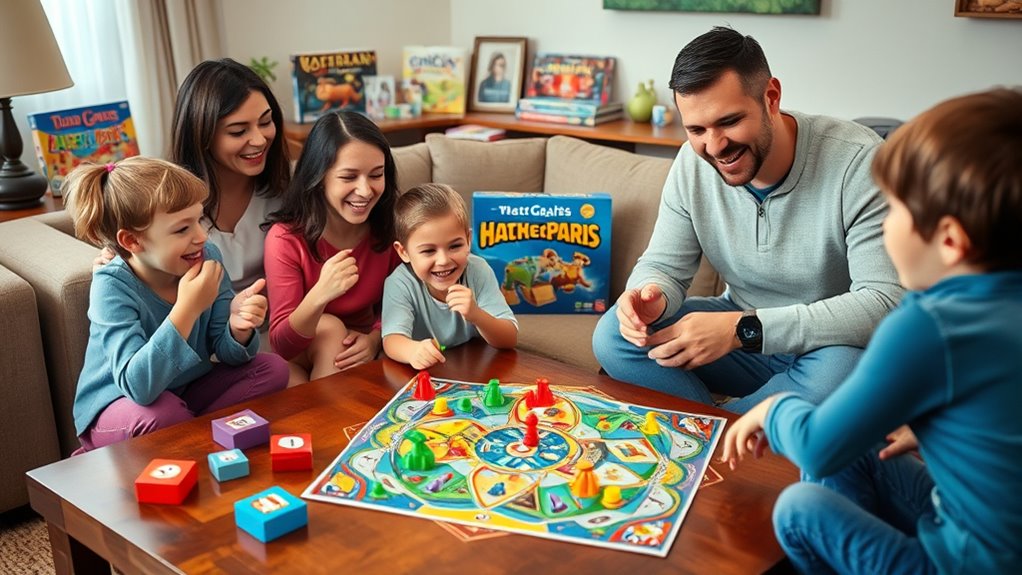

The best family board games bring different ages to the same table without making the rules or wait times a chore. CATAN is my best overall pick for families ready for trading and strategy, while UNO is a simpler, portable choice and Guess Who? gives younger players an easy head-to-head game. The main tradeoffs are how much reading and planning a game asks of players, how long a round lasts, and whether everyone gets to participate at once. Fast options like Connect 4 suit short sessions, while Monopoly asks for a longer commitment. Read on for the full breakdown and help matching a game to your family.

Get everyday helpers delivered free with Prime
- Fast, free delivery on millions of items
- Prime Video, Amazon Music and more included
- Member-only deals all year
Key Takeaways
CATAN earns the overall pick for families seeking choices and interaction, though its trading and resource strategy suit older or more patient players better than preschoolers.
UNO offers the easiest group fit across a broad player count and packs away simply, while its luck-driven turns give players less strategic control than CATAN.
Guess Who? and Connect 4 favor short, two-player sessions; they are easy to teach but less useful when the whole family wants to play together.
Candy Land and Trouble lower the entry barrier for young children, but their simple turns may not hold older siblings’ attention as well as a word or strategy game.
Monopoly, Yahtzee, and Jenga serve different kinds of shared play: extended competition, dice-based push-your-luck decisions, and physical suspense. Choose by the experience your family wants, not just the board game label.
| CATAN Board Game (6th Edition) |  | Best for Strategy-Minded Families | Edition: 6th Edition | Players: 3–4 | Recommended age: 10 years and up | VIEW ON AMAZON | See Our Full Breakdown |
| Hasbro Gaming Trouble Board Game for Kids Ages 5 and Up, 2–4 Players |  | Best for Easy, Lively Family Races | Edition: Classic Edition | Model: A5064 | Players: 2–4 | VIEW ON AMAZON | See Our Full Breakdown |
| Do You Really Know Your Family? Family Card Game |  | Best for Conversation and Laughs | Game type: Trivia and conversation card game | Players: 3–8 | Age range: 8 and up | VIEW ON AMAZON | See Our Full Breakdown |
| USAOPOLY The Original Tapple Family Word Game |  | Best for Fast Wordplay | Brand: USAOPOLY | Age range: 8+ | Included components: 1 Tapple wheel with built-in timer, 36 cards, and rules | VIEW ON AMAZON | See Our Full Breakdown |
| Hasbro Gaming Candy Land Board Game for Kids, Ages 3 and Up |  | Best First Board Game | Brand: Hasbro Gaming | Players: 2–4 | Recommended age: 3 years and up | VIEW ON AMAZON | See Our Full Breakdown |
| Hasbro Twister Party Classic Board Game for 2 or More Players |  | Best for Active Family Nights | Players: 2–4 | Age range: 6 and up | Included: Vinyl mat, spinner, and instructions | VIEW ON AMAZON | See Our Full Breakdown |
| Monopoly Family Board Game for 2-6 Players, Includes 8 Tokens |  | Best for Long Strategy Sessions | Players: 2–6 | Age guidance: 8 and up | Estimated playing time: 120 minutes | VIEW ON AMAZON | See Our Full Breakdown |
| UNO Card Game by Mattel, Ages 7+, 2-10 Players |  | Best for Large Groups | Players: 2–10 | Age range: 7 and up | Included components: 112 cards and instructions | VIEW ON AMAZON | See Our Full Breakdown |
| Hasbro Gaming Guess Who? Board Game with People and Pets Cards | 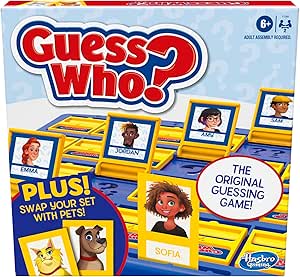 | Best for Two-Player Deduction | Players: 2 | Minimum age: 6 years | Game format: Yes-or-no character guessing | VIEW ON AMAZON | See Our Full Breakdown |
| Connect 4 Classic Grid Game for Kids and Families |  | Best for Quick Head-to-Head Play | Players: 2 | Age guidance: 6 and up | Game type: Strategy board game | VIEW ON AMAZON | See Our Full Breakdown |
| Hasbro Jenga Game with Digital Die |  | Best for Active Family Game Nights | Brand: Hasbro | Material: Wood | Block count: 54 | VIEW ON AMAZON | See Our Full Breakdown |
| Hasbro Gaming Yahtzee Classic Dice Game |  | Best for Family Scorekeepers | Players: 2 or more | Recommended age: 8 years and up | Turns: 13 turns per player | VIEW ON AMAZON | See Our Full Breakdown |
| Sorry! Classic Family Board Game for Kids Ages 6 and Up |  | Best for Playful Rivalry | Brand: Hasbro Gaming | Players: 2–4 | Recommended age: 6 years and up | VIEW ON AMAZON | See Our Full Breakdown |
| family board game | Players | Included components |
|---|---|---|
| CATAN Board Game | 3–4 | — |
| Hasbro Gaming Trouble Board Ga | 2–4 | Gameboard, plastic game unit with Pop-O-Matic die roller, 16 pegs, and instructions |
| Do You Really Know Your Family | 3–8 | Cards |
| USAOPOLY The Original Tapple F | — | 1 Tapple wheel with built-in timer, 36 cards, and rules |
| Hasbro Gaming Candy Land Board | 2–4 | Gameboard, 4 gingerbread pawns, card deck, and instructions |
| Hasbro Twister Party Classic B | 2–4 | — |
| Monopoly Family Board Game for | 2–6 | — |
| UNO Card Game by Mattel | 2–10 | 112 cards and instructions |
| Hasbro Gaming Guess Who? Board | 2 | — |
| Connect 4 Classic Grid Game fo | 2 | — |
| Hasbro Jenga Game with Digital | — | — |
| Hasbro Gaming Yahtzee Classic | 2 or more | Shaker with lid and 100 scorecards |
| Sorry! Classic Family Board Ga | 2–4 | Gameboard, 12 pawns, 45 cards, and instructions |
More Details on Our Top Picks
CATAN Board Game (6th Edition)
CATAN gives family game night room to grow into deeper strategy. Players gather resources, trade with one another, and build toward victory, so choices and negotiation matter more than the luck-driven movement in Candy Land. Its modular island changes the layout between games, giving families a reason to return as they learn how resources and trading shape each round. The wooden pieces and broad set of components support a more involved tabletop experience, but the 60–90 minute playtime asks for more patience than a quick game like Trouble. The base game is limited to three or four players, which can leave larger households out unless they get the separate extension. This is a strong fit for families with older children who enjoy planning and friendly bargaining.
Pros:- Modular board creates varied layouts across plays.
- Trading and building give players meaningful choices.
- Wooden player pieces and a substantial component set.
- Supports strategic play for families with older children.
Cons:- Base game accommodates only three or four players.
- A 60–90 minute playtime can be long for younger or impatient players.
- The 5–6 player extension is sold separately.
Best for: Families with children ages 10 and up who enjoy strategy, trading, and longer game nights.
Not ideal for: Households with five or more players who want everyone to join without buying an extension, or families seeking a short, simple game.
- Edition:6th Edition
- Players:3–4
- Recommended age:10 years and up
- Playing time:60–90 minutes
- Language:English
- Terrain hexes:19
- Wooden player pieces:96
- Expansion compatibility:5–6 Player Extension sold separately
Our verdict“Choose CATAN for an older-child family that wants strategic trading and building and can set aside a longer game night.”
Hasbro Gaming Trouble Board Game for Kids Ages 5 and Up, 2–4 Players
Trouble keeps the rules simple and the turns tactile: players press the Pop-O-Matic bubble to roll, then race their pegs toward the finish. That built-in roller makes setup straightforward and keeps the die attached to the game, a practical plus for younger families. Compared with CATAN, there is little planning or negotiation; the appeal is a clear race that children can follow and adults can join without learning a complex system. The catch is that a bumped peg returns to the beginning, which can undo progress and frustrate players who dislike setbacks. Optional Power Up spaces add a twist, though they do not change the game’s basic luck-driven rhythm. It suits a quick, accessible session better than a family looking for strategic choices or an adult challenge.
Pros:- Pop-O-Matic roller keeps the die attached and makes turns easy to start.
- Simple race rules are accessible to younger players.
- Optional Power Up spaces add another way to play.
- Gameboard and pegs provide a ready-to-play set.
Cons:- A bumped peg can be sent all the way back to the beginning.
- Gameplay depends heavily on die rolls.
- The listed age range is 5–15, which may offer limited appeal to some adults.
Best for: Families with children ages 5 and up who want a simple race game with a memorable built-in die roller.
Not ideal for: Players who dislike having progress erased by a bumped peg or want strategic decisions like those in CATAN.
- Edition:Classic Edition
- Model:A5064
- Players:2–4
- Age range:5 years and up
- Included components:Gameboard, plastic game unit with Pop-O-Matic die roller, 16 pegs, and instructions
- Optional gameplay:Power Up spaces
Our verdict“Pick Trouble for a family that values quick, easy-to-follow races over the deeper choices in CATAN.”
Do You Really Know Your Family? Family Card Game
This card game turns family knowledge into the main event. Trivia prompts and silly challenges invite players to talk and joke together, giving it a more personal feel than the racing turns in Trouble or the word sprints in Tapple. It accommodates three to eight players, so it can bring a larger family group into one activity, and its tin makes the cards easy to pack for a visit or trip. The tradeoff is that enjoyment depends on players being comfortable answering questions and taking part in challenges; families wanting a structured board and clear win-by-movement goal may prefer Candy Land. It is designed for indoor play and requires at least three people, so it will not serve smaller households or solo parent-child sessions as flexibly as two-player options.
Pros:- Trivia and challenges encourage family conversation.
- Supports groups of three to eight players.
- Portable tin is convenient to bring along.
- English-language cardstock cards need no batteries.
Cons:- Requires at least three players.
- Indoor play is the intended setting.
- Conversation prompts and challenges may not suit players who prefer structured board-game turns.
Best for: Families of three to eight who enjoy conversation prompts, shared jokes, and learning amusing things about one another.
Not ideal for: Two-player households or families who prefer a board, tactical decisions, and a defined race to a finish.
- Game type:Trivia and conversation card game
- Players:3–8
- Age range:8 and up
- Included components:Cards
- Container:Tin
- Material:Cardstock
- Language:English
- Dimensions:2 x 4.7 x 6.7 inches
- Battery required:No
Our verdict“Choose this for a group that wants a portable conversation game rather than a board-centered race like Candy Land.”
USAOPOLY The Original Tapple Family Word Game
Tapple turns category prompts into a race against the clock. Players call out an answer and press a letter tab, so quick recall matters more than the trading and long-term planning in CATAN. Its 144 categories give families plenty of prompts to cycle through, while the built-in timer and stored components make it easy to bring out for a lively session. That pace is also the main limitation: children starting at age eight may find the ten-second pressure tough, especially when a category narrows their options. Compared with Do You Really Know Your Family?, Tapple focuses on fast verbal competition rather than personal trivia and conversation. Choose it for a group that likes energetic word challenges; skip it if players need more time to think or prefer a relaxed pace.
Pros:- Built-in timer creates brisk, easy-to-start rounds.
- 144 categories support repeat play.
- Letter tabs make answers visible and keep turns active.
- Portable wheel has built-in storage.
Cons:- Ten-second pressure can be difficult for younger players.
- Fast recall may favor some players over others.
- No manufacturer warranty is included.
Best for: Families with children ages 8 and up who enjoy quick category challenges and can handle a timed turn.
Not ideal for: Families with younger children or players who prefer relaxed conversation and extra time to think.
- Brand:USAOPOLY
- Age range:8+
- Included components:1 Tapple wheel with built-in timer, 36 cards, and rules
- Categories:144
- Model name:The Original Tapple
- Item type:Party Game
- Manufacturer:USAOpoly
- Timer:Built-in, 10 seconds
Our verdict“Pick Tapple for a family that wants energetic word sprints rather than the conversational pace of Do You Really Know Your Family?”
Hasbro Gaming Candy Land Board Game for Kids, Ages 3 and Up
Candy Land is built for preschoolers who are just learning to take turns. Players draw color-coded cards and move gingerbread pawns along a candy-themed path, so children can join without reading or weighing complicated choices. That makes it easier to introduce than CATAN, which is intended for older players and takes much longer. The short 15-minute playing time also fits young attention spans. The tradeoff is that movement follows the cards: families seeking tactical decisions or control over the outcome may find the play repetitive. It supports two to four players, so it works for a small family gathering but cannot include a larger group in the same game. With English and Spanish instructions, it is a straightforward starting point for color matching and turn-taking.
Pros:- No reading is required to play.
- Color-coded cards support matching and color recognition.
- Short 15-minute playing time suits young attention spans.
- Instructions are included in English and Spanish.
Cons:- Card draws determine movement, leaving little room for player decisions.
- Supports only two to four players.
- The simple play may hold limited appeal for older children and adults.
Best for: Families with preschool-age children who are learning colors, matching, and how to take turns.
Not ideal for: Families seeking strategic choices, more player capacity, or a game that stays engaging as children grow older.
- Brand:Hasbro Gaming
- Players:2–4
- Recommended age:3 years and up
- Estimated playing time:15 minutes
- Included components:Gameboard, 4 gingerbread pawns, card deck, and instructions
- Instruction languages:English and Spanish
- Skills:Color recognition, matching, and turn-taking
Our verdict“Choose Candy Land as a child’s first family game when accessible color matching matters more than strategy.”
Hasbro Twister Party Classic Board Game for 2 or More Players
Twister turns family play into a physical challenge, which makes it a lively change from the seated turns of Monopoly or Connect 4. Players follow the spinner to place hands and feet on colored spots, so balance and flexibility matter as much as luck. The straightforward rules make it easy for children and adults to join in, and the mat can be used indoors or outdoors on a flat surface. Its tradeoff is the format: this is best for a small group ready to move, rather than a whole family playing at once. The supplied specs list 2–4 players, and anyone who dislikes bending, balancing, or falling out of position may enjoy it less than a card or board game.
Pros:- Gets players moving while encouraging balance and coordination
- Simple spinner-led rules are easy for mixed-age groups to follow
- Can be played indoors or outdoors on a flat surface
Cons:- The 2–4 player listing limits how many people can join each round
- Players can get frustrated if balancing or bending is difficult
- Needs clear floor space and a flat surface
Best for: Families with children age 6 and up who want an energetic activity for a small group or party
Not ideal for: Large families who want everyone to play at once, or players who prefer seated games and dislike physical challenges
- Players:2–4
- Age range:6 and up
- Included:Vinyl mat, spinner, and instructions
- Play setting:Indoor or outdoor
- Game format:Physical balance and coordination
- Play surface:Flat surface required
Our verdict“Choose Twister for a small family group that wants movement and laughs, and choose a seated game if space or mobility is a concern.”
Monopoly Family Board Game for 2-6 Players, Includes 8 Tokens
Monopoly is the pick for families who enjoy negotiation and long-term planning: buying properties, trading, and building houses or hotels create decisions that unfold over many turns. That gives it more deal-making than the quick pattern play of UNO or Connect 4, but it also asks for substantially more time. The listed playing time is 120 minutes, so it suits an evening set aside for one game better than a short activity between other plans. Eight tokens offer players a choice of marker, though the game is listed for 2–6 players. Younger children may find the property rules and extended play harder to follow than the simpler turns in Candy Land. Choose it when the family likes competition and can commit to a longer session.
Pros:- Property buying and trading give players meaningful choices over the course of play
- Supports 2–6 players for a range of family group sizes
- Eight tokens let players choose a marker
Cons:- The listed playing time of 120 minutes is a substantial commitment
- Property, rent, and building rules may be difficult for younger players
- Long play can be a poor fit for families who want quick turns and frequent game changes
Best for: Families with children age 8 and up who enjoy property trading, negotiation, and extended game nights
Not ideal for: Families seeking a short game, or households with younger children who may struggle with the rules and length
- Players:2–6
- Age guidance:8 and up
- Estimated playing time:120 minutes
- Edition:Standard Edition
- Tokens:8
- Language:English
- Genre:Family
Our verdict“Pick Monopoly for a family that enjoys trading and has time for a long session; choose UNO for quicker group play.”
UNO Card Game by Mattel, Ages 7+, 2-10 Players
UNO is the most flexible group option in this batch, supporting up to 10 players while Connect 4 and Guess Who? are built for two. Its color-matching turns are easier to teach than Monopoly’s property and trading rules, making it a practical choice when ages or experience levels vary. Graphic symbols support colorblind accessibility, and three blank wild cards let families add house rules. The game continues until a player or team reaches 500 points, so a session can run through multiple rounds rather than end after one hand. The main tradeoff is that this is a card game rather than a board game, and the supplied description notes that the cardboard packaging offers limited durability. I’d choose it for a larger gathering that needs easy-to-explain turns.
Pros:- Accommodates groups of 2–10 players
- Graphic symbols on the cards support colorblind accessibility
- Three blank wild cards allow families to customize rules
- Matching rules are easier to teach than Monopoly’s trading and property system
Cons:- Basic cardboard packaging offers limited durability
- Card matching may feel too simple for players seeking deeper strategy
- The game uses cards rather than a traditional board
Best for: Families and mixed-age gatherings of up to 10 people who want an easy-to-teach game with accessible card symbols
Not ideal for: Buyers specifically seeking a board and physical game pieces, or families who need especially durable storage packaging
- Players:2–10
- Age range:7 and up
- Included components:112 cards and instructions
- Colorblind accessible:Yes
- Customizable wild cards:3 blank cards
- Winning threshold:500 points
- Manufacturer:Mattel
Our verdict“Choose UNO when a large, mixed-age group needs accessible rules and flexible play, and look to a board game for a more involved tabletop experience.”
Hasbro Gaming Guess Who? Board Game with People and Pets Cards
Guess Who? gives two players a focused deduction challenge: ask yes-or-no questions and narrow the character choices until you identify the mystery card. Including both people and pets adds another set of characters to work through, giving it more variety than a single-category guessing game. That makes it a stronger one-on-one choice than Connect 4 for families who prefer clues and questions to lining up pieces. Its narrow player count is the catch: this version is listed for two, so a larger family cannot all compete in the same round as they could with UNO. Younger children may also need help with reading and understanding questions. The two boards and scorekeepers support repeated rounds, but the small face cards call for care around very young children.
Pros:- People and pet card sets add variety to the guessing choices
- Yes-or-no questions encourage deduction and conversation
- Two boards and scorekeepers support head-to-head rounds
Cons:- Designed for only two players
- Younger children may need help reading and understanding questions
- Small face cards may be less suitable around very young children
Best for: A parent and child age 6 or older who want a short, face-to-face game built around asking questions and making deductions
Not ideal for: Families looking for one game everyone can play together, or children who need support with reading and comprehension
- Players:2
- Minimum age:6 years
- Game format:Yes-or-no character guessing
- Included boards:2 gameboards
- People cards:48 face cards and 24 mystery cards
- Pet cards:48 face cards and 24 mystery cards
- Other included items:2 scorekeepers and game rules
Our verdict“Choose Guess Who? for a parent-child head-to-head game with varied characters, and pick UNO when the whole family needs to join.”
Connect 4 Classic Grid Game for Kids and Families
Connect 4 is a straightforward choice for quick two-player contests: its familiar goal and fast setup make it easier to start than Monopoly, which asks families to manage trading, property, and a much longer session. Three modes—classic, frenzy, and pop-out—give children ways to vary the basic grid challenge without learning a wholly different game. That simplicity is useful for younger players, but it leaves less room for families seeking layered strategy. The two-player limit also makes it a poor fit when several siblings want to take part at once; UNO handles larger groups better. Choose Connect 4 when the priority is a clear, direct match between two people and quick rematches, rather than a shared game for a whole table.
Pros:- Easy-to-learn rules and quick setup make it simple to start a match
- Three modes offer variation on the standard grid game
- Direct two-player competition suits siblings or an adult and child
Cons:- Limited to two players, so others must wait or play separately
- The straightforward strategy may not hold the interest of players seeking more depth
- The supplied product details do not specify included components
Best for: Families with children age 6 and up who want quick, easy-to-start matches between two players
Not ideal for: Large households that want everyone involved in the same game, or older players looking for complex strategy
- Players:2
- Age guidance:6 and up
- Game type:Strategy board game
- Gameplay modes:Classic, frenzy, and pop-out
- Pop-out feature:Yes
- Setup:Quick setup
Our verdict“Choose Connect 4 for quick matches between two players, and choose UNO when the family wants a game for a larger group.”
Hasbro Jenga Game with Digital Die
Jenga with Digital Die keeps the familiar block tower but adds six rule variations, giving families a way to change the feel of a repeat-play game. The die can call for challenges such as using only thumbs or racing a timer, so turns ask for more than steady hands. Compared with Yahtzee Classic, this is more physical and easier to dip into without tracking a long sequence of rounds; Sorry! offers more movement and direct setbacks between players. The tradeoff is that some of Jenga’s new modes depend on smartphone or web app access, while the classic version needs no digital companion. Long-time Jenga fans may also prefer the straightforward tower. Its wooden blocks and stacking sleeve make setup and storage simple, though it still needs a stable surface and careful handling.
Pros:- Six die-led modes add variety to familiar stacking play
- Wooden blocks make the tower a tactile, hands-on activity
- Stacking sleeve helps with setup and storage
- Solo play and group play are both listed
Cons:- Some digital die modes require smartphone or web app access
- Tower collapses can interrupt play and require rebuilding
- Players who know classic Jenga may find the added modes less appealing
Best for: Families with children ages 6 and up who want a quick, hands-on game with optional rule changes
Not ideal for: Households avoiding phone or web app dependence, or players who prefer strategy without dexterity challenges
- Brand:Hasbro
- Material:Wood
- Block count:54
- Recommended age:6+
- Player count:1+
- Gameplay feature:Digital die with six play modes
- Included accessory:Stacking sleeve
Our verdict“Choose this Jenga edition for a family that enjoys dexterity games and wants optional twists on a familiar activity.”
Hasbro Gaming Yahtzee Classic Dice Game
Yahtzee Classic suits families who enjoy weighing a risk on each roll: players can roll up to three times per turn to chase combinations, then record results across 13 rounds. That choice gives it more ongoing score strategy than Jenga with Digital Die, where tension comes from physical balance, and it asks less direct interference than Sorry!. The shaker lid doubles as storage, and 100 scorecards give a group a ready supply for repeat games. Its main compromise is the bookkeeping: everyone needs to follow the scorecard through the full sequence, so it is less breezy than a quick stacking session. The listed age starts at 8, making it a better fit for older children who can manage both the scoring and the changing odds than for the youngest players in a mixed-age family.
Pros:- Simple roll-and-score structure is easy to learn
- Up to three rolls per turn give players choices about risk
- Shaker lid doubles as storage for the dice
- Includes 100 scorecards for repeated sessions
Cons:- A full game follows 13 turns per player and requires scorekeeping
- Scorecards are consumable, so continued play uses up the included supply
- Less physical and interactive than Jenga or Sorry!
Best for: Families with children ages 8 and up who enjoy dice odds, turn-by-turn choices, and keeping a shared score
Not ideal for: Families seeking a short, low-bookkeeping game or including younger children who may struggle with scorecards
- Players:2 or more
- Recommended age:8 years and up
- Turns:13 turns per player
- Rolls per turn:Up to 3
- Dice:5
- Included components:Shaker with lid and 100 scorecards
- Material:Plastic
Our verdict“Pick Yahtzee for families with older children who like making probability choices and do not mind tracking a multi-round score.”
Sorry! Classic Family Board Game for Kids Ages 6 and Up
Sorry! Classic is the pick here for families who want the board itself to create direct competition: card draws move pawns, while slides and opponent moves can send them back to start. That gives turns more player-to-player impact than Yahtzee Classic, where each person mainly manages their own dice and score. It also offers more movement around a shared board than Jenga with Digital Die, whose tension comes from keeping a tower upright. The swings in position make the game lively, but they can frustrate a child who has nearly reached home and gets sent back. With room for two to four players and a listed age of 6 and up, it fits small family groups better than larger gatherings. Card luck also limits how much planning can control the outcome.
Pros:- Slides and pawn interactions create lively turns
- Card draws add variety to movement
- Supports two to four players
- Includes the board, pawns, cards, and instructions
Cons:- A pawn can be sent back to start, which may upset players
- Card draws limit how much a player can plan movement
- Designed for up to four players, so it does not fit larger groups
Best for: Families of two to four with children ages 6 and up who enjoy race games and playful take-that moments
Not ideal for: Players who dislike setbacks, random card draws, or games where a late move can send a pawn back to start
- Brand:Hasbro Gaming
- Players:2–4
- Recommended age:6 years and up
- Genre:Family
- Edition:Standard Edition
- Included components:Gameboard, 12 pawns, 45 cards, and instructions
- Language:English
Our verdict“Choose Sorry! for a small family group that enjoys racing, surprises, and sending opponents backward as part of the fun.”

How We Picked
I compared these 13 games as options for actual family tables, weighing age accessibility, clarity of rules, player count, session length, replay appeal, and how much each game lets players affect the outcome. I also considered practical fit: whether a game works for a quick weeknight round, accommodates a larger group, or needs players to read, plan, or wait through other turns.
The ranking favors games with a clear family use and a balance of approachability and repeat play. CATAN leads for households with a range of ages who can handle strategy; simpler games rank well for younger children or quick sessions but serve a narrower role. Classic games such as Monopoly remain recognizable choices, though longer play and player elimination can make them a weaker fit for some families. The list assigns each option a distinct role so readers can choose based on their group’s ages, patience, and preferred style.
Factors to Consider When Choosing Family Board Games
Before choosing a game, think about how your family actually gathers: who will play, how long they can stay engaged, and whether everyone wants the same level of challenge. These broader checks can prevent a game from sitting unused after the first round.
Match the youngest player’s real abilities
Age labels are a starting point, but reading fluency, attention span, and comfort with losing matter just as much. A child may meet the printed age and still find turn order, card text, or long waits difficult. For mixed-age groups, look for ways adults can help without taking over the child’s decisions. Avoid buying a game only because an older sibling likes its theme; the youngest regular player often determines whether it reaches the table. If children are still learning rules, short rounds and visible actions usually make the first sessions easier.
Choose the right session length
Consider the time your family has on an ordinary evening, not just during a holiday gathering. Games with trading, negotiation, or a slow-changing board can stretch when players deliberate, even if the listed play time sounds manageable. A long game can be rewarding when everyone opts into it, but a reluctant player may turn the session into a countdown. For younger children, a game that ends before attention fades is often a better purchase than a deeper game that rarely gets finished. Keep one quick option available for nights when the group has limited time.
Check who can play at once
A game’s maximum player count does not tell the whole story: some games keep everyone involved between turns, while others leave most players waiting. Count the people who are likely to join on family nights and decide whether you need a whole-group game or a two-player activity. A compact head-to-head game can be a useful choice for a parent and child, but it will not replace a game that includes a larger household. If the group changes from week to week, favor flexible player counts and rules that newcomers can learn quickly. This avoids buying a game that fits only one particular gathering.
Balance luck, skill, and rivalry
Families differ in how much control players want over the outcome. Luck can help younger players stay in contention and reduce the advantage of experience, while strategy gives older players choices that can reward repeat play. Direct take-that moves may create lively moments for some households and frustration for others, especially when a player loses progress. Think about how your family handles competition before choosing a game centered on blocking, trading, or sending opponents backward. A mix of game styles can suit households where one person wants a challenge and another prefers a lighter contest.
Decide what kind of replay you value
Some games create variety through changing decisions, while others rely on quick rematches, social conversation, or physical dexterity. Ask what will make your family want to play again: new strategies, different prompts, unpredictable rolls, or a simple routine children can master. Familiar rules can be a benefit when guests join, though a game may feel repetitive if every session unfolds the same way. A social question game also depends on players being comfortable sharing answers, so consider your family’s boundaries and the ages at the table. Choose replay appeal that fits your group rather than assuming more rules mean more lasting fun.
Frequently Asked Questions
Which of these games works best for a family with both preschoolers and older children?
Start with the youngest child’s ability to follow turns and stay engaged, then decide whether older players are willing to keep the experience light. Candy Land has simple movement rules for very young players, while UNO can suit a wider age range once children can match colors or numbers. Neither choice gives older players the same strategic depth as CATAN, so households may prefer keeping a simple game for mixed-age play and a more involved one for older players. Adults can help with reading without choosing moves for a child. The best fit is the game your group can finish together without one age group doing all the work.
What should I choose if we usually have six or more people playing?
Check the stated player count and how much downtime each person will face, not just whether everyone can technically join. UNO supports a larger group than several of the head-to-head options here and is easy to bring to a gathering. Twister can involve multiple players in a shared physical activity, though it needs room and may not suit every player. Monopoly supports up to six, but a full table can make an already extended session take longer. For bigger groups, a quick-moving game is often more practical than one where players wait through long turns.
Is a strategy game like CATAN a good first family game?
It can be a good first choice if the regular players enjoy planning, trading, and learning rules together. It asks more of players than Guess Who? or Connect 4, so younger children or people who want a very quick start may find it demanding. Consider whether your household enjoys talking through choices and accepts that experience can affect the outcome. If you are unsure, begin with a simpler game that gets everyone comfortable taking turns, then add a strategy game for longer sessions. The right first game depends on your family’s appetite for decisions, not on a universal difficulty label.
How can I tell whether a game will be too long for our family?
Look at the expected play time, but also account for teaching rules, setup, and players who take longer to decide. A game with trading or negotiation can run longer when everyone debates each move, while a familiar card game often starts quickly. Think about how long your youngest or least patient regular player stays engaged in other activities. You can also plan to stop at a natural point, though that works only if the game supports it. When sessions tend to get interrupted, prioritize games with short rounds or a clear end point.
Should I pick one versatile game or several games for different occasions?
One versatile game makes sense if your family has a consistent group size and similar preferences from week to week. A small mix is more useful when ages, available time, or the number of players change often. For example, a quick card game can cover casual gatherings, while a strategy game suits a longer session with older players. Avoid buying several games that all depend on the same kind of patience or competition; that leaves the same family member opting out each time. Choose variety around real differences in your household’s routines.
Conclusion
For most families with school-age children and time for planning, CATAN is my best overall pick because it combines interaction with meaningful choices. UNO is my best value-style choice for households that want a portable game with a broad player range, while Monopoly is the premium-feeling choice for a longer, familiar game night—provided everyone is comfortable with its extended play. For beginners and younger children, I would start with Candy Land or Guess Who?, depending on whether they need a simple shared board or a two-player guessing game. Choose Twister for movement, Yahtzee for dice decisions, and Connect 4 for quick head-to-head play. Match the game to your family’s ages, group size, and available time, and the right pick becomes much clearer.
Fall Picks
fall essentials
As an affiliate, we earn on qualifying purchases.