
Choosing a safety system when you cannot hear alarms is a matter of survival, not just convenience. I have reviewed the market to find solutions that translate auditory warnings into visual and tactile signals effectively. The First Alert BRK 7030BSL stands out as the best integrated solution for new constructions because it combines smoke detection with a powerful strobe. For those who already have working alarms and need a retrofit, the Sonic Alert HomeAware II offers a non-invasive acoustic listening approach. Meanwhile, the Bellman & Symfon system is ideal for those needing portable, wireless alerts for doorbells and calls.

Get everyday helpers delivered free with Prime
- Fast, free delivery on millions of items
- Prime Video, Amazon Music and more included
- Member-only deals all year
My analysis focuses on three critical tradeoffs: installation complexity, integration with existing devices, and alert clarity. Hardwired systems offer reliability but require electricians. Retrofit kits are easier but rely on existing alarms functioning correctly. Wireless systems provide flexibility but depend on battery management. I will guide you through which option fits your specific living situation and mobility needs.
Key Takeaways
- Hardwired strobe alarms like the First Alert BRK 7030BSL offer the highest reliability for new builds but require professional installation.
- Acoustic alerting systems such as the Sonic Alert HomeAware II allow users to keep existing smoke detectors while adding visual and tactile warnings.
- Wireless push-button systems like Bellman & Symfon are best for doorbells and bedside alerts but do not replace smoke detectors.
- Synchronization between multiple strobe lights is a critical feature for large homes to ensure alerts are seen from any room.
- Battery backup is non-negotiable for any alerting system to ensure protection during power outages.
| First Alert BRK 7030BSL Hardwired Hearing Impaired Combination Alarm | 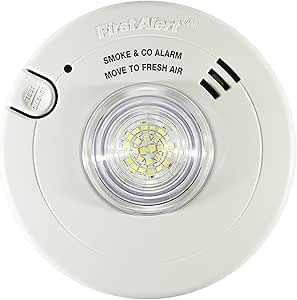 | Best Integrated Hardwired Solution | Detection Type: Photoelectric Smoke & Carbon Monoxide | Power Source: Hardwired with 10-Year Battery Backup | Strobe Output: 177 Candela LED | VIEW ON AMAZON | See Our Full Breakdown |
| First Alert SLED177 Hardwired Hearing Impaired LED Strobe Light |  | Best Standalone Visual Alert | Function: Visual Alert Strobe Only | Power Source: 120V AC Hardwired | Interconnectivity: Up to 18 Devices | VIEW ON AMAZON | See Our Full Breakdown |
| Sonic Alert HomeAware II Basic Starter Kit |  | Best Retrofit Acoustic System | Sensor Type: Acoustic (Listens for alarms) | Alert Types: Strobe, Bed Shaker, Display | Power Source: Corded with Battery Backup | VIEW ON AMAZON | See Our Full Breakdown |
| Bellman & Symfon Push Button Notification System |  | Best Wireless Portable Alert | Components: Transmitter, Flash Receiver, Bed Shaker | Range: Up to 250 meters | Power: Alkaline Batteries | VIEW ON AMAZON | See Our Full Breakdown |
| whole home alerting systems for deaf | Power Source | Mounting | Interconnectivity | Dimensions |
|---|---|---|---|---|
| First Alert BRK 7030BSL Hardwi | Hardwired with 10-Year Battery Backup | Ceiling or Wall | Synchronized with compatible devices | 2.5"D x 5.4"W x 6.8"H |
| First Alert SLED177 Hardwired | 120V AC Hardwired | Ceiling or Wall | Up to 18 Devices | — |
| Sonic Alert HomeAware II Basic | Corded with Battery Backup | — | — | 5"D x 6"W x 6.5"H |
| Bellman & Symfon Push Button N | — | Velcro, Screws, Lanyard | — | — |
More Details on Our Top Picks
First Alert BRK 7030BSL Hardwired Hearing Impaired Combination Alarm
This unit serves as a dual-threat detector, combining photoelectric smoke sensing with carbon monoxide detection. What makes it distinct from the other options is its integrated LED strobe. You do not need to buy a separate strobe light; the alarm itself flashes brightly when it detects danger. The Optipath 360 technology ensures that smoke is detected from any direction, reducing blind spots. If you install multiple units, their strobes synchronize, creating a unified visual alert throughout the house. This is superior to standalone strobes that may flash out of phase. However, this is a hardwired device. It requires a dedicated electrical circuit and professional installation. It is not a plug-and-play solution. If you are renovating or building new, this is the gold standard. For renters or those in older homes without pre-wired alarm circuits, this model is impractical.
Pros:- Combines smoke and CO detection with a built-in strobe
- Synchronized strobes across multiple units for whole-home alerts
- 10-year battery backup provides redundancy during power outages
- Meets strict ADA and building code requirements
Cons:- Requires professional hardwired installation
- Higher upfront cost due to labor and wiring needs
- Limited to fixed locations where wiring is available
Best for: Homeowners undertaking new construction or major renovations who want a permanent, code-compliant solution.
Not ideal for: Renters or those who cannot hire an electrician for hardwired installation.
- Detection Type:Photoelectric Smoke & Carbon Monoxide
- Power Source:Hardwired with 10-Year Battery Backup
- Strobe Output:177 Candela LED
- Interconnectivity:Synchronized with compatible devices
- Warranty:10 Years
- Mounting:Ceiling or Wall
- Dimensions:2.5″D x 5.4″W x 6.8″H
Our verdict“This is the most robust option for new builds, offering seamless integration of detection and visual alerting.”
First Alert SLED177 Hardwired Hearing Impaired LED Strobe Light
Unlike the BRK 7030BSL, this device does not detect smoke or carbon monoxide on its own. Instead, it acts as a dedicated visual alert that connects to your existing hardwired smoke or CO alarms. This makes it an excellent upgrade path if you already have functional detectors but lack visual warnings. The smart strobe feature is a key differentiator; it flashes different patterns to distinguish between smoke, heat, and CO threats. This allows you to identify the type of emergency without seeing a digital display. It can synchronize with up to 18 interconnected devices, making it suitable for large properties. The low-profile design is less intrusive than a full alarm unit. However, it requires the same hardwired infrastructure as the BRK model. If your existing alarms are not interconnected, this strobe may not trigger reliably. It is a component, not a complete system, so you must ensure your central alarms are compatible.
Pros:- Smart strobe patterns differentiate between smoke, heat, and CO
- Synchronizes with up to 18 First Alert or BRK devices
- Slim, low-profile design blends into ceilings
- UL Listed and ADA Compliant
Cons:- Does not detect hazards itself; relies on connected alarms
- Requires hardwired installation
- No manufacturer warranty listed
Best for: Users with existing hardwired smoke alarms who need to add visual strobe capability without replacing detectors.
Not ideal for: Those without existing interconnected hardwired alarms or who need a standalone detector.
- Function:Visual Alert Strobe Only
- Power Source:120V AC Hardwired
- Interconnectivity:Up to 18 Devices
- Light Source:LED
- Certification:UL Listed, ADA Compliant
- Weight:8.16 ounces
- Mounting:Ceiling or Wall
Our verdict“A specialized upgrade for homes with existing wired alarms, offering clear visual distinction between hazard types.”
Sonic Alert HomeAware II Basic Starter Kit
This system takes a different approach by listening for the sound of your existing smoke and CO alarms. It does not replace them. Instead, it acts as a translator, converting the auditory alarm into a visual display, flashing strobe, and bed shaker. This is the best option for renters or those who cannot rewire their homes. The kit includes a rechargeable battery backup, ensuring it works during power outages. It also features Caller ID capabilities, notifying you of phone calls, which is a bonus for daily living. However, this system has a critical limitation: it must be placed in the same room as the smoke alarm to hear it. If your alarm is in the hallway and you are sleeping in a bedroom, the unit may not trigger if the sound is muffled by closed doors. It relies entirely on the volume and clarity of your existing detectors. If your smoke alarms are old or quiet, this system will fail.
Pros:- Provides visual, tactile, and audio alerts simultaneously
- Easy setup without electrical work or wiring
- Includes Caller ID and Bluetooth phone notifications
- Rechargeable battery backup for power outages
Cons:- Requires placement in same room as smoke alarm
- Dependent on existing smoke alarms being loud and functional
- Bulkier than wall-mounted strobes
Best for: Renters or those with existing loud smoke alarms who want a non-invasive, multi-sensory alert solution.
Not ideal for: Users with quiet or old smoke detectors, or those who sleep far from the alarm source.
- Sensor Type:Acoustic (Listens for alarms)
- Alert Types:Strobe, Bed Shaker, Display
- Power Source:Corded with Battery Backup
- Phone Integration:Caller ID Display
- Dimensions:5″D x 6″W x 6.5″H
- Weight:1.8 pounds
- Connectivity:Bluetooth
Our verdict“The most accessible retrofit solution for those who cannot modify their home’s electrical system.”
Bellman & Symfon Push Button Notification System
This system is not designed to replace smoke detectors. Instead, it provides wireless alerts for doorbells, phones, and manual emergency calls. It includes a push button, a flashing receiver, and a bed shaker. The 250-meter range is impressive, allowing you to receive alerts in the backyard or garage. It is fully expandable, so you can add more receivers or buttons as needed. This is ideal for daily living alerts rather than fire safety. Compared to the Sonic Alert HomeAware, it does not listen for smoke alarms. It relies on you pressing a button or connecting a doorbell sensor. The battery-powered design offers flexibility, but it means you must monitor battery levels. If the batteries die, you lose your alerting capability. It is a complement to a smoke alarm system, not a replacement. Use this for doorbells and bedside emergencies, not for detecting fires.
Pros:- Wireless design with long 250-meter range
- Includes bed shaker and flashing light for multi-sensory alerts
- Expandable system for multiple users and devices
- No installation required; works out of the box
Cons:- Does not detect smoke or CO hazards
- Requires regular battery replacement
- No weatherproofing for outdoor doorbell buttons
Best for: Individuals needing wireless alerts for doorbells, phones, or bedside emergencies in a flexible layout.
Not ideal for: Those looking for a primary smoke or CO detection system.
- Components:Transmitter, Flash Receiver, Bed Shaker
- Range:Up to 250 meters
- Power:Alkaline Batteries
- Expandability:Supports multiple transmitters/receivers
- Mounting:Velcro, Screws, Lanyard
- Alert Type:Visual and Tactile
- Portability:High
Our verdict“A versatile wireless solution for doorbells and manual alerts, best used alongside dedicated smoke detectors.”

How We Picked
I selected these four products based on their ability to provide unambiguous, multi-sensory alerts for individuals who are deaf or hard of hearing. My primary criterion was the effectiveness of the visual and tactile signals. A strobe light that is too dim or a bed shaker that is too weak defeats the purpose of the device. I also evaluated the ease of integration. Some systems require replacing existing smoke detectors, which is a significant undertaking, while others work alongside current infrastructure. I prioritized devices that meet ADA and UL safety standards, as these certifications indicate a baseline of performance and reliability. Finally, I considered the expandability of each system. A whole-home solution needs to scale, allowing users to add more receivers or strobes as their home layout changes. I excluded products that lacked clear synchronization capabilities or had poor user feedback regarding false alarms.
| whole home alerting systems for deaf | Interconnectivity | Mounting |
|---|---|---|
| First Alert BRK 7030BSL Hardwi | Synchronized with compatible devices | Ceiling or Wall |
| First Alert SLED177 Hardwired | Up to 18 Devices | Ceiling or Wall |
| Sonic Alert HomeAware II Basic | — | — |
| Bellman & Symfon Push Button N | — | Velcro, Screws, Lanyard |
Factors to Consider When Choosing Whole Home Alerting Systems For Deaf
Selecting the right alerting system depends on your living situation, technical ability, and existing infrastructure. I have broken down the key factors to help you make an informed decision.
Hardwired vs. Wireless Systems
Hardwired systems like the First Alert models offer superior reliability because they are powered by your home’s electrical grid with battery backups. They are ideal for new constructions or major renovations. However, they require professional installation. Wireless systems like the Bellman & Symfon are easy to set up and portable, making them perfect for renters. The tradeoff is the need for regular battery changes and potential signal interference in large homes.
Detection vs. Translation
Some devices detect hazards directly, while others translate existing alarms. The First Alert BRK 7030BSL detects smoke and CO itself. The Sonic Alert HomeAware II listens for the sound of your current alarms. If you choose a translation system, you must ensure your existing smoke detectors are loud and functioning properly. If they are old or quiet, the translation system may fail to alert you.
Alert Clarity and Synchronization
In a multi-story home, you need to know if the alarm is in your bedroom or the kitchen. Synchronized strobes flash in unison, indicating a whole-home emergency. Some systems, like the SLED177, use distinct flash patterns to differentiate between smoke and CO. This level of detail helps you react appropriately without panicking. Ensure your chosen system supports synchronization if you have a large layout.
Frequently Asked Questions
Can I use a battery-operated strobe light for smoke detection?
You can use battery-operated strobes, but they are generally not recommended as primary safety devices for whole-home coverage. Battery units require frequent maintenance and testing to ensure the batteries are fresh. In a fire scenario, a dead battery could lead to fatal consequences. Hardwired systems with battery backups are preferred because they are constantly monitored and powered by the home’s electricity. If you must use battery units, place them in every room and test them weekly, but be aware that this increases your maintenance burden significantly.Do these systems work with smart home devices?
Some systems, like the Sonic Alert HomeAware II, offer Bluetooth connectivity for phone notifications, but they do not typically integrate with major smart home hubs like Alexa or Google Home for automated alerts. The Bellman & Symfon system is purely wireless radio frequency and does not connect to Wi-Fi. Most dedicated alerting systems focus on reliability over smart connectivity. If you want smart integration, you may need separate smart smoke detectors that send push notifications to your phone, but these should be supplemented with local strobes and shakers for immediate, in-home alerts.How many strobe lights do I need for my home?
Building codes and ADA guidelines generally require a strobe light in every sleeping room and common area. The number of lights needed depends on the size of your home and the strength of the strobe. A high-candela strobe like the First Alert 7030BSL can illuminate a larger area than a smaller unit. I recommend consulting with a fire safety professional to determine the exact placement. In large homes, synchronization is critical so that all lights flash at the same time, creating a unified visual signal that is hard to miss.What is the difference between a bed shaker and a pillow vibrator?
A bed shaker is a device placed under the mattress that vibrates the entire bed, waking you up with strong tactile feedback. A pillow vibrator is smaller and placed under the pillow. Bed shakers are generally more effective for deep sleepers because they provide a more noticeable sensation. However, they require a power source or a wireless receiver. Pillow vibrators are more portable but may not be strong enough to wake someone from a deep sleep. For safety-critical alerts, a bed shaker is the preferred choice due to its reliability and intensity.Can I install these systems myself?
Hardwired systems like the First Alert BRK and SLED177 require professional installation by a licensed electrician. Attempting to wire these yourself is dangerous and may violate local building codes. Wireless systems like the Bellman & Symfon and the Sonic Alert HomeAware II are designed for DIY setup. They plug into standard outlets or run on batteries, requiring no electrical work. If you are renting or uncomfortable with wiring, stick to the wireless or acoustic listening options. Always check local regulations to ensure your installation meets fire safety codes.Conclusion
Choosing the right whole home alerting system depends on your specific housing situation and safety needs. If you are building a new home, the First Alert BRK 7030BSL is my top recommendation for its integrated detection and synchronized strobes. For those with existing wired alarms, the First Alert SLED177 adds necessary visual clarity without replacing detectors. Renters should look to the Sonic Alert HomeAware II for a non-invasive retrofit solution that translates existing alarms into visual and tactile signals. Finally, for daily living alerts like doorbells, the Bellman & Symfon system offers unmatched wireless flexibility. I urge you to prioritize reliability and maintenance simplicity, as these systems are your primary line of defense in an emergency.
Fall Picks
fall essentials
As an affiliate, we earn on qualifying purchases.