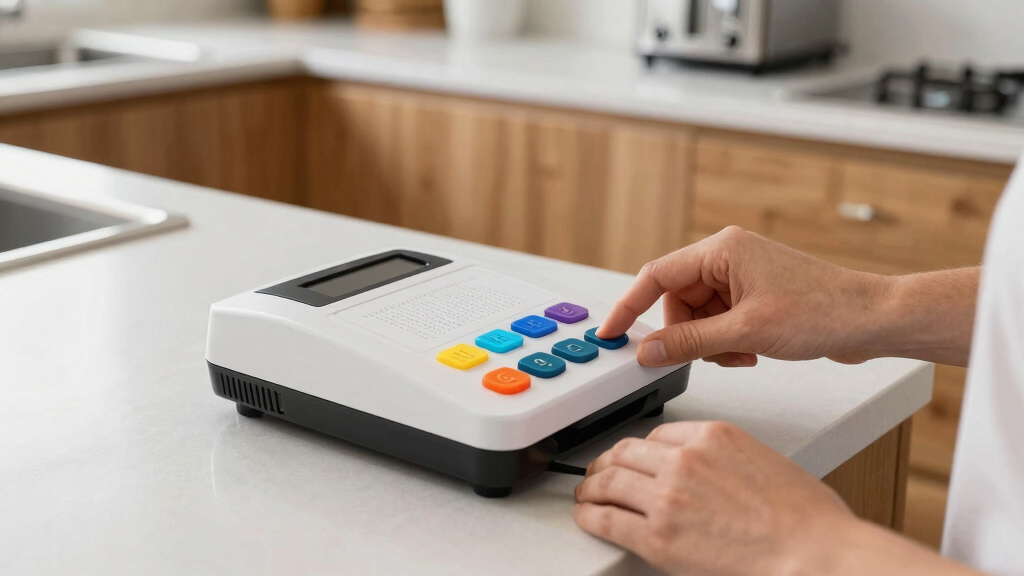

Choosing the right braille label maker depends on your specific needs, whether it’s creating quick labels for organization or crafting detailed, tactile labels for accessibility. Among the best options today, the Compact Easy Braille Labeling Slate and Stylus stands out for portability and simplicity, making it ideal for on-the-go labeling tasks. The Reizen RL-350 Braille Labeler offers a lightweight, user-friendly design suited for frequent use at home or work, though it requires separate tape supplies. For those seeking a versatile, handheld device capable of producing both Braille letters and numbers, the Easy to Use Handheld Braille Label-Maker by Blind in Mind delivers dependable manual embossing with a compact form factor. Each of these options balances ease of use, portability, and functionality, but they come with trade-offs such as limited features or ongoing tape costs.
Key Takeaways
- The Compact Easy Braille Labeling Slate is best for quick, single-line labels and portability.
- The Reizen RL-350 is ideal for users needing a lightweight, handheld device with multiple tape width options.
- The Blind in Mind handheld offers versatile manual embossing suitable for both sighted and visually impaired users.
- All options require ongoing tape purchases or specific materials, impacting long-term cost.
- Choosing the right tool depends on whether your priority is portability, ease of use, or multi-functionality.
| Compact Easy Braille Labeling Slate and Stylus |  | Best for Portable, Single-Line Labeling | Material: Aluminum | Cells per line: 25 | Dimensions: Small and portable | VIEW LATEST PRICE | See Our Full Breakdown |
| Reizen RL-350 Braille Labeler |  | Best for Portable, Multi-Width Labeling | Handle: Fits comfortably in your palm | Label tape width: 3/8 and 1/2 inches | Included tape: One free roll of vinyl tape | VIEW LATEST PRICE | See Our Full Breakdown |
| Easy to Use Handheld Braille Only Manual Label-Maker, Labeler, for Organizing and Marking, for The Blind and Sighted |  | Best for Versatile Manual Embossing | Dimensions: 10 x 4 x 2 inches | Tape width: 0.5 inches | Tape length: 8 feet | VIEW LATEST PRICE | See Our Full Breakdown |
| braille label makers on amazon | Dimensions | Material |
|---|---|---|
| Compact Easy Braille Labeling | Small and portable | Aluminum |
| Reizen RL-350 Braille Labeler | 2.38 inch H x 10 inch L x 4 inch W | — |
| Easy to Use Handheld Braille O | 10 x 4 x 2 inches | Plastic |
More Details on Our Top Picks
Compact Easy Braille Labeling Slate and Stylus
This aluminum Braille labeling slate is designed specifically for creating a single line of 25 Braille cells, making it perfect for quick labels on books, documents, or small items. Compared to digital or electronic options, it offers unmatched simplicity and durability, especially suited for users who prefer manual, tactile tools. Its compact size means it can easily fit into a bag or pocket, ideal for on-the-go labeling tasks. However, its limitation to one line makes it less suitable for detailed or extensive labeling projects. This tool excels where portability and straightforward operation are prioritized over volume or advanced features.
Pros:- Compact and portable design
- Durable aluminum construction
- Easy to use for creating tactile labels
Cons:- Limited to one line of 25 cells
- Primarily for labeling, not for long writing sessions
Best for: Users who need quick, durable labels on the go, especially for books, documents, or small labeling jobs.
Not ideal for: Those requiring multi-line labels, digital features, or extensive editing capabilities.
- Material:Aluminum
- Cells per line:25
- Dimensions:Small and portable
Our verdict“A perfect choice for quick, durable, single-line Braille labels when portability is a priority.”
Reizen RL-350 Braille Labeler
The Reizen RL-350 Braille Labeler combines portability with versatility, making it a strong choice for users who often label files, jars, or household items. Its ergonomic handle and simple tape loading system make it accessible for quick, tactile embossing, though it’s limited to vinyl tapes, which means ongoing costs for supplies. Compared with digital labelers, it lacks electronic features but compensates with tactile simplicity and ease of manual operation. It’s particularly suitable for those who prefer a straightforward, handheld device without the need for digital customization, but users needing multi-material support might find it limiting.
Pros:- Lightweight and portable
- Ergonomic handle for comfort
- Compatible with multiple tape widths
Cons:- Tape sold separately
- Limited to vinyl tapes only
- No digital or electronic features
Best for: People who need a portable, easy-to-use labeler for frequent, manual embossing with multiple tape width options.
Not ideal for: Users seeking digital or electronic labeling features, or those who prefer built-in storage or editing capabilities.
- Handle:Fits comfortably in your palm
- Label tape width:3/8 and 1/2 inches
- Included tape:One free roll of vinyl tape
- Dimensions:2.38 inch H x 10 inch L x 4 inch W
- Warranty:1 year
Our verdict“A reliable, straightforward manual labeler ideal for frequent, portable use, with the caveat of ongoing tape costs.”
Easy to Use Handheld Braille Only Manual Label-Maker, Labeler, for Organizing and Marking, for The Blind and Sighted
This handheld Braille label maker by Blind in Mind offers a tactile, manual embossing experience suitable for both sighted and visually impaired users. It produces both Braille letters and numbers, making it versatile for organizing a variety of items. Its design emphasizes simplicity, with a spin dial to select characters and a squeeze trigger for embossing, then cut, peel, and stick. The included tape is 8 feet long and 0.5 inches wide, providing ample material for multiple labels. Compared to digital options, it requires manual effort but offers a tactile, reliable labeling method that’s ideal for those who prefer or need hands-on tools.
Pros:- Produces both Braille letters and numbers
- Manual, tactile operation
- Lightweight and durable plastic construction
- Includes 8-foot tape roll
Cons:- Requires manual effort for embossing
- Limited to vinyl tape, no digital features
- Slight learning curve for proper use
Best for: Users needing a versatile, manual embossing device capable of creating both letters and numbers for various organizing tasks.
Not ideal for: Those requiring electronic or multi-material support, or users preferring automated or high-volume labeling systems.
- Dimensions:10 x 4 x 2 inches
- Tape width:0.5 inches
- Tape length:8 feet
- Embossing method:Manual squeeze and dial
- Material:Plastic
Our verdict“A dependable manual Braille label maker that balances simplicity and functionality for both sighted and visually impaired users.”

How We Picked
Our selection process centered on key factors like ease of use, portability, versatility, and durability. We prioritized products that serve different user needs—from quick, simple labeling tasks to more detailed embossing. Each product was evaluated for features that support accessibility and convenience, with an eye toward tradeoffs such as cost, complexity, and material compatibility. Our goal was to highlight options that stand out within their categories, helping users at various skill levels and usage scenarios find a suitable braille label maker.
| braille label makers on amazon | Material |
|---|---|
| Compact Easy Braille Labeling | Aluminum |
| Reizen RL-350 Braille Labeler | — |
| Easy to Use Handheld Braille O | Plastic |
Factors to Consider When Choosing Best Braille Label Makers On Amazon
Choosing the right braille label maker involves understanding your labeling needs, preferred method of operation, and environment of use. Whether you prioritize portability, ease of use, or versatility, the right tool can make a significant difference in creating tactile labels efficiently and comfortably. This guide covers key considerations to help you select the best device for your situation.Portability and Size
If you often label items on the go or need a compact device to carry in your bag, look for smaller, lightweight options like the Compact Easy Braille Labeling Slate or the Reizen RL-350. Larger, more feature-rich devices tend to be less portable but can handle more complex tasks.
Manual vs. Digital Features
Manual embossers like the Blind in Mind label maker provide tactile control and simplicity but require physical effort. Digital or electronic labelers often have additional features, such as easy editing or multiple fonts, but can be more expensive and less tactile. Decide if tactile control or digital convenience suits you better.
Material Compatibility and Cost
Most braille label makers use vinyl tapes, with some supporting other materials. Consider ongoing costs for tapes and whether the device supports your preferred tape widths and types. Devices that use standard tapes tend to be more economical long-term.
Intended Use and Volume
For quick, single-line labels, a simple slate or handheld device is sufficient. For larger projects, consider models that support longer or multi-line embossing, or digital options that enable easier editing and formatting.
Frequently Asked Questions
Can I use any type of tape with these braille label makers?
Most of these devices are designed to work with specific types of vinyl tape, typically 3/8 or 1/2 inch wide. It’s important to check compatibility before purchasing additional tapes, as using incompatible materials can damage the device or produce poor embossing results. Ongoing costs should also be considered, especially if you plan frequent labeling.
Are manual braille label makers suitable for beginners?
Yes, manual embossers like the Blind in Mind model are generally straightforward to use once you get the hang of the dial and squeeze mechanism. They are especially good for users who prefer tactile control and don’t require digital features. However, there is a slight learning curve to produce consistent, neat labels.
What is the best choice for labeling large quantities of items?
For high-volume labeling, digital or semi-automatic devices with faster embossing capabilities are usually better. Among the options listed, none are fully automated, but the manual handheld models are reliable for moderate use. For extensive projects, consider investing in more advanced electronic braille labelers designed for speed and efficiency.
How durable are these braille labels in everyday use?
Labels created with vinyl tape and embossed with manual devices tend to be quite durable and resistant to wear and tear, making them suitable for household and organizational use. The slate and stylus, being metal, also offer long-lasting durability for labels on books or documents. However, the longevity depends on proper application and environment.
Do these devices work for both sighted and visually impaired users?
Most manual embossers, including the ones reviewed, are accessible for both sighted and blind users. The tactile nature of embossing allows visually impaired users to feel their labels easily. Sighted users may find digital or electronic options more convenient, but manual tools remain effective for tactile labeling and organization.
Conclusion
For users who prioritize portability and quick, simple labels, the Compact Easy Braille Labeling Slate is an excellent choice. The Reizen RL-350 makes sense for those needing a lightweight, versatile device for frequent use at home or work, especially if tape costs are manageable. Meanwhile, the Blind in Mind handheld offers a manual, tactile option for users who want a flexible, reliable device capable of embossing both letters and numbers. Your choice should align with your labeling volume, environment, and whether you prefer manual or digital features.