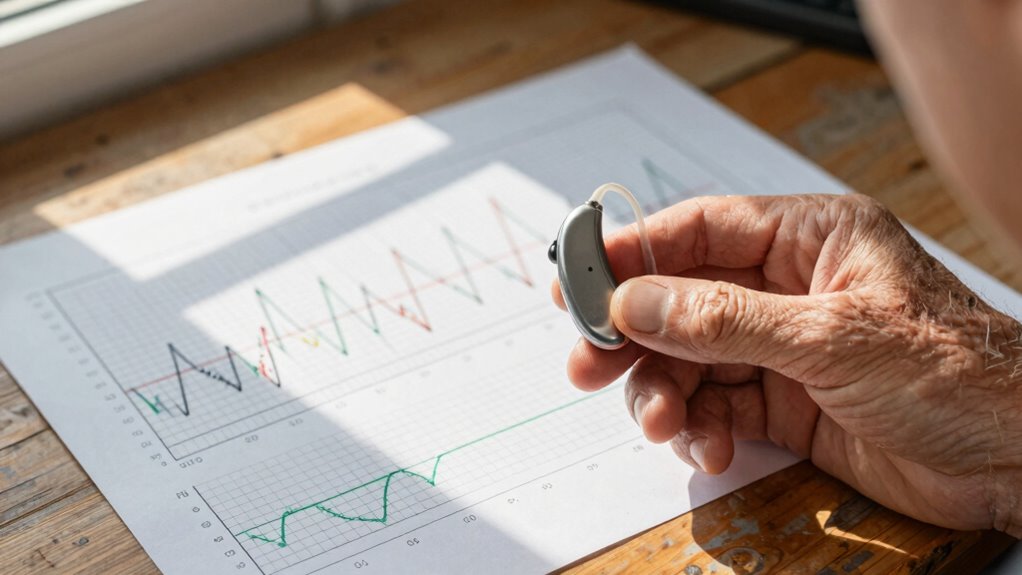

As a veteran, you can track hearing changes by using modern hearing aids that log patterns and environmental data, making it easier to notice declines over time. Regular check-ups with audiologists help compare your current hearing to previous levels, while keeping personal logs of your experiences and environments provides additional insights. Staying aware of noise exposure and making adjustments when needed can prevent further damage. Keep exploring for more helpful strategies to protect and monitor your hearing health effectively.
Key Takeaways
- Use hearing aids with built-in data logging to monitor hearing patterns over time.
- Keep a diary of hearing experiences, environments, and any difficulties encountered.
- Schedule regular audiology assessments to compare current hearing levels with past data.
- Practice noise prevention by limiting exposure to loud sounds and using hearing protection.
- Stay vigilant for early signs of hearing decline, such as difficulty understanding speech in noisy settings.
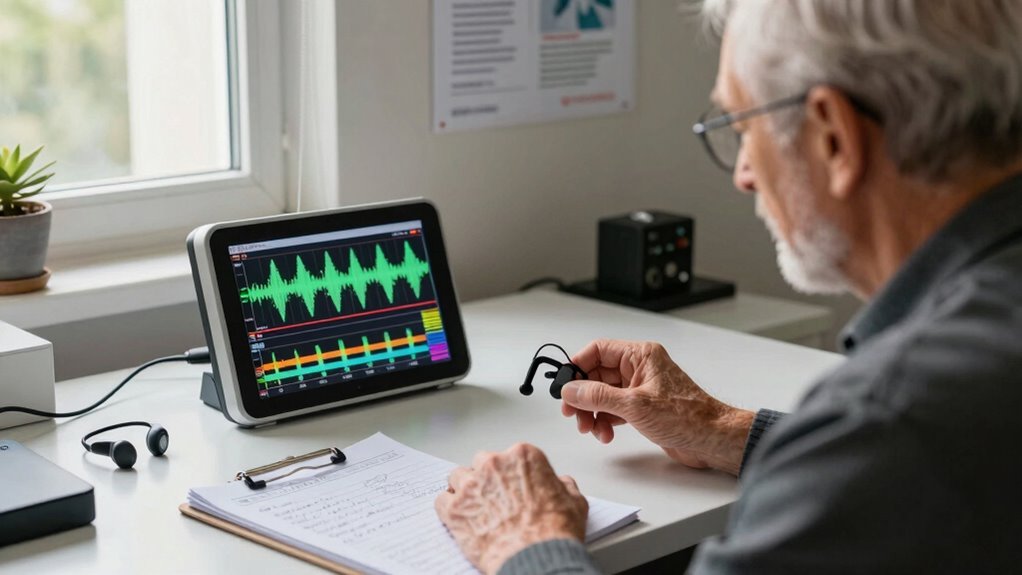
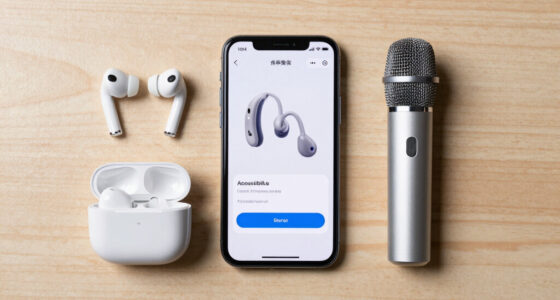
Have you noticed your hearing changing over time? It’s a common concern, especially for veterans who might have experienced noise exposure during service. Tracking these changes is key to maintain your quality of life and guarantee you get the right support when needed. Modern hearing aid technology offers more than just amplification; it can also help you monitor your hearing health. Many devices now come equipped with features that log your hearing patterns, making it easier for you and your audiologist to identify gradual declines. By regularly updating your hearing aids and using their built-in tracking capabilities, you can see how your hearing responds to different environments and over varying periods.
In addition to relying on hearing aid technology, paying attention to your environment is essential. Noise exposure prevention plays a significant role here. If you notice that loud sounds seem more disruptive than before, or if you find yourself struggling to understand conversations in noisy settings, it might be time to schedule a hearing check. Protecting your ears from further damage involves limiting exposure to loud noises and using hearing protection when you’re in noisy environments, like during shooting exercises or at loud events. Consistently practicing noise exposure prevention can slow down the progression of hearing loss, and tracking these habits helps you recognize patterns over time. Being aware of hearing health monitoring methods, such as using specialized apps or devices, can further support your efforts. Incorporating regular hearing assessments into your routine can help detect changes early and guide necessary adjustments. Staying informed about hearing loss progression can empower you to make timely decisions about your hearing care. Additionally, understanding how noise exposure contributes to hearing deterioration can motivate more consistent protective behaviors.
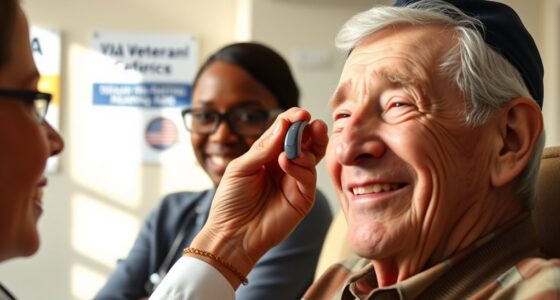
Keeping a record of your hearing experiences can be incredibly helpful. Consider maintaining a simple diary or log that notes when you notice changes, what environments you were in, and how your hearing feels. This record complements the data from your hearing aids and provides a thorough view of your hearing health. Regular audiology appointments are also indispensable. During these visits, your audiologist can compare your current hearing levels with previous assessments, helping you and your healthcare provider spot any gradual changes early on. They might suggest adjustments to your hearing aid settings or recommend additional treatments. Being proactive about hearing health is crucial to preserving your hearing over time and ensuring timely interventions.
Ultimately, staying proactive about your hearing health involves combining technology, environmental awareness, and professional guidance. With the right approach, you can catch early signs of decline and take steps to prevent further damage. Whether it’s updating your hearing aids to leverage the latest hearing aid technology or practicing noise exposure prevention, each step helps you maintain better hearing over time. Remember, your ears are precious, and the more attentive you are to subtle changes, the more effectively you can manage your hearing health and enjoy life to the fullest.
As an affiliate, we earn on qualifying purchases.
Frequently Asked Questions
Can Hearing Changes Occur Suddenly or Only Gradually?
Hearing changes can happen suddenly or gradually. Sudden hearing loss occurs quickly, often within a few hours or days, and needs immediate attention. Gradual loss develops over months or years, making it harder to notice at first. As a veteran, you should pay attention to any rapid changes in hearing. Regular checkups can help you catch both sudden hearing issues and slow declines early, ensuring timely treatment and better hearing health.
Do All Veterans Experience Hearing Loss at the Same Rate?
Not all veterans experience hearing loss at the same rate. Your hearing health depends on factors like exposure to loud noises, genetics, and ear protection. Imagine two veterans: one consistently wears hearing protection during service, while the other doesn’t. Over time, their ear health diverges, highlighting that proactive hearing protection can slow hearing loss. Regular check-ups help you catch changes early, ensuring your hearing remains protected and healthy.
Are There Specific Activities That Worsen Hearing Decline?
Certain activities, especially exposing yourself to environmental noise without protection, can worsen hearing decline. Loud concerts, machinery, or gunfire increase damage risk if you’re not using protective strategies like earplugs or earmuffs. To preserve your hearing, avoid prolonged exposure to loud noise, take regular breaks, and always wear hearing protection in noisy settings. These steps help slow down hearing deterioration and safeguard your auditory health over time.
How Often Should Veterans Schedule Hearing Check-Ups?
How often should you schedule hearing check-ups? Regular visits every year or two are essential, especially if you’re exposed to loud noises or experience tinnitus management issues. Have you considered how hearing protection strategies can help prevent further decline? Consistent check-ups allow your audiologist to monitor changes, recommend adjustments, and address concerns early, ensuring your hearing stays as healthy as possible over time.
Can Hearing Aids Fully Restore Hearing to Original Levels?
Hearing aids can’t fully restore hearing to original levels due to hearing aid limitations and ongoing damage. Many hearing restoration myths suggest they do, but they primarily amplify sounds to improve clarity. You should understand that while hearing aids considerably enhance hearing, they don’t cure hearing loss. Regular check-ups help monitor progress, and managing expectations ensures you’re aware of what hearing aids can realistically achieve.
Conclusion
By regularly tracking your hearing, you can catch changes early and seek help promptly. Did you know that veterans exposed to loud noises are twice as likely to experience hearing loss? Staying vigilant with routine check-ins guarantees you don’t miss signs of deterioration. Taking proactive steps not only preserves your hearing but also enhances your overall quality of life. So, keep monitoring your hearing and stay ahead of potential issues—you deserve to hear your best, always.