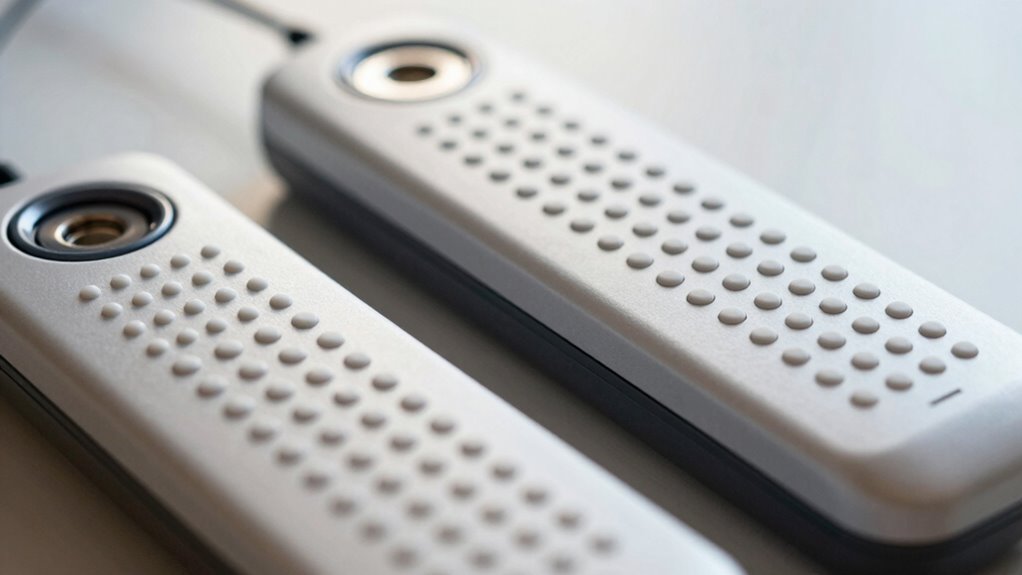

A 20-cell braille display is lightweight and portable, making it great for quick access on the go, but it requires more scrolling and can slow you down during long sessions. A 40-cell model offers a larger surface for easier navigation through lengthy documents and a more immersive experience. While it’s less portable, it suits extended use much better. Keep exploring to discover which option best fits your routines and preferences.

Get everyday helpers delivered free — and shop member deals
- Fast, free delivery on millions of items
- Access to Prime Big Deal Days deals on October 6–7
- Prime Video, Amazon Music and more included
Key Takeaways
- 20-cell displays are more portable and lightweight, ideal for quick, on-the-go reading, while 40-cell models suit extensive reading sessions.
- 40-cell braille displays show twice as much text per line, reducing scrolling and improving reading efficiency.
- Smaller displays may require more navigation and scrolling, impacting reading speed and comfort.
- Larger displays offer a more immersive experience, benefiting users with long documents or continuous reading needs.
- Choice depends on balancing portability with reading capacity, based on individual routines and preferences.
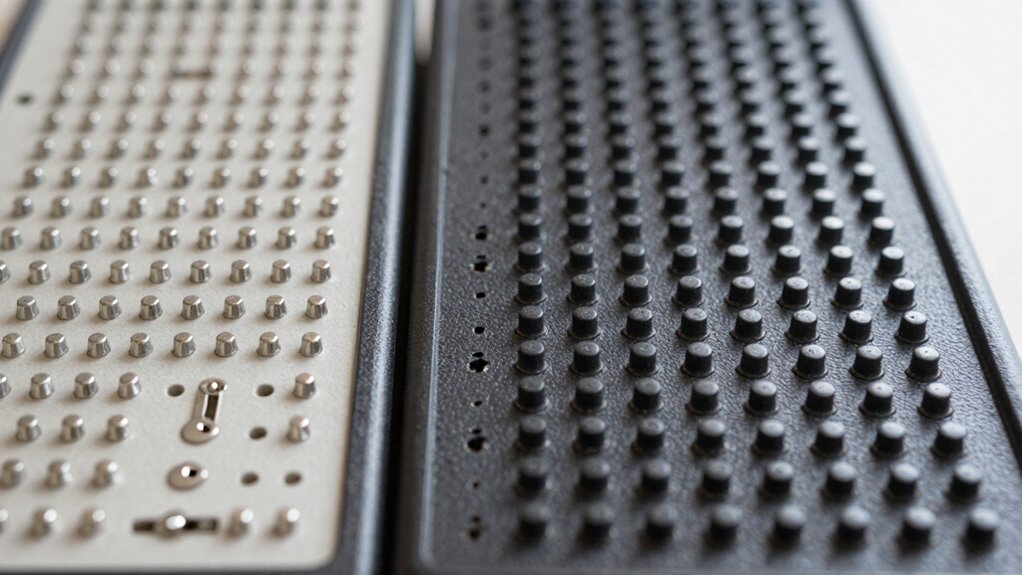
When choosing a braille display, understanding the differences between 20-cell and 40-cell models is essential, as it directly impacts your reading experience and efficiency. A 20-cell display offers a more compact design, making it easier to carry around and use on the go. This portability feature allows you to read comfortably during commutes, in cafes, or while traveling, without feeling weighed down. The tactile feedback on a 20-cell device tends to be quick and responsive, providing a smooth reading experience despite its smaller size. However, because it presents fewer characters at a time, you may need to scroll more often to read longer passages, which can slow down your reading pace if you’re used to larger displays.
On the other hand, a 40-cell braille display significantly increases your reading capacity, allowing you to view twice the amount of text in a single line. This larger size might seem less portable at first, but many models now incorporate sleek, lightweight designs that balance size and ease of transport. The tactile feedback on a 40-cell display tends to feel more natural when reading larger blocks of text, reducing the need for frequent scrolling. With more cells to work with, you can navigate through documents or books more seamlessly, enhancing your overall reading efficiency. If you primarily work with long documents or prefer a more continuous reading flow, a 40-cell model could be more suitable. Additionally, size and portability differences play a crucial role in how users manage their reading routines. Considering ergonomic design can further improve comfort during extended use.
A 40-cell braille display enhances reading efficiency with larger text blocks and seamless navigation, ideal for lengthy documents.
Both types of displays incorporate tactile feedback technology that enables you to feel the braille characters clearly, but the experience differs based on size. Smaller displays often have slightly faster refresh rates, which make scrolling feel more immediate, while larger displays provide a more immersive reading experience with less interruption. When considering portability features, a 20-cell device wins in terms of size and weight, making it ideal for users who prioritize mobility. Conversely, a 40-cell display, while slightly bulkier, offers the advantage of extended reading without interruption, which is beneficial if you spend hours working or reading extensively. Furthermore, understanding the user preferences related to display size can help optimize your reading setup for comfort and efficiency. A consideration of durability and build quality is also important, especially for users frequently on the move. Choosing the right display size involves balancing portability with reading comfort, depending on your individual needs.
As an affiliate, we earn on qualifying purchases.
Frequently Asked Questions
How Does the Learning Curve Differ Between 20-Cell and 40-Cell Displays?
The learning curve is steeper with a 40-cell display because of increased learning complexity. You need more time to master the tactile feedback from the additional cells, which can initially feel overwhelming. With a 20-cell display, you’ll adapt faster since it’s more straightforward. Over time, a 40-cell display becomes more efficient, but expect a longer adjustment period as you develop the skills to navigate its expanded tactile feedback.
Are 40-Cell Displays More Affordable Than 20-Cell Models?
Like a wise old library, 40-cell displays can sometimes seem more valuable, but they’re often pricier than 20-cell models. The price comparison shows that 40-cell devices usually cost more upfront, though they might offer greater accessibility benefits for users needing more context at once. If affordability is your main concern, a 20-cell display might be the smarter choice. However, if you need expanded capacity, investing in a 40-cell model could be worthwhile.
Which Display Type Offers Better Durability Over Time?
A 40-cell braille display generally offers better durability over time due to its robust build and higher material quality, making it more resistant to wear and tear. You’ll also find it more reliable for long-term use. While it may be slightly less portable than a 20-cell device, the increased material durability means it can withstand frequent handling and travel better, ensuring consistent performance over years.
Do 40-Cell Displays Significantly Improve Reading Speed?
A 40-cell display acts like an open highway, allowing you to scan more text at once. This setup considerably boosts your reading speed, particularly in terms of reading comfort and tactile feedback. With more cells, you can process larger chunks of information, reducing the need for frequent scrolling. In real use, this setup makes reading more fluid and efficient, helping you grasp content faster without sacrificing tactile sensitivity.
Can Users Upgrade From a 20-Cell to a 40-Cell Device Easily?
You can typically upgrade from a 20-cell to a 40-cell device, but it depends on device compatibility. Check if your existing device’s software and hardware support the new model, as some upgrades might require new connections or features. Keep portability concerns in mind; a 40-cell display is larger and less portable, so make certain it fits your lifestyle. Consulting with the manufacturer or specialist can help make the shift seamless.
Conclusion
So, whether you’re exploring the compact 20-cell or the expansive 40-cell braille display, it’s funny how the choice often hinges on what you stumble upon first. Sometimes, the smaller device surprises you with its convenience, while the larger one reveals new depths of reading comfort. In the end, it’s almost as if fate guides you to the perfect match—proving that in the world of braille tech, the right fit often comes when you least expect it.
Fall Picks
fall essentials
As an affiliate, we earn on qualifying purchases.