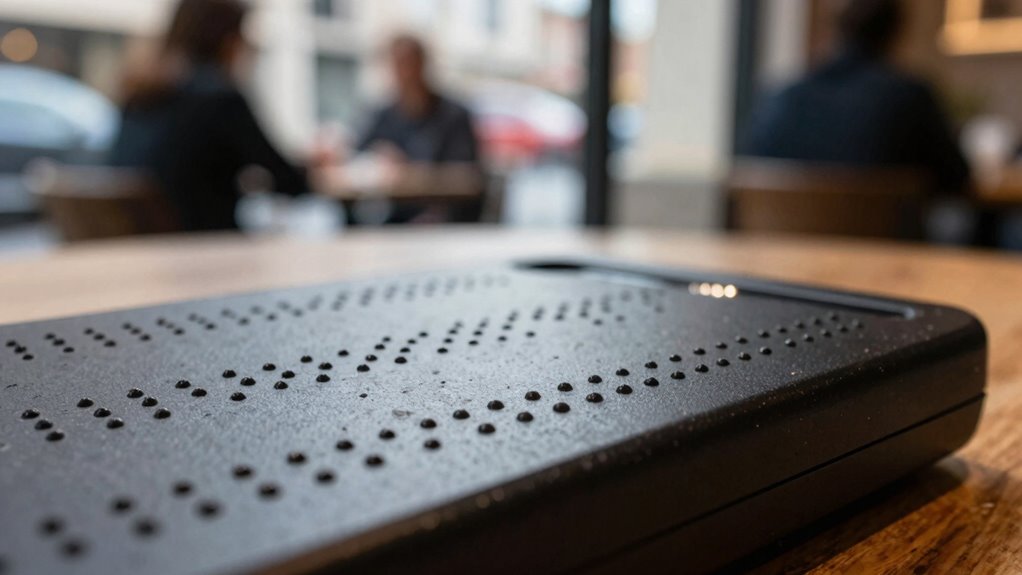

In a voice-first world, Braille remains essential because it gives you tactile independence and a reliable way to access complex information without screens or devices. Voice technology can’t fully replace the physical connection and comprehension that Braille offers. It’s durable, private, and supports active engagement, helping you build confidence and skills. Staying connected to Braille means you retain full access to knowledge and self-sufficiency; if you keep exploring, you’ll discover even more benefits.

Get everyday helpers delivered free — and shop member deals
- Fast, free delivery on millions of items
- Access to Prime Big Deal Days deals on October 6–7
- Prime Video, Amazon Music and more included
Key Takeaways
- Braille provides tactile access to complex texts and notes that voice technology cannot replicate or convey effectively.
- It offers a reliable, durable reading method unaffected by technical malfunctions or noisy environments.
- Braille enhances active learning, comprehension, and retention through physical engagement with material.
- Combining Braille with voice tech creates a more inclusive, accessible environment for diverse needs.
- Braille remains vital for independence, literacy, and confidence beyond what voice assistants can offer.
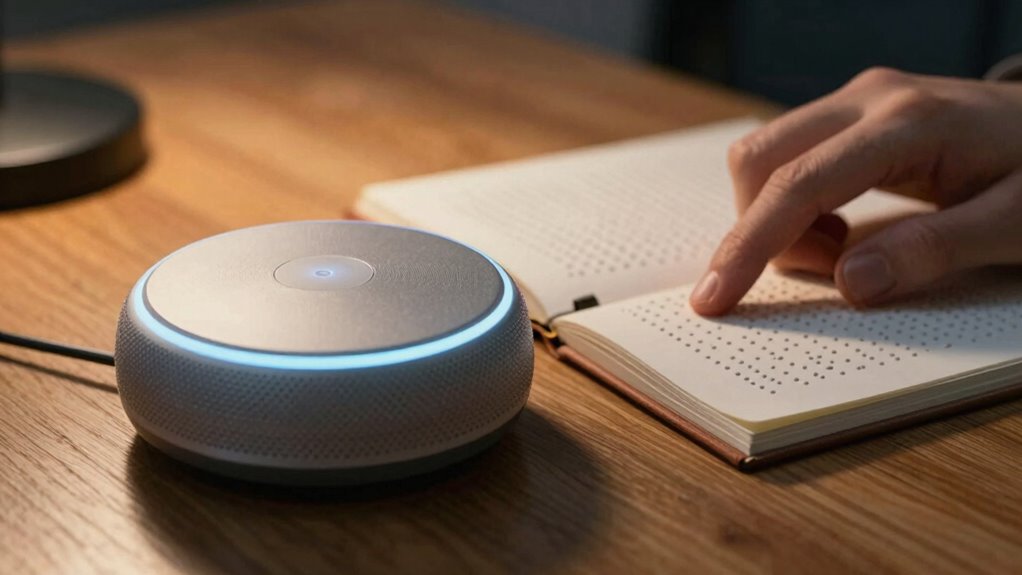
Have you ever wondered how visually impaired individuals navigate a world increasingly dominated by voice technology? While voice assistants and speech recognition have transformed daily life, they don’t replace the importance of tactile reading, especially Braille. Tactile reading remains a vital tool for literacy empowerment, allowing individuals to access written information independently and confidently. Unlike audio, which depends on a device or an app, Braille offers a tactile, portable means of reading that can be used anywhere, anytime. This independence is crucial for educational achievement, employment, and personal growth. Braille provides a direct, physical connection to language that promotes literacy and comprehension, making it an essential skill despite the rise of voice-first technology.
Braille offers independent, portable access to written information, vital for literacy and confidence in a voice-driven world.
In a voice-first world, it might seem that Braille has become obsolete, but that couldn’t be further from the truth. For many visually impaired people, Braille is more than just reading; it’s a gateway to literacy empowerment. When you learn to read Braille, you gain the ability to access complex texts, write notes, and read for pleasure without needing a screen or an audio device. It’s a skill that fosters independence, helping you navigate education systems, workplaces, and social environments with confidence. This tactile method also encourages active learning. Instead of passively listening, you’re engaging physically with the material, which enhances comprehension and retention. Additionally, the durability and longevity of Braille materials make it a reliable accessible reading method that doesn’t rely on technology that can malfunction or become inaccessible.
Moreover, Braille plays a crucial role in situations where voice technology might fall short. In noisy environments or places where privacy matters, relying solely on voice commands or audio output might be impractical. Braille provides a discreet, reliable way to read and write without depending on technology that could malfunction or be inaccessible. It also serves as a complementary tool that enhances literacy skills alongside audio-based methods. When you combine Braille with voice technology, you create a more inclusive environment that respects different learning styles and needs. This dual approach ensures that you retain full access to information, regardless of the circumstances. Recognizing the importance of tactile literacy in inclusive education is essential for fostering equitable opportunities for all learners. Supporting tactile literacy initiatives can help bridge accessibility gaps and promote comprehensive learning experiences.
Ultimately, Braille remains an indispensable part of accessibility and literacy empowerment. It’s not just about reading; it’s about maintaining independence, fostering self-confidence, and ensuring equal opportunities. While voice technology continues to evolve and expand, the tactile reading experience offered by Braille continues to be vital. It’s a tactile bridge to knowledge and self-sufficiency, reminding us that technology should complement, not replace, the fundamental human right to literacy.
As an affiliate, we earn on qualifying purchases.
Frequently Asked Questions
How Does Braille Support Literacy Beyond Tactile Reading?
Braille supports literacy beyond tactile reading by enhancing haptic learning and tactile comprehension. When you use Braille, you develop a deeper understanding of language structure, grammar, and punctuation through touch. This tactile engagement fosters cognitive connections that improve reading skills and retention. Braille also encourages active learning, allowing you to grasp complex concepts visually and physically, which strengthens overall literacy and comprehension in ways that voice alone can’t fully achieve.
What Are the Costs Associated With Implementing Braille Technology?
You might be surprised, but implementing braille technology involves significant costs. A thorough cost analysis reveals expenses like purchasing devices, training users, and maintaining infrastructure. Infrastructure investment is essential to guarantee accessibility and reliable service. While initial costs can be high, the benefits of empowering visually impaired users with independence and literacy support make it a worthwhile investment. Balancing these costs helps you make informed decisions about braille technology adoption.
Can Braille Be Integrated Into Modern Digital Devices Effectively?
Yes, braille can be effectively integrated into modern digital devices through tactile feedback technology. You can experience seamless digital integration with braille displays that connect to smartphones and computers, providing real-time access to text. These devices enable you to read and interact with digital content independently, ensuring that braille remains a crucial accessibility tool. This combination preserves tactile learning and offers a hands-on approach in a voice-first world.
How Does Braille Accessibility Impact Employment Opportunities?
Braille accessibility acts as a key that opens employment opportunities for you. Without it, you’re like a ship without a sail, unable to navigate the job market effectively. Assistive technology and inclusive design guarantee that you can read and communicate efficiently, opening doors to careers in various fields. When organizations prioritize braille access, they create a level playing field, empowering you to thrive and contribute your skills confidently.
Are There Portable Braille Solutions for On-The-Go Use?
Yes, there are portable devices that serve as tactile solutions for on-the-go use. These portable braille solutions, like compact refreshable braille displays, allow you to access digital content anytime, anywhere. They are lightweight and easy to carry, making them ideal for travel or quick access in various environments. These devices guarantee you stay connected and independent, maintaining essential braille literacy even in a voice-first world.
Conclusion
In a world dominated by voice technology, you might think braille has become obsolete. But consider this: isn’t it crucial to have multiple ways to access information, especially when voice isn’t an option? Braille remains a essential tool for independence, literacy, and privacy. Don’t overlook its importance—after all, shouldn’t everyone have the choice to read and learn in the way that best suits them? Braille’s role is more relevant than ever.
Fall Picks
fall essentials
As an affiliate, we earn on qualifying purchases.