Otoacoustic Emissions (OAE) testing is a quick, painless, and non-invasive way to check your inner ear’s health. During the test, a small probe is placed in your ear that emits soft sounds and measures the echoes produced by your cochlea’s hair cells. Strong responses usually mean your ear is functioning well, while weak or absent echoes may signal issues. If you’d like to discover how this test can help identify hearing problems early, there’s more to learn.
Key Takeaways
- OAE testing is a quick, non-invasive method to assess cochlear (inner ear) function by measuring sound echoes produced by hair cells.
- It uses a small probe with a microphone in the ear canal to emit sounds and capture the ear’s echo responses.
- Strong echoes indicate healthy cochlear hair cells, while weak or absent responses suggest potential inner ear damage.
- The test is suitable for newborns, children, and adults, providing immediate results without requiring active participation.
- OAE screening helps detect early hearing loss, enabling timely intervention and further diagnostic evaluation if needed.
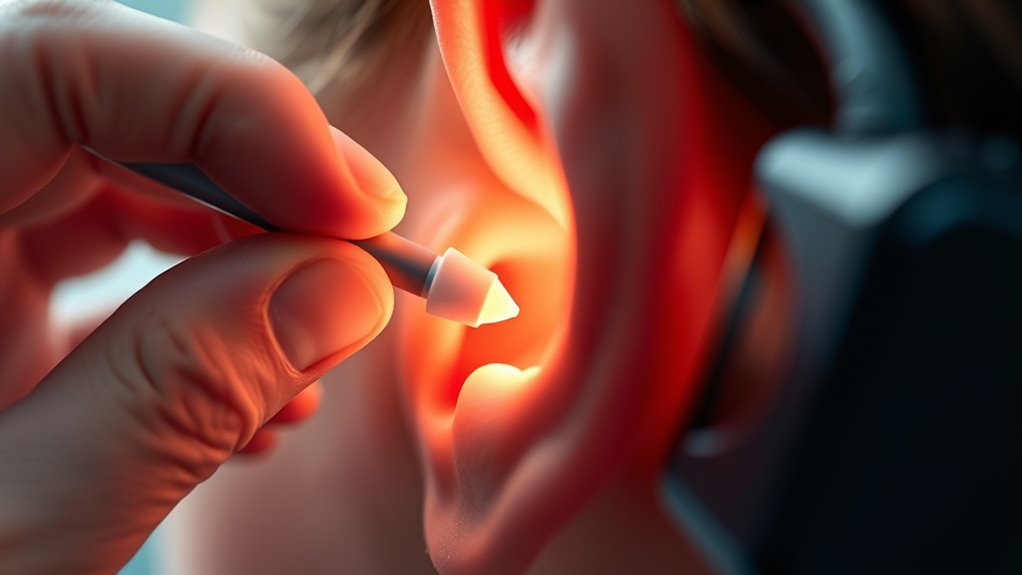
Otoacoustic Emissions (OAE) testing is a quick, non-invasive way to assess your hearing health by measuring sounds produced by your inner ear. These tiny sounds, called otoacoustic emissions, are generated when the hair cells inside your cochlea respond to sound stimuli. When a sound is played into your ear, your inner ear produces these echoes, which are then detected by a sensitive microphone placed in your ear canal. This process allows professionals to evaluate how well your inner ear is functioning without discomfort or the need for more invasive procedures.
OAE testing quickly assesses inner ear health by measuring sounds it produces in response to stimuli.
Understanding the role of your inner ear is key to grasping how OAE testing helps determine your hearing health. The inner ear contains the cochlea, a spiral-shaped structure filled with tiny hair cells that convert sound vibrations into electrical signals sent to your brain. If these hair cells are damaged or not functioning properly, your hearing can be affected. OAE testing provides an immediate snapshot of this inner ear activity, highlighting whether your cochlea is responding normally. Since the test specifically measures the health of these hair cells, it’s particularly useful for detecting early signs of hearing loss, especially in newborns and young children who cannot communicate their hearing issues.
The procedure itself takes just a few minutes. You’ll sit comfortably while a small probe is gently inserted into your ear canal. The device then emits soft sounds, typically clicks or tones, and listens for the echo responses generated by your inner ear. If the echoes are present and strong, it indicates healthy cochlear function. If they’re weak or absent, it suggests possible damage or dysfunction within the inner ear. Because the test is objective and doesn’t require your active participation, it’s an ideal screening tool for infants or individuals unable to cooperate during traditional hearing tests.
Your hearing health depends on the proper functioning of your inner ear, and OAE testing offers a reliable way to monitor that health. It’s often used as part of newborn hearing screenings, but adults can benefit too, especially if they’re experiencing hearing difficulties or exposure to loud noise. The results can help your healthcare provider determine if further testing or intervention is necessary. Overall, OAE testing is a fast, painless, and effective method to ensure your inner ear is working correctly and to catch potential issues early before they develop into more significant hearing problems.
Frequently Asked Questions
Can OAE Testing Detect All Types of Hearing Loss?
OAE testing can’t detect all types of hearing loss because it offers only thorough coverage of cochlear function, specifically outer hair cell health. Testing limitations mean it may miss issues like neural or middle ear problems. If your hearing loss involves these areas, OAE results might appear normal, even if hearing isn’t. For a complete diagnosis, combining OAE with other tests ensures you identify all potential hearing issues effectively.
How Long Does an OAE Testing Session Typically Take?
You’ll find that an OAE testing session usually takes about 15 to 30 minutes, depending on the child’s cooperation and the specific appointment process. During the test, you’ll stay in a quiet room while the technician places a small probe in the ear. The test duration is quick, making it a convenient way to assess hearing health without causing discomfort. Be prepared for a brief, straightforward appointment.
Is OAE Testing Suitable for Newborns and Infants?
You’ll find OAE testing ideal for newborns and infants, seamlessly fitting into newborn screening programs and supporting early detection of infant hearing issues. While babies can’t respond verbally, the test quickly measures cochlear function, making it non-invasive and comfortable. This early screening helps identify hearing problems promptly, ensuring children get the support they need during critical developmental stages. So yes, OAE testing is highly suitable for your little one’s hearing assessment.
Are There Any Risks or Side Effects From OAE Testing?
You won’t experience significant risks or side effects from OAE testing. It involves minimal discomfort, so it’s usually painless for infants and newborns. The procedure is safe and non-invasive, making it suitable even for very young children. While rare false positives can occur, they don’t pose health risks; instead, they simply mean additional testing might be needed to confirm hearing status. Overall, OAE testing is a safe screening tool.
How Do OAE Results Compare to Other Hearing Assessments?
Did you know that OAE testing can detect hearing issues in over 90% of cases? Compared to other assessments, it offers quick, non-invasive results with high comparison accuracy for cochlear function. However, its testing limitations include difficulty in identifying auditory nerve problems and in quiet environments. While OAEs are excellent for screening, all-encompassing evaluations like audiograms provide a fuller picture of your hearing health.
Conclusion
Otoacoustic emissions testing is a quick and non-invasive way to check your hearing health. It helps identify hearing issues early, so you can take action before problems worsen. Remember, a stitch in time saves nine—catching concerns early makes all the difference. With OAE tests, you’re taking a proactive step toward better hearing and peace of mind. Don’t wait until it’s too late; your ears will thank you for it.