

Screening tests help you quickly identify if you’re at potential risk for a health issue, but they don’t give you a definite answer. Full diagnostic tests are more detailed, providing precise, conclusive results to confirm if you have a condition. While screenings are faster and less invasive, diagnostic tests are more accurate and informative. If you want to understand how these tests differ in technique and purpose, keep exploring to get the full picture.

Get everyday helpers delivered free with Prime
- Fast, free delivery on millions of items
- Prime Video, Amazon Music and more included
- Member-only deals all year
Key Takeaways
- Screening tests identify potential risks, while diagnostic tests confirm the presence of a condition.
- Screening is less invasive, quicker, and used for initial assessment; diagnostic testing is more detailed and definitive.
- Screening tests detect markers or indicators, whereas diagnostic tests analyze DNA or tissues thoroughly for confirmation.
- Screening results suggest risk; diagnostic results provide conclusive evidence of a condition.
- Diagnostic tests are more complex, precise, and used after screening indicates potential issues.
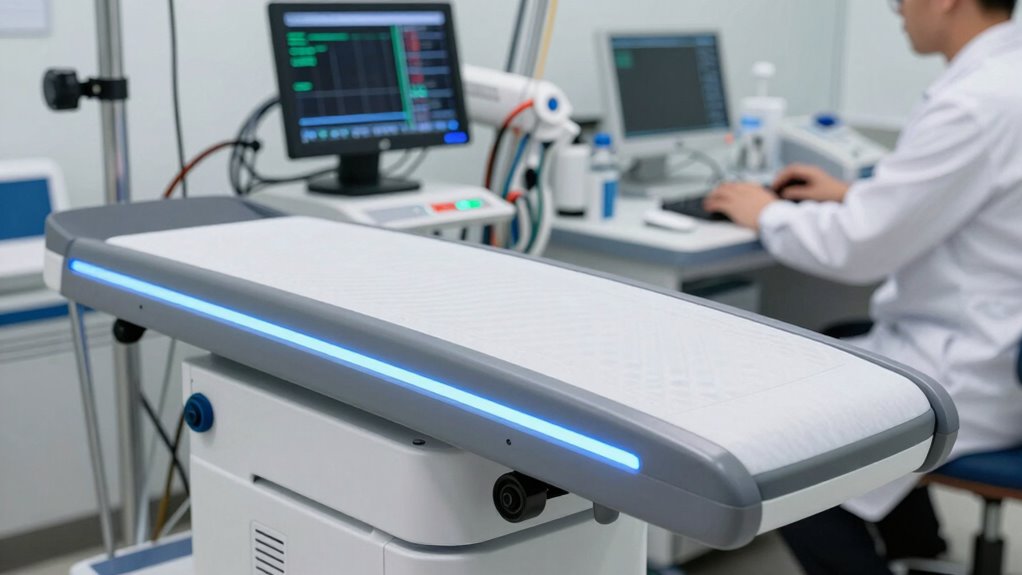
Have you ever wondered what sets screening tests apart from full diagnostic tests? The main difference lies in their purpose and the level of detail they provide. Screening tests are designed to identify individuals who may be at risk for a certain condition, often before symptoms appear. They are typically less invasive, quicker, and more accessible. For example, in the case of genetic conditions, screening might involve analyzing genetic markers to see if you carry certain variations associated with increased risk. These tests aim for early detection, allowing you to take preventive steps or prepare for further testing if necessary. However, they don’t give you a definitive diagnosis, only an indication of potential risk. screening tests are an essential part of proactive health management, helping to flag potential issues early on. Full diagnostic tests, on the other hand, are more detailed and precise. They’re usually performed after a screening test suggests there might be an issue, or if there’s a strong reason to suspect a specific condition. These tests involve detailed analysis, often utilizing advanced techniques to confirm whether a condition is truly present. For example, if a screening test indicates a possible genetic abnormality, a diagnostic test can analyze your DNA more thoroughly to determine if that abnormality is real. Diagnostic tests often measure specific genetic markers with high accuracy, providing definitive answers. They can also assess the severity of a condition, which helps in planning treatment or management strategies. Additionally, diagnostic tests benefit from advanced techniques that provide a higher level of detail and reliability.
As an affiliate, we earn on qualifying purchases.
Frequently Asked Questions
How Accurate Are Screening Tests Compared to Diagnostic Tests?
Screening tests are generally less accurate than diagnostic tests, so false positives can happen, meaning you might get a positive result even if you’re healthy. However, they’re useful for early detection of potential issues. Diagnostic tests are more precise, confirming whether a condition exists. You should follow up any positive screening results with a diagnostic test to guarantee accurate diagnosis and avoid unnecessary worry or treatment.
Can Screening Tests Replace Diagnostic Testing Entirely?
Can screening tests truly replace diagnostic tests? Probably not, since false positives can lead you on unnecessary worry, and they might miss early detection of serious issues. Screening offers a helpful first look, but it can’t provide the certainty or detail that diagnostic testing does. Think of screening as a warning sign, not a final verdict—trust diagnostic tests for a definitive answer when it matters most.
What Are the Costs Associated With Each Testing Type?
Screening tests tend to be less expensive upfront, offering a cost comparison that makes them accessible. However, they often aren’t fully covered by insurance, which can increase your out-of-pocket costs if follow-up diagnostic testing is needed. Diagnostic tests are usually more costly but may be fully covered by insurance if medically necessary. You should check with your provider to understand coverage details and costs for each test type.
Are Screening Tests Suitable for All Age Groups?
Screening tests aren’t suitable for all age groups; age-related considerations are vital. Pediatric screening is essential for early detection in children, but some tests may not be appropriate for older adults due to differing health risks. You should consult healthcare professionals to determine the right screening approach based on age, medical history, and risk factors. This guarantees timely detection and appropriate follow-up, tailored to each age group’s specific needs.
How Long Does It Take to Get Results From Each Test?
Getting results from tests is like waiting for a seed to sprout. For screening tests, you might get results in a day or two, especially if pre-test procedures are straightforward. Full diagnostic tests often take longer, sometimes weeks, due to detailed analysis. Afterward, post-test counseling helps you understand the results, whether quick or delayed, ensuring you’re supported through every step of your health journey.
Conclusion
Now that you understand the key differences, you might wonder what’s next. Will a simple screening be enough, or is it time to dig deeper with full diagnostic testing? The choice isn’t always clear-cut, and missing the signs could have serious consequences. Stay curious, ask questions, and trust your instincts. The path you choose could very well shape your health’s future—so don’t wait too long to find out what lies ahead.
Halloween Picks
halloween
As an affiliate, we earn on qualifying purchases.