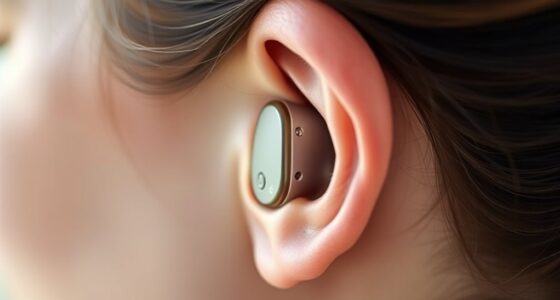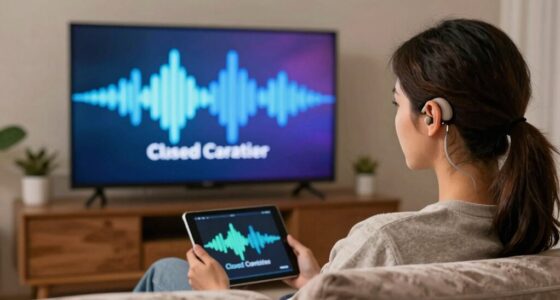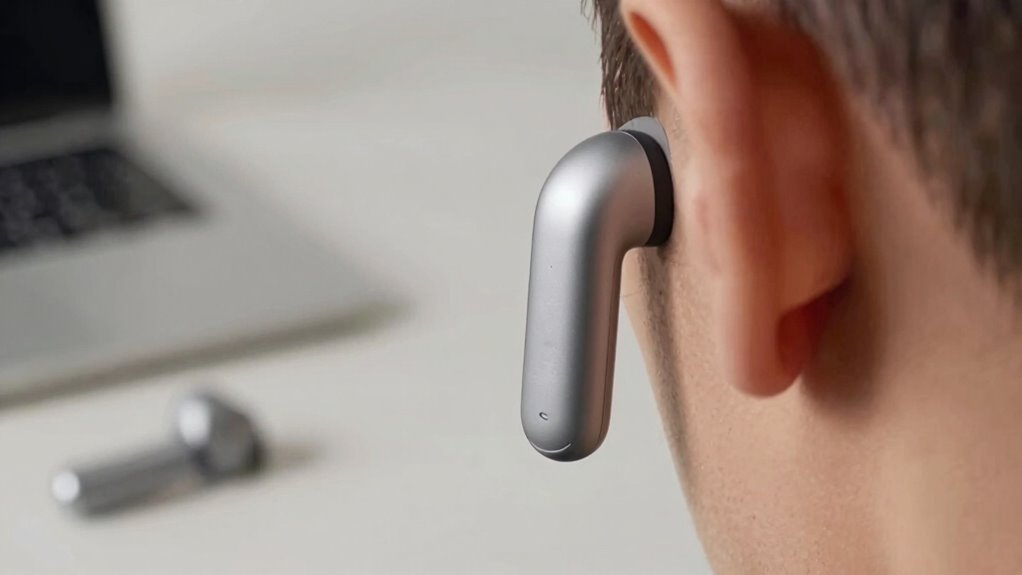

Hearing device compression helps you hear soft sounds clearly while preventing loud noises from feeling overwhelming. It works automatically, adjusting sounds in real time so conversations stay natural and comfortable, even in noisy places. The systemcompatibly works with all kinds of hearing aids, constantly tailoring sound to fit your environment. This makes your listening experience more natural and less tiring. If you’d like to understand how this simple process makes a big difference, there’s more to explore.

Get everyday helpers delivered free with Prime
- Fast, free delivery on millions of items
- Prime Video, Amazon Music and more included
- Member-only deals all year
Key Takeaways
- Compression adjusts loud and soft sounds so everything sounds natural and comfortable to listen to.
- It prevents loud sounds from being too harsh and makes quiet sounds easier to hear.
- Modern hearing aids automatically change settings based on the environment for clearer sound.
- Compatibility across different hearing aid types ensures consistent sound quality.
- These features help users understand speech better and enjoy conversations without fatigue.
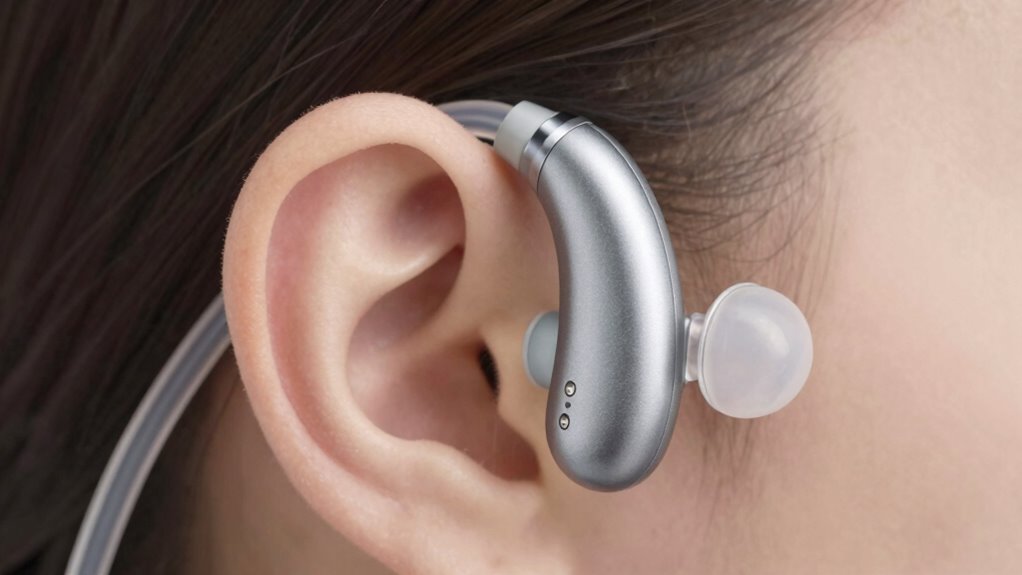
When it comes to device compatibility, compression technology is designed to integrate seamlessly with a variety of hearing aids. Whether you have a behind-the-ear style, in-the-ear, or more advanced models, modern hearing devices can incorporate compression features that adapt in real-time. You can trust that this compatibility ensures that the benefits of compression — like clearer speech and reduced listening fatigue — are accessible to everyone, regardless of the device they wear.
Understanding how compression impacts sound quality can help you appreciate why it’s such a vital feature. Without it, loud sounds can become painfully jarring, and quiet sounds may get lost in the background. Compression guarantees that all sounds are presented at comfortable levels, preserving natural sound cues and speech intelligibility. You’ll notice that conversations become easier to follow, even in noisy environments, because the device intelligently manages the volume of different sounds. This leads to a more natural listening experience, making everyday interactions more comfortable and less tiring. Additionally, advanced sound processing plays a crucial role in tailoring these features to individual hearing needs. Moreover, ongoing advancements in sound technology continue to enhance how effectively compression can be customized for each user’s unique auditory requirements.
Most importantly, compression adapts dynamically, responding to your environment in real-time. When you’re in a quiet room, it allows softer sounds to come through clearly. When you’re in a noisy place, it reduces the intensity of loud noises so they don’t overshadow speech. This adaptability is what makes modern hearing aids so effective at improving sound quality while maintaining device compatibility, across various settings. Additionally, these advancements are rooted in caffeine science, which explores how sound processing can be optimized for better auditory performance. Ultimately, compression helps you regain confidence in your hearing devices, guaranteeing you can participate fully in conversations and enjoy your surroundings without constant adjustments or discomfort.
hearing aid compression technology
As an affiliate, we earn on qualifying purchases.
As an affiliate, we earn on qualifying purchases.
Frequently Asked Questions
Does Compression Affect Sound Quality?
Yes, compression can affect sound quality by reducing sound distortion and enhancing hearing clarity. When your hearing device uses compression, it balances loud and soft sounds, making everything clearer without harshness. While some worry about potential quality loss, good compression algorithms are designed to preserve natural sound. Overall, it helps you hear more comfortably and accurately, improving your listening experience without sacrificing sound quality.
How Long Does It Take to Get Used to Compression?
It typically takes a few days to a few weeks for your hearing comfort and sound adaptation to improve with compression. During this time, your ears and brain adjust to the new hearing experience. Be patient and wear your device consistently, as this helps your brain get used to the changes. Most people find that over time, sound becomes clearer and more natural, enhancing overall hearing comfort.
Can Compression Be Turned off or Adjusted?
Yes, compression can usually be turned off or adjusted through your hearing aid settings. You can customize the compression based on your user preferences, allowing you to control how much amplification is applied to different sounds. Many hearing aids offer easy-to-use controls or apps, so you can tweak these settings yourself or have your audiologist adjust them during check-ups to guarantee ideal comfort and sound quality.
Is Compression Suitable for All Hearing Loss Types?
Think of compression as a tailored suit—perfectly fitted for certain needs, but not all. Compression isn’t suitable for all hearing loss types; it depends on your hearing aid compatibility and your specific hearing profile. To get the best results, you’ll want compression customization, ensuring your device adapts comfortably. Always consult with your audiologist to determine if compression works for your unique hearing loss, making your hearing experience clearer and more natural.
Does Compression Drain the Device’s Battery Faster?
Compression doesn’t markedly drain your hearing device’s battery because it’s a built-in feature designed for efficiency. In fact, it often helps conserve battery life by reducing the need for the device to work harder in loud environments. Plus, with device customization, you can adjust compression settings to optimize battery efficiency while maintaining sound quality. So, you can enjoy clear hearing without worrying about faster battery drain.
Conclusion
Understanding hearing device compression is like opening a secret code that helps your ears hear better. It’s a simple concept once you get the hang of it, making sounds clearer and more comfortable. Just as a key fits perfectly into a lock, compression tunes your device to your hearing needs. With this knowledge, you can feel more confident in managing your hearing health, knowing that your device is working smoothly—like a finely tuned instrument ready to play your favorite sounds.
Halloween Picks
halloween
As an affiliate, we earn on qualifying purchases.