
You need better listening access in churches and lecture halls because clear sound guarantees everyone can fully participate, regardless of hearing ability. Proper acoustic design combined with assistive technology reduces echoes, background noise, and missed content, creating an inclusive environment. These improvements help you connect more deeply with services and presentations. Investing in sound quality benefits all attendees and fosters a welcoming atmosphere. Keep exploring how you can make spaces more accessible for everyone.

Get everyday helpers delivered free with Prime
- Fast, free delivery on millions of items
- Prime Video, Amazon Music and more included
- Member-only deals all year
Key Takeaways
- Many spaces lack essential assistive listening devices, hindering full participation for individuals with hearing difficulties.
- Poor acoustic design causes echoes and muffled sound, reducing speech clarity for all attendees.
- Combining acoustic treatment with assistive technology ensures even sound distribution and better comprehension.
- Upgrading environments promotes inclusivity, enabling everyone to engage fully in religious and educational events.
- Investing in listening accessibility creates a welcoming atmosphere and enhances overall experience for diverse audiences.

Many churches and lecture halls still lack the necessary technology to provide clear listening experiences for all attendees. This gap often leaves people with hearing difficulties struggling to follow sermons, presentations, or speeches. To bridge this divide, investing in assistive technology is crucial. Devices like hearing loops, FM systems, or personal amplification tools make a significant difference, guaranteeing everyone can engage fully with the content. When these tools are integrated seamlessly into the space, they help eliminate barriers and promote inclusivity. However, simply having assistive technology isn’t enough; the environment itself must be optimized through thoughtful acoustic design.
Assistive tech and thoughtful acoustic design ensure inclusive, clear listening experiences for all attendees.
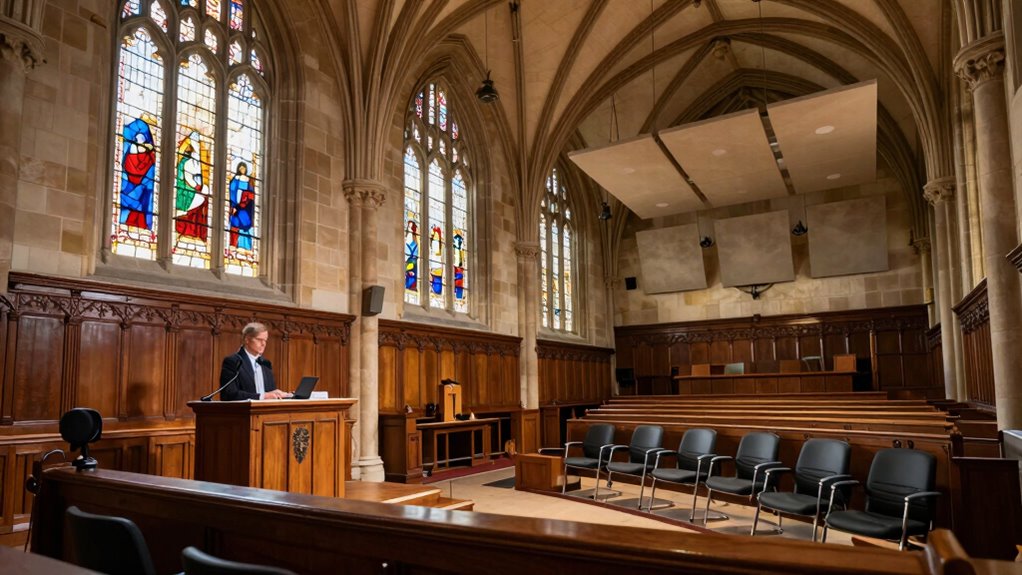
Acoustic design plays a fundamental role in improving sound clarity and distribution within a space. Many traditional layouts overlook how sound travels and how architectural features can impact listening quality. Poor acoustics lead to echoes, dead spots, or muffled audio, which frustrate attendees and diminish the overall experience. Proper acoustic design considers factors like sound absorption, diffusion, and speaker placement. For example, using acoustic panels or ceiling treatments can reduce echo, making speech more intelligible. Strategically positioning speakers ensures sound reaches every corner evenly, preventing some areas from being drowned out or overly loud. Incorporating modern sound systems and understanding how sound travels within a space can dramatically enhance the listening experience. Additionally, understanding the principles of acoustic treatment can help optimize the environment further, ensuring sound is managed effectively. Recognizing how sound propagation affects acoustic performance is essential for creating effective solutions.
When acoustic design is prioritized, combined with assistive technology, the listening experience becomes much more accessible. It’s not just about amplifying sound but creating a space where sound is evenly distributed and clear to all. For instance, a well-designed space with a high-quality sound system ensures that even those seated at the back can hear every word without straining. Incorporating assistive listening devices further enhances this experience for individuals with hearing impairments, making sure they don’t miss crucial parts of the message. These systems also help reduce background noise, which can be disruptive and distracting. Proper acoustic treatment can greatly improve speech intelligibility, especially in larger or more reverberant spaces.
You have the power to advocate for these improvements within your community. Suggesting upgrades to existing spaces or designing new ones with acoustic considerations and assistive technology in mind can transform how people experience religious services or educational lectures. It’s about creating an environment where everyone feels included and can participate fully. When sound quality is prioritized, and accessible tools are used, you’re helping foster a more welcoming, engaging, and inclusive atmosphere. Ultimately, investing in better acoustic design and assistive technology isn’t just a technical upgrade—it’s a step toward ensuring that every attendee can hear, understand, and connect, no matter their hearing ability.
assistive listening devices for churches
As an affiliate, we earn on qualifying purchases.
As an affiliate, we earn on qualifying purchases.
Frequently Asked Questions
How Do Hearing Aids Improve Accessibility in These Spaces?
Hearing aids improve accessibility in churches and lecture halls by utilizing assistive technology and acoustic enhancement features. They amplify sound directly into your ears, reducing background noise and making speech clearer. This technology guarantees you don’t miss important messages, sermons, or lectures. By adapting to different acoustics, hearing aids create a more inclusive environment, allowing you to engage fully and comfortably participate in these spaces.
What Are the Costs Associated With Upgrading Listening Systems?
You might think upgrading listening systems is cheap, but a thorough cost analysis reveals it’s more costly than expected. The costs include new equipment, installation, and ongoing maintenance, which can be intimidating. Upgrade challenges like compatibility issues and training also add to expenses. While it’s tempting to overlook these costs, investing properly guarantees everyone can hear clearly, turning irony into inclusive accessibility for all.
Are There Specific Technologies Recommended for Older Buildings?
For older buildings, you should consider using wireless microphones paired with acoustic treatment to improve sound clarity. Wireless microphones offer flexibility and ease of setup, making them ideal for spaces with existing infrastructure challenges. Acoustic treatments, like panels and diffusers, help reduce echo and background noise, ensuring clear sound delivery. Together, these technologies enhance listening access without extensive structural modifications, making them practical solutions for preserving and upgrading historic spaces.
How Can Staff Be Trained to Assist Visitors With Hearing Impairments?
Imagine your staff as welcoming guides, helping visitors navigate a vibrant, inclusive space. You train them in sign language integration and sensory friendly design, equipping them to assist those with hearing impairments. They learn to recognize cues, speak clearly, and offer assistive listening devices. Through hands-on practice and empathy-building exercises, your team becomes confident, creating a warm environment where everyone feels valued and heard, regardless of hearing ability.
What Are the Legal Requirements for Accessibility in Public Venues?
You must comply with legal requirements like the Americans with Disabilities Act (ADA), which mandates accessible design in public venues. This includes removing accessibility barriers, such as inadequate hearing assistance, and implementing inclusivity measures like hearing loops and signage. Ensuring your venue is accessible not only meets legal standards but also fosters an inclusive environment where all visitors feel welcome and accommodated.
Conclusion
So, next time you sit in a church or lecture hall, remember that better listening access isn’t just about convenience—it’s about truly connecting. Ironically, while these spaces are designed for enlightenment and community, poor sound systems often leave you in the dark or missing essential moments. It’s time to prioritize clear, inclusive audio so everyone can hear, understand, and participate fully—because missing out on important messages shouldn’t be part of the experience.
Halloween Picks
halloween
As an affiliate, we earn on qualifying purchases.