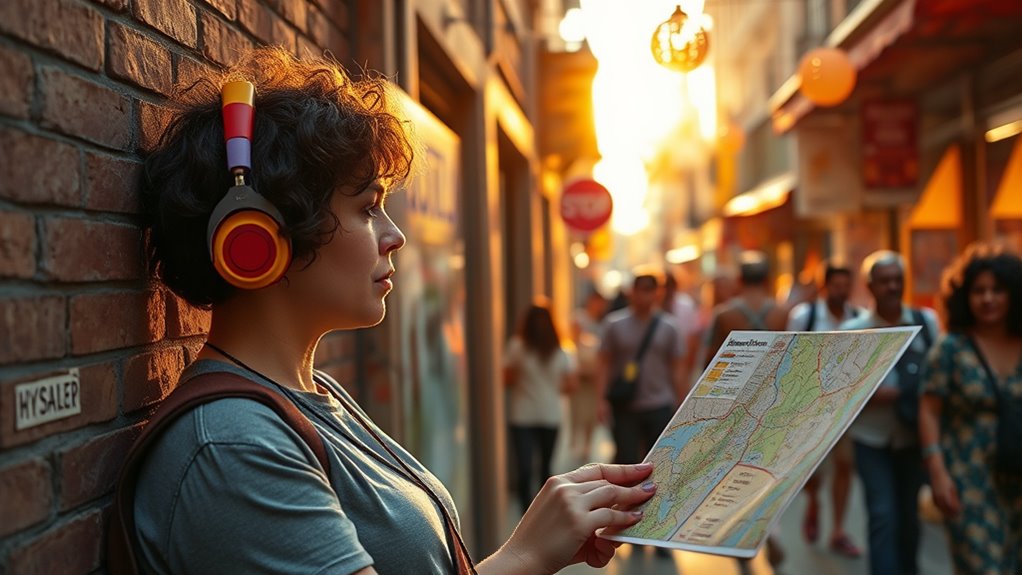

Traveling while deaf or hard of hearing means preparing ahead with assistive tech like amplifiers, captioning apps, and visual alert systems. Share your needs with airlines, hotels, and guides, and carry emergency info and contacts. Research destinations for sign language services and accessible facilities. With proactive planning and the right tools, you can stay safe, independent, and confident on your trip. Keep exploring ways to make your journey smoother and more enjoyable.

Get everyday helpers delivered free with Prime
- Fast, free delivery on millions of items
- Prime Video, Amazon Music and more included
- Member-only deals all year
Key Takeaways
- Research destination accessibility, including captioning, sign language services, and assistive technology options beforehand.
- Inform airlines, hotels, and transport providers of specific hearing needs in advance for proper accommodations.
- Carry visual alert devices and digital copies of important documents to ensure safety and communication in emergencies.
- Use real-time captioning apps and sign language interpreters to facilitate conversations and stay informed.
- Share emergency plans and assistive tech instructions with travel companions for better support and response.

Traveling while deaf or hard of hearing can present unique challenges, but with the right preparation, it’s entirely manageable. One of the most effective ways to guarantee smooth travel experiences is leveraging assistive technology. Devices like hearing aids, cochlear implants, or personal amplifiers can considerably improve communication and environmental awareness. Additionally, visual alert systems—such as vibrating alarms for notifications or flashing lights for doorbells and alarms—help you stay connected to your surroundings. Many airports, hotels, and transportation providers now offer specialized technology or accommodations, but it’s best to research and arrange these in advance. Apps that provide real-time captioning or transcription also serve as valuable tools, allowing you to read conversations or announcements quickly and accurately. Incorporating assistive technology into your travel plans can remove many barriers, giving you greater independence and confidence.
Equally important is emergency preparedness. When traveling, it’s essential to have a plan for unexpected situations. Carrying a written list of emergency contacts, including local emergency services, is crucial. Consider having a portable visual alert device that can notify you of emergencies, such as smoke alarms or sirens. Sharing your needs with travel companions ensures they can assist or alert authorities if necessary. Also, familiarize yourself with the emergency procedures at your destination—know where the nearest hospitals, clinics, and police stations are located. Keep digital and physical copies of important documents, including your medical information and any assistive technology instructions. If you’re traveling abroad, research the local emergency services and their communication methods, as some regions may have limitations in sign language or captioning services. Preparing for emergencies reduces stress and helps you respond swiftly if an unexpected situation arises. Being aware of the availability of captioning and sign language services at your destination can further enhance your safety and communication.
Planning ahead by integrating assistive technology and emergency preparedness strategies makes traveling more accessible and less stressful. Inform airlines, hotels, and transportation services about your needs in advance, ensuring they can accommodate you effectively. When you arrive at your destination, don’t hesitate to ask for assistance or clarification if needed. Being proactive and equipped boosts your confidence and allows you to focus on enjoying your trip. Remember, your needs are valid, and many resources are available to support your journey. With the right tools and planning, traveling while deaf or hard of hearing becomes an empowering experience, opening up new opportunities for exploration and connection.
assistive listening devices for travel
As an affiliate, we earn on qualifying purchases.
As an affiliate, we earn on qualifying purchases.
Frequently Asked Questions
How Can I Find Deaf-Friendly Accommodations Worldwide?
You can find deaf-friendly accommodations worldwide by using specialized platforms that highlight accessibility reviews and offer search filters for sign language resources. Look for hotels and lodgings with clear communication policies and accessible services. Reading reviews from other deaf or hard of hearing travelers helps you gauge the experience. Additionally, reach out directly to the property to confirm they provide sign language interpreters or other accommodations, ensuring a comfortable stay.
What Are the Best Travel Apps for Deaf Travelers?
You’ll want to download apps that offer sign language translation and real-time captioning, making communication smoother. Look for apps like Ava or Google Live Transcribe, which provide instant captioning for conversations and events. These tools help you understand spoken language quickly and accurately. Additionally, apps like Signily or Sign Language Translator can assist with sign language communication, ensuring you stay connected and informed wherever you travel.
How Do I Communicate With Emergency Services Abroad?
Ever wonder how you’ll communicate with emergency services abroad? You should prepare by downloading sign language translation apps and familiarizing yourself with local emergency numbers. Carry a visual alert card that explains your situation, and consider using video relay services for urgent communication. Being proactive in emergency preparedness guarantees you can effectively reach help and convey your needs, even if there’s a language barrier. Staying prepared keeps you safe and confident during your travels.
Are There Specific Travel Insurance Options for Deaf Travelers?
Yes, there are specific travel insurance options for deaf travelers that cover sign language interpretation and accessible transportation. You should look for policies that explicitly mention coverage for communication assistance and mobility needs. These plans help guarantee you get the support you need during your trip, making your journey smoother. Always verify that the insurer understands your requirements and offers services like sign language interpretation and accessible transportation options.
How Can I Connect With Local Deaf Communities During Travel?
Think of connecting with local deaf communities as finding hidden gems in a vast treasure map. You can discover these gems through sign language resources and by attending deaf community events. Use social media and online platforms to find local groups. When you arrive, approach with respect and curiosity. These connections enrich your travel experience, turning strangers into lifelong friends who share your language and culture.
Conclusion
Traveling while deaf or hard of hearing might seem intimidating at first, but with the right preparations, you can turn challenges into opportunities. Remember, every journey is a new chapter waiting to be written, and your unique perspective adds richness to every experience. Don’t let communication barriers hold you back—think of them as hurdles to overcome, not walls to stop you. With confidence and a little planning, you’ll find your way, no matter where your travels take you.
Halloween Picks
halloween
As an affiliate, we earn on qualifying purchases.